

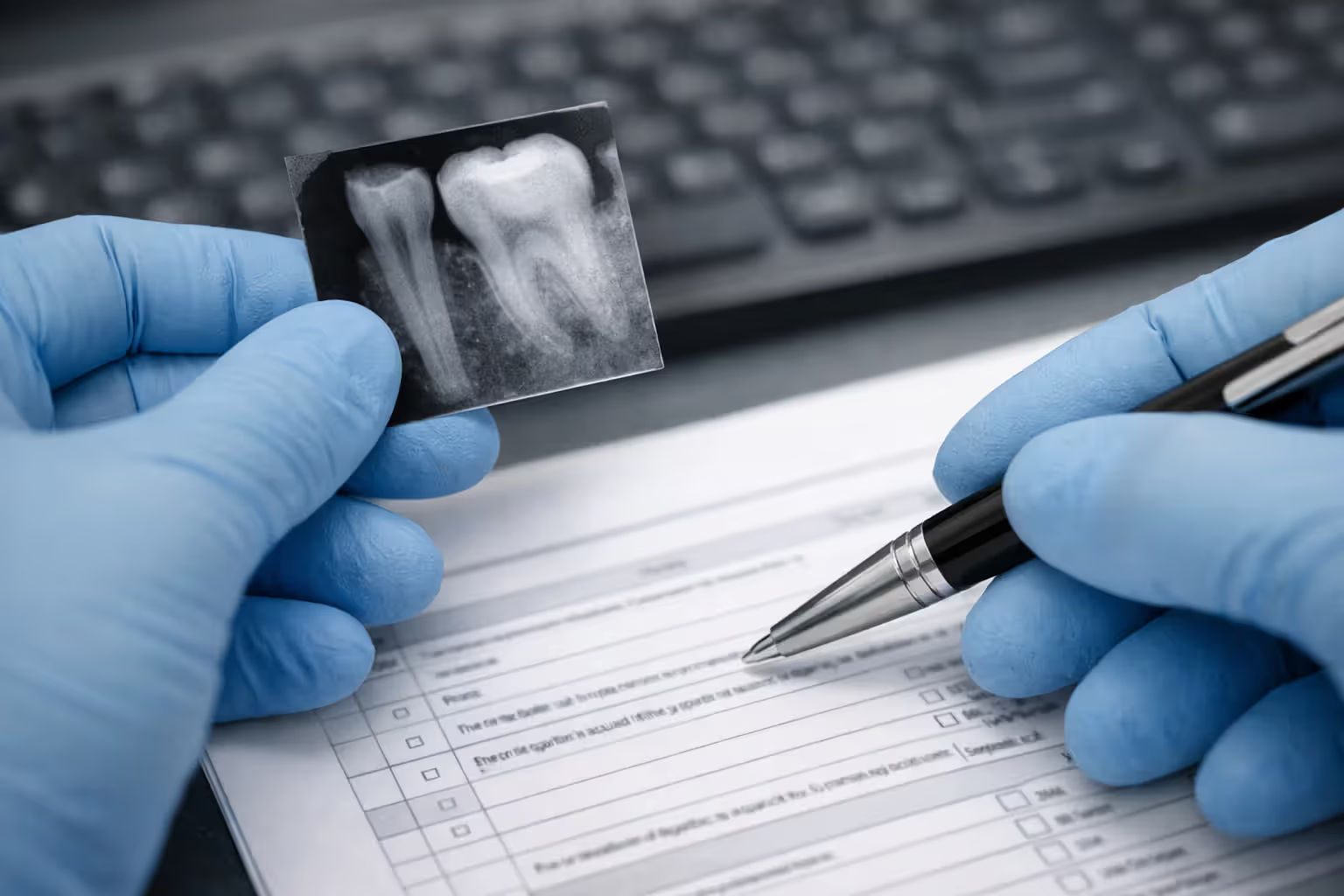
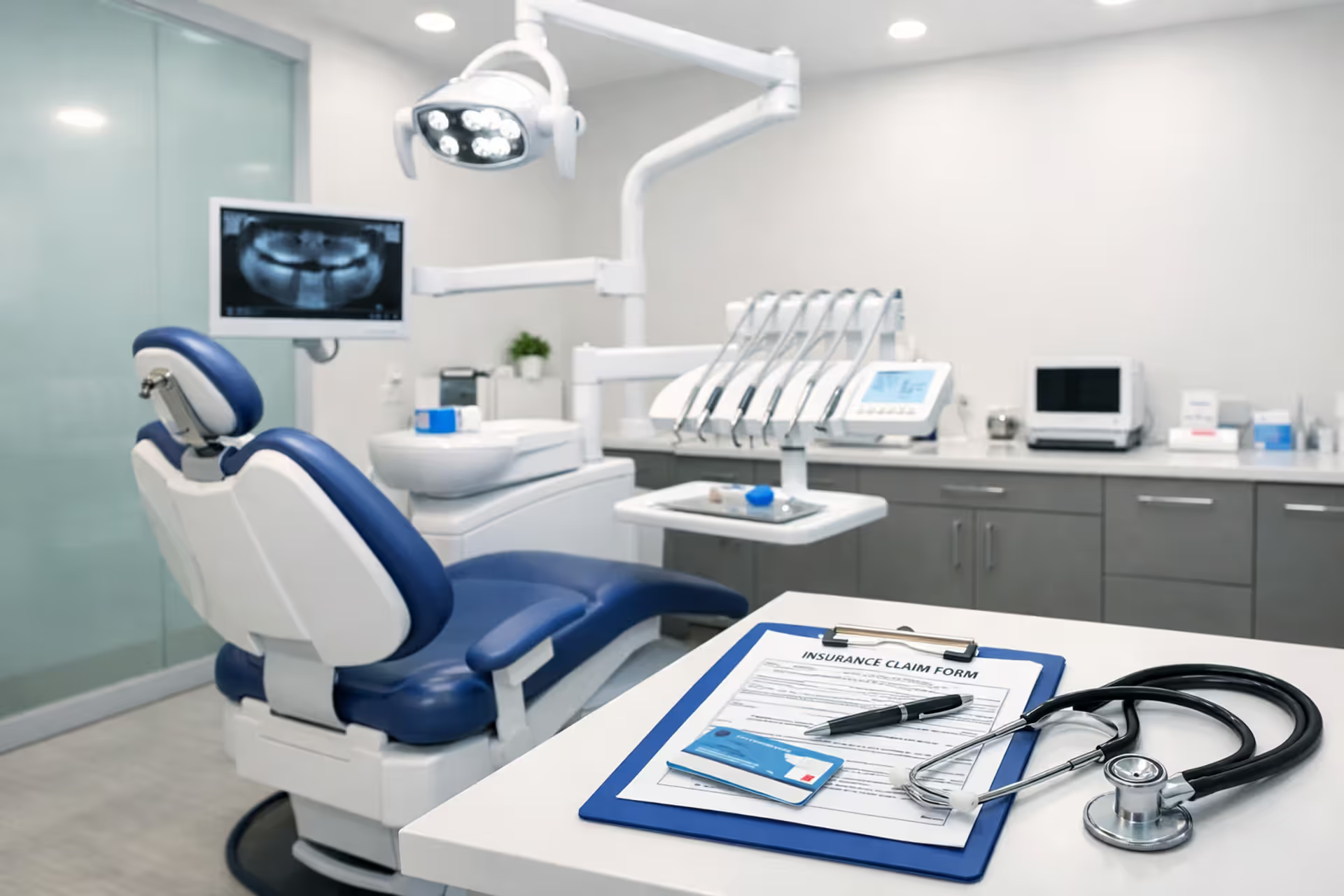
Dental office desk with insurance claim documents, laptop showing claim form, and dental instruments
Examples of Dental Narratives for Insurance Claims

Ever had an insurance company deny a perfectly legitimate dental claim? You're not alone. About 30% of dental claims require some form of additional documentation before approval, and that's where narratives come in. These written explanations can flip a denial into an approval—but only if you know what insurance reviewers actually want to see.
Most dental offices send out hundreds of these letters every year. Some get approved in days. Others trigger denials that take months to sort out. The difference? Usually it's not the treatment itself—it's how well you explained why it's necessary.
What Is a Dental Narrative for Insurance
Think of a dental narrative as the story behind the procedure codes. Your claim form lists CPT and CDT codes—sterile numbers that tell what you did. The narrative explains why you did it.
Insurance reviewers see these as your chance to justify treatment. They're evaluating claims filed by dentists they've never met, for patients they've never examined. Your narrative bridges that gap.
Here's when you'll definitely need one: replacing a crown that's only three years old, extracting a tooth that looks intact on radiographs, performing a second root canal on the same tooth, or treating someone who's already maxed out their annual cleanings. Basically, anything that raises the question "why this treatment, why now, why this patient?"
Sometimes they're officially required—the insurance portal won't even let you submit without attaching a narrative. Other times they're technically optional, but including one anyway can prevent the dreaded "pending additional information" status that delays payment for weeks.
What is examples of dental narratives for insurance really asking? People want to see what successful narratives actually look like, because writing in a vacuum is nearly impossible. You need models to follow.
Key Components Every Dental Narrative Must Include
Missing even one of these elements tanks your approval odds. Insurance reviewers work from checklists—literally. If they can't find specific information, they deny the claim.
Patient History starts your narrative with context. Don't just write "patient has a history of dental problems." That's meaningless. Instead: "Patient fractured this tooth in 2019, had it restored with a large MOD amalgam in 2020, then developed recurrent decay in 2023 despite regular six-month recall visits." See the difference? The second version shows a pattern and timeline.
Clinical Findings need numbers, measurements, actual data. When you write "severe bone loss," the reviewer has no idea what you mean. Their "severe" might be your "moderate." But "bone loss to 65% of root length with 8mm probing depths on three surfaces" tells them exactly what you found. Same with decay—"large cavity" versus "decay extending 5mm apical to the CEJ involving 70% of the distal surface."
Treatment Rationale connects the dots between what you found and what you're proposing. This is where many narratives fall apart. You described the problem beautifully, then just stated the treatment without explaining why alternatives won't work. If you're recommending extraction instead of endo, spell out why: insufficient ferrule for crown retention, vertical fracture visible on CBCT, or previous RCT failure with separated instrument blocking canal access.
Prognosis matters more than most dentists realize. Insurance companies hate paying for procedures with questionable long-term success. If you're placing an implant in someone with uncontrolled diabetes and poor home care, address it directly. Either explain what's changed (A1C now 6.5%, patient completed periodontal therapy) or acknowledge the risks while justifying why the alternative is worse.
What does examples of dental narratives for insurance cover in practice? Everything from basic extractions to complex full-mouth reconstructions, but the same principles apply regardless of procedure type.
Author: Olivia Davenport;
Source: ladylesliebelize.com
Sample Dental Narratives by Procedure Type
Reading actual examples teaches you more than any list of tips. Here's what works.
Crown Narrative Example
"Patient fractured the mesial cusp of tooth #19 while eating on March 12, 2026. This tooth received a three-surface amalgam in 2021, which now comprises roughly 60% of the coronal structure. The fracture line runs from the occlusal surface through the marginal ridge, visible both clinically and on the periapical radiograph dated 3/14/26. Remaining enamel walls measure less than 2mm in thickness on the buccal and lingual aspects. The tooth tests vital with no periapical involvement. Given that two-thirds of the tooth structure consists of existing amalgam plus undermined enamel, another direct restoration would fail quickly under occlusal forces. A full-coverage restoration will protect the remaining tooth structure and prevent the fracture from extending below the gingival margin, which would compromise restorability."
Extraction Narrative Example
"Tooth #3 shows advanced periodontal breakdown with 8-9mm pocket depths on all surfaces and Class III mobility (moves freely in all directions). The periapical film from 4/5/26 reveals bone loss extending past the apical third of both roots. Furcation involvement is complete—you can pass a probe entirely through from buccal to lingual. Patient completed scaling/root planing in September 2025, followed by three months of localized antibiotic therapy, with no improvement in probing depths or mobility. The crown-to-root ratio has deteriorated to approximately 1:1. Patient cannot keep this area clean despite demonstrated good hygiene on other teeth. Retention would require periodontal surgery with a poor long-term prognosis, subjecting the patient to unnecessary expense and discomfort when the tooth will likely be lost anyway within 1-2 years."

Author: Olivia Davenport;
Source: ladylesliebelize.com
Periodontal Treatment Narrative Example
"This 54-year-old patient presents with generalized chronic periodontitis affecting all quadrants. Initial periodontal charting from 2/1/26 shows pocket depths of 5-8mm on 68% of surfaces, with bleeding on probing at 82% of sites. Radiographic bone loss ranges from 40% on anterior teeth to 55% on molars. We completed quadrant scaling and root planing between February and April 2026. Patient returns for three-month re-evaluation with improved home care (bleeding reduced to 45%) but persistent 6-7mm pockets in posterior sextants despite resolution of inflammation. Non-surgical therapy has taken the disease as far as it can go. Osseous surgery on the posterior quadrants will eliminate these residual pockets by recontouring bone and establishing gingival architecture the patient can actually clean. Patient is non-smoking with controlled Type 2 diabetes (most recent A1C 6.4%), which supports favorable healing."
Root Canal Narrative Example
"Patient called our emergency line on 5/2/26 reporting severe, spontaneous pain in the lower left quadrant beginning three days prior. Clinical exam identifies tooth #30 as the source. Cold test triggers immediate intense pain that lingers for 60+ seconds after removing the stimulus. Percussion causes sharp pain. Biting pressure is uncomfortable. The existing occlusal composite placed in 2023 appears intact, but the radiograph shows decay tracking toward the pulpal floor. No periapical radiolucency is visible yet, though given the symptom severity, it's likely developing. The tooth has adequate remaining structure for a core buildup and crown after endodontic treatment. Without RCT, this tooth will abscess and likely require extraction. That creates a problem since tooth #31 is already missing—losing #30 would mean a three-unit bridge or implant instead of saving a strategic abutment tooth with predictable endodontic therapy."
Common Mistakes That Lead to Claim Denials
Even experienced practitioners mess these up regularly. The insurance company won't tell you which mistake you made—they'll just deny the claim.
Vague descriptions kill claims fast. "Patient needs crown because tooth is broken" tells the reviewer absolutely nothing. Where's the fracture? How big? Does it involve the pulp? Could it be fixed with bonding instead? Without specifics, reviewers assume you're overselling unnecessary treatment.
The medical necessity gap is the number one denial reason nationwide. You perfectly described the clinical situation but never explained why your proposed treatment is the right solution. A crown narrative might detail the fractured cusp beautifully, then just state "crown is necessary" without addressing why a simple restoration won't work. Connect those dots explicitly.
Insufficient documentation means telling reviewers about findings you didn't prove. If you mention "significant bone loss visible on radiograph" but don't actually submit the radiograph, they have zero reason to believe you. Include proof for every major clinical claim in your narrative.
Timing problems create red flags everywhere. Replacing a crown after eighteen months demands explanation. Did the patient have trauma? Did the margin fail due to material defect? Did recurrent decay develop because of uncontrolled xerostomia? Without context, early replacement looks like either your mistake or insurance fraud.
Inconsistencies between documents destroy credibility instantly. If your narrative describes decay on the mesial surface but your claim form lists "D" in the surface code, the reviewer knows something's wrong. Triple-check that every detail matches across all submitted materials.

Author: Olivia Davenport;
Source: ladylesliebelize.com
How to Write an Effective Dental Narrative
How does examples of dental narratives for insurance work when you're actually sitting down to write one? Here's the real-world process.
Step One: Pull Everything First — Don't start writing until you've gathered every relevant document. Previous treatment notes, all radiographs, perio charts, correspondence, consultation reports if applicable. You need the complete timeline. Discovering a missing detail halfway through your narrative wastes time and weakens your argument.
Step Two: Numbers Over Adjectives — Replace descriptive words with actual measurements wherever possible. Not "loose tooth" but "Class II mobility with 1.5mm horizontal movement." Not "deep pockets" but "7mm probing depths on mesial, 6mm distal, 8mm mid-buccal." Not "big cavity" but "decay involving four surfaces extending 6mm below the CEJ." Reviewers trust data, not your judgment calls.
Step Three: Explain Your Decision Tree — Walk them through why you eliminated other options. "I considered a very large composite restoration, but with 65% of tooth structure already replaced by amalgam, the remaining enamel cannot support adhesive bonding. I also evaluated an onlay, but the fracture line extends too far gingivally for predictable margins." This shows thoughtful treatment planning instead of reflexively choosing the most expensive option.
Author: Olivia Davenport;
Source: ladylesliebelize.com
Step Four: Write for Smart Non-Dentists — Your reviewer probably has clinical training but reviews fifty claims daily across all specialties. Use precise terminology but define anything uncommon. "The furcation (the area where roots divide) shows Grade III involvement (probe passes completely through)" works better than assuming they remember their dental anatomy.
Step Five: Attach and Reference Evidence — Submit radiographs, photos, previous claim documents, whatever supports your case. But here's the key—reference them specifically in your narrative text. "The periapical radiograph dated 4/12/26 (attached) shows the separated file fragment in the apical third of the distal canal" connects your written description to visual proof.
Step Six: Answer Unasked Questions — Think like a skeptical reviewer. What would make you doubt this claim? Address those concerns proactively. If frequency seems odd, explain it. If cost seems high, justify it. If your diagnosis seems questionable, provide testing results that confirm it. Don't wait for a denial letter to include this information.
When Insurance Companies Require a Narrative
I've reviewed over 50,000 dental claims in my career. The narratives that get approved fastest share one quality—they answer my questions before I ask them. The dentist anticipated what I'd want to know and provided it upfront. The ones that get denied? They assume I understand their clinical reasoning without explaining it. Remember, I'm evaluating your treatment plan for a patient I've never met based entirely on what you put in front of me. Make your case complete the first time
— Dr. Patricia Morrison
Examples of dental narratives for insurance coverage explained means understanding when these documents become mandatory versus just helpful.
Pre-authorizations for major work almost always demand narratives upfront. Implants, bridges over three units, gum surgery, bone grafting—submit your narrative with the pre-auth request. Otherwise you're just delaying approval while they request what they were going to require anyway.
Appeals need comprehensive narratives even if your original claim didn't include one. You're now addressing a specific denial reason while filling in gaps from your initial submission. This is your second bite at the apple, but many insurance companies limit you to one appeal, so make it count.
Exceeding frequency limits triggers automatic requests. Insurance might cover two cleanings yearly, but your periodontally involved patient needs four. Your narrative must explain the clinical difference between a routine prophy and active periodontal maintenance. Same with radiographs—if you're taking bitewings at eight months instead of twelve, document why (monitoring active caries, high-risk patient).
Alternative treatment approaches require justification. Choosing an implant over a bridge for a 28-year-old? Explain the twenty-year perspective—avoiding reduction of virgin adjacent teeth, preserving bone, lower lifetime cost. Doing surgical endo instead of extraction? Detail why you believe the tooth can be saved.
Cosmetic versus functional distinctions need careful documentation. Veneers for someone with severe enamel erosion affecting function are medically necessary. Veneers for someone who dislikes their tooth color are cosmetic. Your narrative must establish functional impairment—difficulty eating, speech problems, TMJ issues from lost vertical dimension—not just appearance concerns.
You'll also get narrative requests for unusual combinations of procedures done the same day, treatment on recently worked teeth, or specialist procedures billed by general dentists. Anything that deviates from standard patterns gets scrutinized.
| Procedure Type | Critical Information to Include | Why Claims Get Denied | Typical Length |
| Crown | Percentage of tooth that's filling, exact fracture location, why buildup won't hold, vitality status | Too much remaining tooth structure, insufficient time since last crown, missing radiographic proof | 150-250 words |
| Extraction | Specific mobility measurements, millimeters of bone loss, failed prior treatments with dates, restorability assessment | Could be treated with endo or perio surgery, insufficient documentation, premature decision | 125-200 words |
| Periodontal Surgery | Actual probing depths at six points per tooth, percentage of bleeding sites, response to SRP with timeline, medical conditions affecting healing | Didn't try non-surgical treatment first, insufficient time since SRP, measurements not documented | 200-300 words |
| Root Canal | Pain duration and character, pulp testing results (specific response), radiographic findings, post-endo restorability | Asymptomatic tooth without clear diagnosis, poor prognosis making treatment wasteful, questionable vitality status | 150-225 words |
| Implant | Reason original tooth was lost, bone quality from CBCT or radiograph, why bridge isn't appropriate, relevant medical history | Patient too young, insufficient bone documentation, didn't consider less expensive alternatives | 250-350 words |
| Emergency Exam | Exact symptom onset time, severity description, why couldn't wait for regular appointment, immediate treatment provided | Wasn't actually emergency, had regular exam recently, insufficient documentation of acute condition | 100-150 words |
Frequently Asked Questions About Dental Narratives
Writing narratives that actually get approved isn't about fancy language or manipulation. It's about presenting complete clinical information in a logical structure that allows someone who's never met your patient to understand why your treatment plan makes sense.
The narratives that work best combine specific measurements with clear reasoning. They connect clinical findings to treatment selection explicitly rather than assuming the reviewer will make those leaps themselves. They anticipate questions and address them proactively. And they provide visual evidence supporting written claims.
Use the examples here as models for structure and detail level, but customize everything to your actual clinical findings. The five minutes you invest in writing a thorough narrative up front will save you hours dealing with denials, appeals, and delayed payments down the road. Your patients get faster approval, you get paid sooner, and everyone avoids the frustration of unnecessary back-and-forth with insurance companies.
Related Stories
Read more
Read more



The content on this website is provided for general informational and educational purposes only. It is intended to offer guidance on dental insurance topics, including coverage options, premiums, deductibles, waiting periods, annual maximums, claims processes, and procedures that may be covered by insurance such as implants, braces, crowns, dentures, and preventive care. The information presented should not be considered medical, dental, financial, or professional insurance advice.
All articles and explanations published on this website are for informational purposes only. Dental insurance policies may vary between providers, and details such as coverage limits, exclusions, reimbursement rates, waiting periods, and eligibility requirements can differ depending on the insurer, plan, and individual circumstances.
While we strive to keep the information accurate and up to date, this website makes no guarantees regarding the completeness or reliability of the content. Use of this website does not create a professional relationship. Visitors should review official policy documents and consult with licensed dental or insurance professionals before making decisions regarding dental care or insurance coverage.