

Dental mirror lying next to an insurance document and dollar bills on a desk with a blurred dental chair in the background
How Does Dental Insurance Work in the US?

Your dentist hands you a bill for $850 after insurance "covered" your crown. You paid premiums all year—what gives? Here's the reality: dental coverage follows completely different rules than your medical plan, and most people don't figure this out until they're staring at an unexpected bill.
Medical insurance tends to cover necessary treatments once you've met your deductible. Dental plans? They put strict dollar caps on yearly benefits, make you split costs on almost everything, and force you to wait months before they'll pay for certain treatments. This isn't a bug—it's how these policies were designed.
The dental insurance industry still runs on a framework from the 1960s and 70s. You'll find a three-tier system where checkups get nearly full coverage, fillings split costs with you, and crowns or bridges leave you paying half or more. Getting a handle on these mechanics means you'll avoid nasty surprises and time your treatments smarter.
Understanding Dental Insurance Coverage Basics
Let's break down what actually happens when you use dental coverage. You're paying a monthly premium—that's your fee just for having the policy, whether you see a dentist or not. Individual plans typically run $20-60 monthly, though workplace coverage usually costs less since your employer negotiates group rates.
Your deductible is the threshold you cross before coverage kicks in. Expect to pay $50-150 per person each year before your insurer contributes anything. There's a silver lining: many policies skip the deductible entirely for routine checkups and cleanings.
Copays show up as flat fees at each appointment—maybe $10-25 for standard visits. But here's where it gets interesting: coinsurance determines the real cost split for different treatment types.
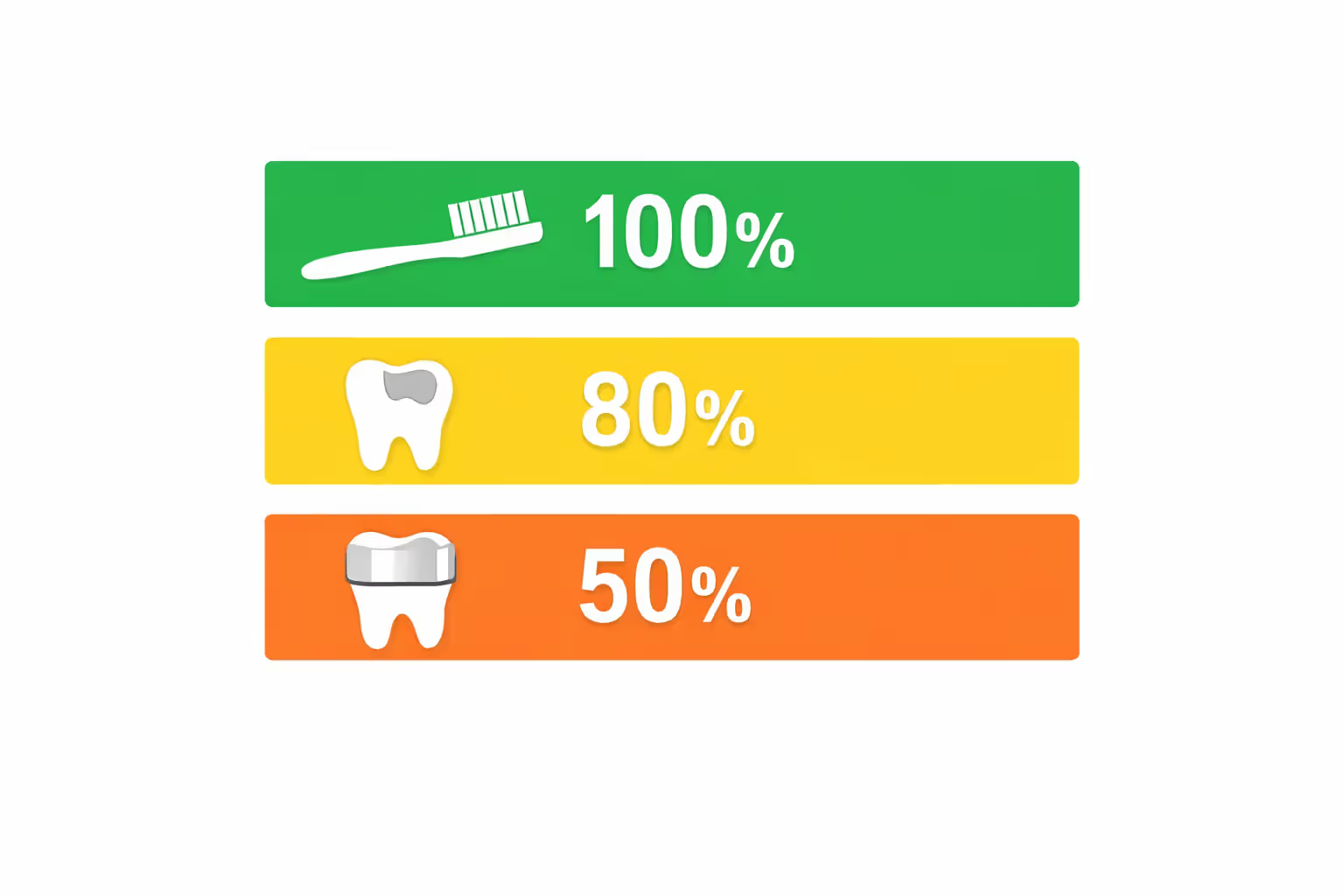
The dental industry settled on a 100-80-50 formula decades ago:
Preventive care (100%): Your routine cleanings, examinations, X-rays, and fluoride treatments get covered completely, usually capped at two cleaning visits annually. You might pay a small copay, but that's it.
Basic procedures (80%): Fillings, straightforward tooth extractions, and basic gum treatments receive 80% coverage once you've cleared your deductible. You're covering the remaining 20% plus anything your dentist charges above what the insurer considers reasonable.
Major procedures (50%): Crowns, bridges, dentures, root canals, and surgical work split right down the middle. Say your plan approves $1,200 for a crown—you'll pay $600 plus your deductible if you haven't met it yet.
Now here's the kicker that catches everyone off guard: the annual maximum. Most policies won't pay more than $1,000-2,000 in benefits each year, period. Hit that ceiling, and every additional dollar comes from your pocket until your plan year resets. That limit hasn't budged much since the 1970s, even though dental care costs have tripled.
Network restrictions matter too. PPO plans give you better rates with dentists who've agreed to the insurer's fee schedules. DHMOs require choosing a primary dentist and getting referrals for specialists, but you'll typically face lower premiums and pay fixed copays instead of percentages.
Author: Daniel Mercer;
Source: ladylesliebelize.com
How Primary and Secondary Dental Plans Work Together
Some folks maintain dual dental coverage—maybe one through work and another via their spouse's employer. When you're this fortunate, coordination of benefits rules determine which insurer pays what.
Your primary coverage comes from your own employer's plan in most cases. That insurer reviews claims first and pays based on their standard coverage formula. Then your secondary plan examines what's left unpaid and might pick up some or all of the remaining balance, within their own coverage caps.
Let's look at a real scenario: You're getting a crown that costs $1,400. Your primary plan has a $100 deductible and covers 50% of major work, so they pay $650. That leaves you with a $750 bill. Your secondary insurer reviews this remaining amount and might pay part of it based on their coverage levels and whether they also impose a deductible.
There's a ceiling though—both plans combined can't pay more than what the dentist actually charged. If your first plan pays 50% and your second also covers 50%, you might get the full treatment covered. But watch out for each plan's deductibles, waiting requirements, and yearly maximums eating into this benefit.
Supplemental dental policies specifically target the gaps your primary coverage leaves behind. These work particularly well when your workplace plan maxes out at a low annual benefit. A supplemental policy might add another $1,000-2,000 in yearly coverage, essentially doubling what you have available.
People on Medicare often buy standalone dental plans since Original Medicare ignores routine dental care completely. Medicare Advantage programs sometimes bundle in dental benefits, though what's actually covered depends heavily on which specific plan and geographic area you're looking at.
Claim filing with two policies means submitting to your primary insurer first, then sending their explanation of benefits to your secondary carrier. Most dental offices handle this coordination themselves, but expect the payment process to stretch several weeks longer.
Waiting Periods and Coverage Limitations
Insurance companies hate adverse selection—that's when people only buy coverage right before they need expensive work. They combat this with waiting periods that can seriously delay your access to treatment.
Checkups and cleanings start immediately. Schedule your routine care the day your coverage begins. Fillings and other basic treatments require a 3-6 month wait after your policy starts. Major work faces the longest delays, typically 6-12 months.
Need a root canal and crown but just signed up for insurance? You might be waiting a full year before your plan contributes even a dollar toward that $2,500 treatment. Some people try gaming the system by timing enrollment strategically, but insurers have caught on—treatments started before waiting periods end get denied, even if you finish them afterward.
Those "no waiting period" plans marketed for immediate major work sound tempting, right? Read the details first. They usually charge substantially higher premiums, impose stingy annual maximums, or lock you into 24-month contracts. Run the numbers—paying out-of-pocket and joining a standard plan afterward often costs less.
Pre-existing condition clauses create another headache. If your dentist documented a cavity or recommended a crown before your coverage started, insurers may label this pre-existing and deny the claim even after waiting periods expire. Always request a pre-treatment estimate from your insurer before scheduling major work.
Annual maximums reset on your plan anniversary, not January 1st. Coverage starting in April means your new benefit period begins each April. Smart patients schedule expensive procedures strategically around this reset date, spreading treatment across two plan years to maximize benefits.
Missing tooth clauses trip up many people. Lots of plans refuse to cover replacement of teeth you lost before buying coverage. Lost a tooth five years back and want an implant now? Your insurer might reject the entire claim.

Author: Daniel Mercer;
Source: ladylesliebelize.com
What to Do When You Can't Afford Dental Work With Insurance
Carrying dental insurance doesn't guarantee affordable treatment. Between deductibles, coinsurance, and those annual maximums, patients often face bills running several thousand dollars despite having coverage.
Take someone needing two crowns, a root canal, and periodontal treatment totaling $6,500. A typical plan covering 50% of major work up to a $1,500 yearly maximum will pay $1,500—leaving the patient stuck with a $5,000 bill. Most people don't have that kind of cash sitting around.
Hit your annual maximum mid-treatment? Talk with your dentist before continuing. Many offices offer payment plans stretching costs across 6-24 months, often interest-free if you stick to the schedule. This keeps your treatment on track while making costs digestible.
Negotiating fees happens more than you'd think. Dentists aware you're paying out-of-pocket may cut charges 10-30%, especially for cash payments that skip credit card fees and insurance paperwork. Just asking "Can we discuss some flexibility on this cost?" often yields savings.
Some dentists run in-house membership programs for uninsured patients or those who've burned through annual benefits. You pay a yearly fee of $200-400 and get discounted rates on all procedures—similar to a savings plan but exclusive to that practice.
Alternatives to Traditional Insurance
Dental savings plans aren't actually insurance—they're discount programs. Pay an annual membership of $100-200 and receive 10-60% discounts on most treatments at participating dentists. Zero deductibles, no waiting periods, no annual caps.
These plans shine for people needing immediate major work or consistently blowing past insurance annual maximums. A $150 membership saving you 30% on $4,000 of dental work means $1,200 in your pocket—outperforming many insurance policies after you factor in premiums and cost-sharing.
CareCredit and similar healthcare financing products offer credit lines usable at participating providers. Approved applicants get 6-24 months of interest-free promotional financing. Miss one payment or fail to clear the balance before the promo ends, though, and you'll face deferred interest charges on the entire original amount at rates often exceeding 26%.
HSAs and FSAs let you pay dental expenses with pre-tax dollars, effectively discounting costs by your tax bracket percentage. In a 22% tax bracket, a $1,000 dental bill really costs you $780 in actual spending power when paid through these accounts.
Finding Low-Cost or Free Dental Care
Dental schools deliver supervised care at 30-50% of typical fees. Students handle treatments under faculty supervision, which makes appointments longer but maintains quality standards. Most dental schools welcome patients needing everything from cleanings to complex restorative procedures.
Federally-funded community health centers operate on sliding fee scales tied to income. Many charge just $20-50 per visit regardless of services rendered. Find centers near you through the HRSA website.
State and local dental societies sponsor occasional free care events where volunteer dentists serve underserved populations. These events typically happen once or twice yearly on a first-come, first-served basis.
Mission of Mercy and Remote Area Medical clinics bring portable dental setups to underserved areas, providing free extractions, fillings, and cleanings over one or two days. Patients sometimes camp overnight for spots, but thousands receive care worth hundreds or thousands of dollars.
Getting Dental Work Without Insurance
Dental care costs without insurance swing wildly based on your location, provider choice, and procedure complexity. Knowing typical price ranges helps with budgeting and comparison shopping.
| Procedure | Average Total Cost | Typical Insurance Coverage % | Patient Out-of-Pocket Cost |
| Routine Cleaning | $100–$150 | 100% | $0–$25 copay |
| Composite Filling | $200–$400 | 80% | $40–$80 + deductible |
| Root Canal | $800–$1,500 | 50% | $400–$750 + deductible |
| Porcelain Crown | $1,200–$1,800 | 50% | $600–$900 + deductible |
| Simple Extraction | $150–$300 | 80% | $30–$60 + deductible |
| Surgical Extraction | $300–$650 | 50% | $150–$325 + deductible |
| Full Denture Set | $1,500–$3,000 | 50% | $750–$1,500 + deductible |
| Dental Implant | $3,000–$5,000 | Often not covered | $3,000–$5,000 |
Paying without insurance means covering the full fee-for-service rate. Interestingly, many dentists charge insured patients based on contracted rates running 20-40% lower than their standard fees. Ask about self-pay rates or cash discounts—you might access similar pricing.
Dental schools remain your best bet for affordable care without coverage. That $1,500 crown at a private practice might run $600-800 at a dental school. Treatment takes longer given the educational setting, but quality standards stay high.
FQHCs charge based on sliding fee scales tied to federal poverty guidelines. A four-person family earning $60,000 yearly might pay 30% of standard fees, while lower earners pay proportionally less. Some patients qualify for completely free care.
Dental savings plans offer another avenue for the uninsured. Programs like Careington, DentalPlans.com, and Cigna Dental Savings connect members with participating dentists who provide discounted fees. Annual membership runs $100-200 for individuals or $150-350 for families.
Corporate dental chains like Aspen Dental sometimes run promotional pricing for uninsured patients. New patient specials might bundle exams, X-rays, and cleanings for $59-99. These offices also generally provide in-house financing.
Patients make a huge mistake assuming they're priced out without insurance. Dental schools, community health centers, and savings plans routinely deliver treatment at 40-60% of standard fees. The trick is researching your options before you're in a dental emergency with no time to compare costs
— Dr. Maria Chen
Choosing Dental Insurance for Major Work
Knowing you need extensive dental work means your plan selection requires deeper analysis than just comparing monthly premiums. The wrong choice can stick you with thousands in uncovered expenses.
Plans advertising zero waiting periods for major work exist, but expect compromises. These policies typically charge premiums 50-100% higher than standard plans, impose lower annual maximums around $1,000, or lock you into 24-month commitments with early termination penalties.
Calculate total cost over the coverage period. A no-wait plan charging $75 monthly ($900 yearly) with a $1,000 maximum provides $2,000 in potential value over two years after subtracting premiums. Compare this against paying out-of-pocket with cash discounts or using a dental savings plan.
Coverage percentages outweigh premiums when major work looms. A plan covering 60% of major procedures versus the standard 50% saves you $600 on a $6,000 treatment plan. That difference exceeds what you'd save by choosing a policy with $20 lower monthly premiums.
Annual maximums become critical when you need extensive treatment. If you're facing $8,000 in dental work, a plan with a $2,000 maximum saves you the same as one with a $1,000 maximum—you'll slam into either ceiling quickly. Focus instead on coverage percentages and whether unused benefits carry forward.
Network size and provider access affect both cost and convenience. Narrow networks offer lower premiums but restrict choices. If you've got an established dentist relationship, verify they participate before buying any plan. Out-of-network care typically costs 20-40% more even with coverage.
Some employer plans offer buy-up options during open enrollment. You might pay an extra $15-30 monthly for enhanced coverage with higher annual maximums, better coverage percentages, or shorter waiting periods. Anticipating major work? This upgrade usually pays for itself.
Individual plans purchased outside employment typically cost more and deliver less generous benefits than group coverage. However, they provide continuity between jobs or for self-employed people. Compare marketplace options carefully—some states offer substantially better individual dental plans than others.
Strategic enrollment timing can minimize out-of-pocket costs. Need major work but it's not urgent? Enrolling 12 months before treatment lets you satisfy waiting periods while paying premiums that might total less than your coinsurance would be.

Author: Daniel Mercer;
Source: ladylesliebelize.com
Frequently Asked Questions About Dental Insurance
Dental insurance runs on fundamentally different mechanics than medical coverage, with annual dollar caps, substantial cost-sharing, and waiting periods that frustrate people expecting comprehensive protection. The standard 100-80-50 coverage structure means you'll pay considerable amounts even with insurance, particularly for major work.
Grasping how primary and secondary coverage coordinate, understanding waiting period impacts, and recognizing the true cost of exceeding annual maximums helps you make smarter decisions about purchasing coverage and scheduling treatments. When insurance falls short, alternatives like dental schools, community health centers, savings plans, and negotiated payment arrangements can make care accessible.
The key is aligning your coverage strategy with your actual dental needs. Rarely need more than preventive care? A basic plan with low premiums makes sense. Anticipating major work? Focus on coverage percentages and annual maximums rather than monthly premium differences. Need immediate treatment? Recognize that dental savings plans or direct payment with negotiated discounts often costs less than insurance with waiting periods.
Dental care doesn't have to break the bank, but it requires research, planning, and sometimes creative approaches to bridge the gap between insurance coverage and actual costs.
Related Stories
Read more
Read more


The content on this website is provided for general informational and educational purposes only. It is intended to offer guidance on dental insurance topics, including coverage options, premiums, deductibles, waiting periods, annual maximums, claims processes, and procedures that may be covered by insurance such as implants, braces, crowns, dentures, and preventive care. The information presented should not be considered medical, dental, financial, or professional insurance advice.
All articles and explanations published on this website are for informational purposes only. Dental insurance policies may vary between providers, and details such as coverage limits, exclusions, reimbursement rates, waiting periods, and eligibility requirements can differ depending on the insurer, plan, and individual circumstances.
While we strive to keep the information accurate and up to date, this website makes no guarantees regarding the completeness or reliability of the content. Use of this website does not create a professional relationship. Visitors should review official policy documents and consult with licensed dental or insurance professionals before making decisions regarding dental care or insurance coverage.