
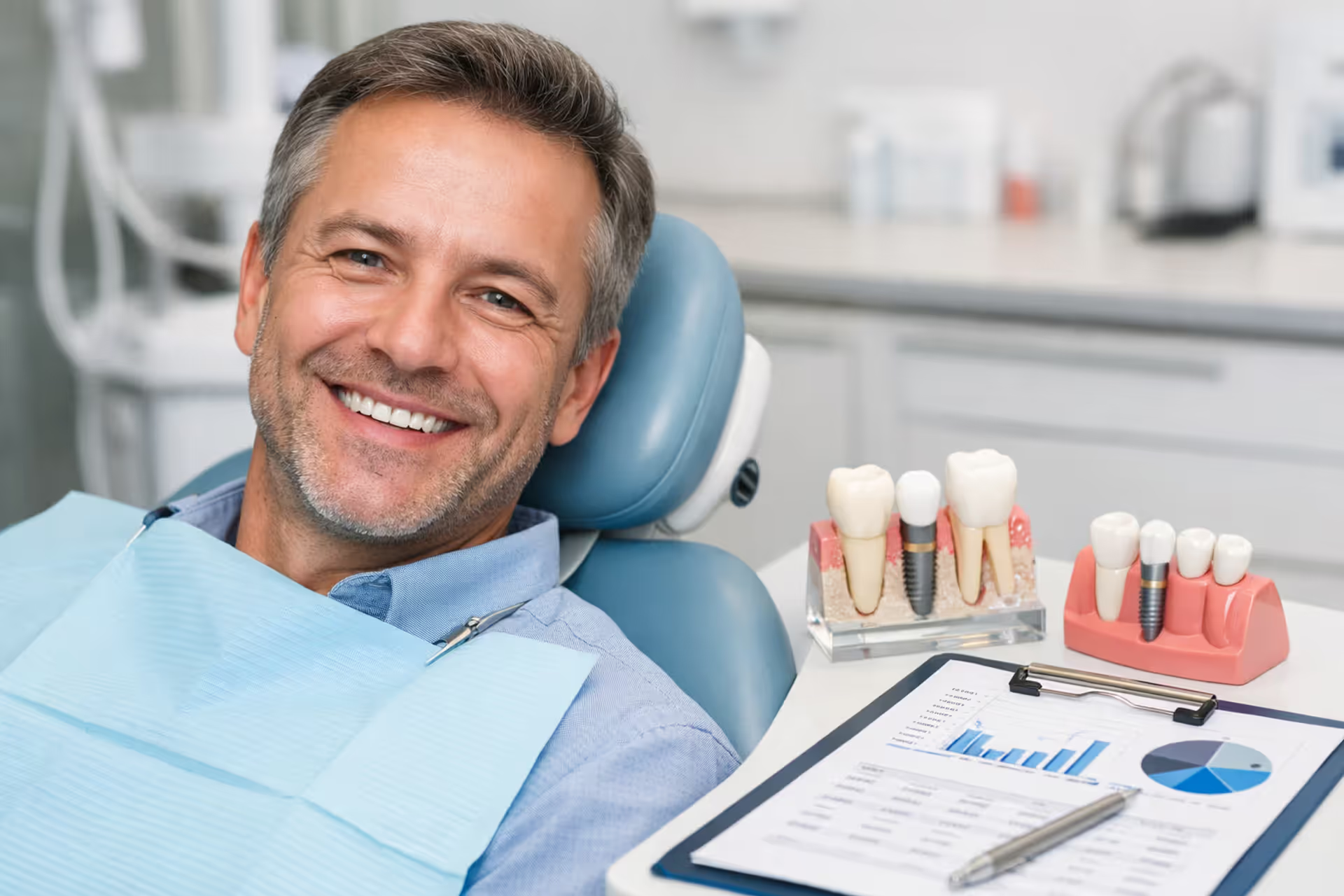
Smiling middle-aged patient sitting in a modern dental clinic chair with dental implant models and cost documents on a nearby table
Full Mouth Dental Implants Cost with Insurance Guide

Getting your entire smile rebuilt with dental implants? You're looking at a financial commitment that'll probably rank up there with buying a car—maybe even a really nice car. The whole process can completely change how you eat, speak, and feel about yourself, but let's be honest: the numbers can be terrifying.
Here's what most people find out the hard way: your current dental plan probably won't cover much. Like, frustratingly little. But here's the thing—some plans do chip in, certain timing strategies can double your benefits, and occasionally medical insurance will surprise you by paying for the bulk of it. Knowing these angles? That's the difference between paying $50,000 out of pocket versus $25,000.
How Much Do Full Mouth Dental Implants Cost Without Insurance
Before we dive into insurance, let's establish what you're actually paying for. Depending on your specific situation and where you live, expect anywhere from $24,000 to $100,000 for one arch (that's either your top or bottom teeth). Double that if you need both.
The All-on-4 technique sits at the lower end—usually $20,000 to $40,000 per arch. Your surgeon places four implants strategically in your jawbone and attaches a full set of prosthetic teeth to them. Why cheaper? Fewer implants means less surgery time, and you can often skip bone grafts entirely because the angled placement works around areas where bone has deteriorated.
Going the traditional route—individual implants for each tooth position—can push past $90,000 for your whole mouth. You're talking 6-8 implants minimum per arch, more surgical appointments, longer healing periods. It's the gold standard in terms of individual tooth function, but the price reflects that complexity.
Let's break down where your money actually goes:
Surgical fees: Your oral surgeon's time and skill represent $15,000-$30,000 of the bill. Need a sinus lift because your upper jaw bone is too thin? Add $3,000-$8,000. Ridge augmentation to build up bone width? Another $3,000-$8,000 per procedure.
Implant hardware: Each titanium post runs $1,000-$3,000. Premium manufacturers like Nobel Biocare or Straumann cost more than economy brands, but their 20-year success rates justify the premium for most patients.
Prosthetic restoration: The actual teeth attached to your implants cost $2,500-$8,000 per arch. Zirconia (looks amazing, lasts forever) costs roughly double what acrylic does (still looks good, needs replacement sooner).
Diagnostic imaging: Before surgery, you'll need a 3D cone beam CT scan ($300-$600) and digital treatment planning ($500-$1,200) so your surgeon knows exactly where to place each implant.
Where you live dramatically affects pricing. Manhattan? You might pay $80,000 for the same procedure that costs $45,000 in Oklahoma City. Coastal metro areas generally charge 30-50% more than Midwest or Southern practices. Same credentials, same implants, vastly different bills.
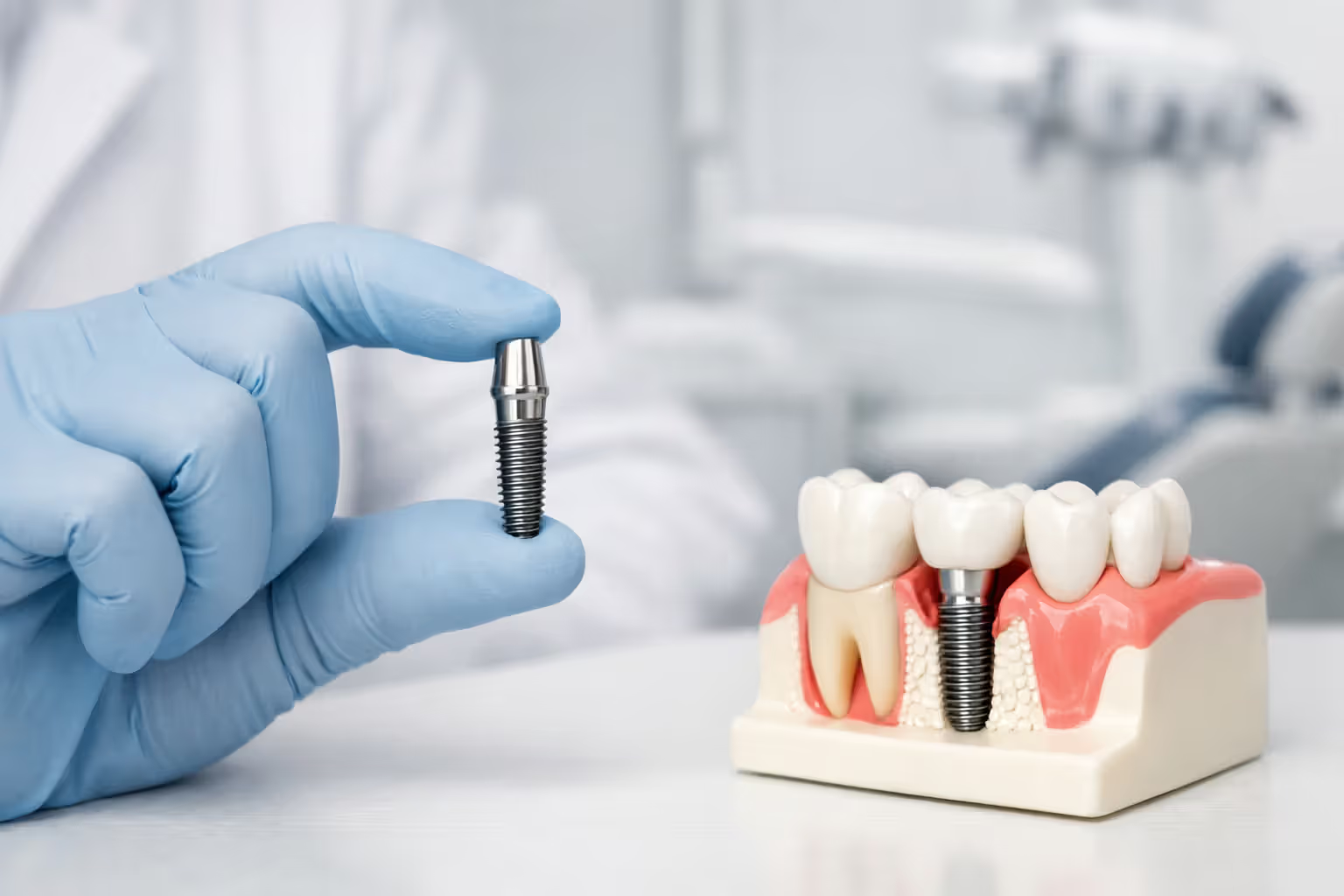
Author: Ashley Whitford;
Source: ladylesliebelize.com
Will Insurance Cover Dental Implants
Most dental policies call implants "cosmetic" or "elective," which is insurance-speak for "we're not paying for this." This label sticks even when you literally can't chew food properly anymore.
Why? Most dental insurance policies were written in the 1970s and 80s when implants were experimental and wildly expensive. Back then, dentures and bridges were the expected solution for missing teeth. Even though implants have become completely mainstream over the past twenty years, insurance companies haven't updated their playbooks.
Current stats: roughly 5-10% of employer-sponsored plans now include some implant coverage. That's up from basically zero a decade ago. When these policies do cover implants, they typically pay 50% of the cost—but that's still subject to annual maximums that rarely break $3,000.
Watch out for these common exclusions:
Cosmetic restrictions: Lost your teeth to cavities, gum disease, or just years of neglect? Insurance considers that preventable, and they won't cover what they see as an upgrade from dentures.
Missing tooth clauses: Teeth that were already gone when you signed up for the policy? Not covered. This prevents people from buying insurance solely to fund an already-planned procedure.
Waiting periods: Even plans that include implant benefits make you wait 12-24 months before you can use them. You'll pay premiums the whole time without accessing the benefit.
Annual maximums: The plan might cover implants at 50%, but if your annual max is $2,000 and your procedure costs $50,000, you're getting $2,000. The math is brutal.
A small percentage of cases qualify as "medically necessary." Car accident destroyed your teeth? Cancer treatment required jaw reconstruction? Born with a congenital condition affecting tooth development? These situations sometimes get approved, but you'll need extensive documentation and should expect to file appeals.
I work with patients every day who have $2,000 annual maximums and need $60,000 of dental work. The frustration is real. What most people don't realize is that with the right documentation and appeal strategy, we can sometimes get medical insurance to cover what dental insurance won't
— Dr. Jennifer Martinez
What Dental Insurance Plans Cover Implants
Plan type matters enormously. Not all dental insurance works the same way, and the structure determines whether you'll see any coverage at all.
PPO plans give you the best shot at implant coverage. You can visit any dentist (though in-network costs less), and higher-tier PPOs sometimes offer implant riders—add-ons that expand coverage. These riders typically run $30-$60 monthly and cover 50% of implant costs up to your annual max.
HMO plans almost never cover implants. These plans focus heavily on prevention and basic procedures. The rare HMO that does include implants restricts you to specific network dentists and usually only covers single-tooth replacements, not full mouth work.
Indemnity plans are dinosaurs—rare but potentially generous. They reimburse a percentage of your dentist's charges without caring about networks. Annual maximums still limit your benefit, but fewer exclusions sometimes mean partial implant reimbursement.
Discount dental plans aren't actually insurance. You pay a membership fee and get access to negotiated rates—usually 15-30% below standard pricing. You're still paying the whole bill yourself, just at a discount. For full mouth implants, that might save $8,000-$15,000.
Supplemental Dental Insurance for Implants
Supplemental policies designed specifically for major dental work can fill the gap between standard coverage and reality. Cigna, Renaissance, and Spirit Dental all offer plans that layer on top of your regular insurance.
Here's how they differ from regular dental insurance:
Higher annual maximums: Standard plans max out at $1,500-$2,000. Supplemental policies push that to $5,000-$10,000 annually. Some eliminate maximums completely after you've been enrolled for three years.
Broader procedure coverage: Implants get treated like crowns or bridges—typically 50% coverage after you meet your deductible.
Longer waiting periods: Better coverage means more patience required. Major procedures often come with 12-24 month waiting periods. Planning ahead is essential.
Higher premiums: Robust supplemental coverage runs $60-$120 monthly. Do the math carefully: paying $1,200 annually for a policy that reimburses $3,000 toward a one-time procedure makes sense. Keeping that policy for years without using it? You're losing money.
Strategic play: Buy supplemental insurance 18-24 months before you plan to get implants. Pay the premiums during the waiting period, schedule your surgery when coverage kicks in, then cancel the policy afterward if you don't anticipate needing more major work.

Author: Ashley Whitford;
Source: ladylesliebelize.com
Does Medical Insurance Cover Dental Implants
Medical insurance occasionally pays for dental implants when they're fixing a medical problem rather than just replacing teeth. This distinction is huge but requires meticulous documentation.
Trauma and accident cases: Teeth destroyed in a car crash, assault, or workplace injury sometimes qualify for medical coverage. The critical factor is proving the loss resulted from acute trauma, not chronic dental problems. ER records, police reports, and immediate post-accident documentation strengthen your case significantly.
Cancer treatment: Patients who lost teeth or jaw bone to oral cancer, radiation therapy, or tumor removal frequently qualify. A letter from your oncologist explaining why implants are medically necessary often persuades insurers.
Congenital conditions: Born with ectodermal dysplasia, cleft palate, or other conditions affecting tooth development? You might get medical coverage for implants. Genetic testing results and specialist documentation support these claims.
Sleep apnea: Rarely, implants that stabilize dentures to improve sleep apnea have received medical insurance approval. You'll need sleep study results and a physician's letter connecting dental instability to your breathing problems.
Getting medical coverage approved involves pre-authorization requests, peer-to-peer reviews (your surgeon speaks directly with the insurance company's medical director), and often multiple appeals. Success rates hover around 15-20% even for well-documented cases.
When medical insurance does approve implants, they typically cover 70-80% after you meet your deductible—substantially better than dental insurance. But you'll still need to satisfy your medical deductible first (often $1,500-$6,000) before coverage begins.
How Much Are Dental Implants with Insurance
Real-world costs depend on your specific policy, but patterns emerge. Let me show you what different coverage scenarios actually look like.
Basic dental insurance might cover extractions and bone grafting but nothing for the implants themselves. Say extractions cost $2,400 and bone grafts run $6,000. Insurance covering 80% of extractions and 50% of grafts would reimburse roughly $4,920. On a $50,000 full mouth procedure, that's about 10% coverage.
Better scenarios involve stacking multiple insurance sources or having premium supplemental plans. Here's what you can realistically expect:
| Insurance Type | Average Full Mouth Cost | Typical Coverage % | Patient Pays | Annual Maximum Limits |
| No insurance | $50,000 | 0% | $50,000 | N/A |
| Basic dental plan | $50,000 | 5-10% | $45,000-$47,500 | $1,500-$2,000 |
| PPO with implant rider | $50,000 | 15-25% | $37,500-$42,500 | $3,000-$5,000 |
| Supplemental plan (stacked) | $50,000 | 25-35% | $32,500-$37,500 | $5,000-$8,000 |
| Medical insurance (approved) | $50,000 | 50-70% | $15,000-$25,000 | Varies widely |
These percentages assume you haven't already used up your annual maximum on other work. Used $1,000 of your $2,000 maximum on crowns earlier this year? Only $1,000 remains available for implants.
Smart timing spreads coverage across calendar years. Schedule extractions and bone grafting in November or December, then place implants in January or February. You've now accessed two years of annual maximums, potentially doubling your total insurance benefit.
Some people coordinate benefits between two policies—maybe one through their job and another through their spouse's employer. Coordination of benefits rules vary, but you might hit 80-100% coverage on certain components when primary and secondary insurance combine.
Best-case scenario involves medical insurance approval for trauma or medical necessity. A patient whose teeth were destroyed in a car accident might see medical insurance cover 80% of a $50,000 procedure after a $3,000 deductible—that's $37,000 in coverage and $13,000 out of pocket.
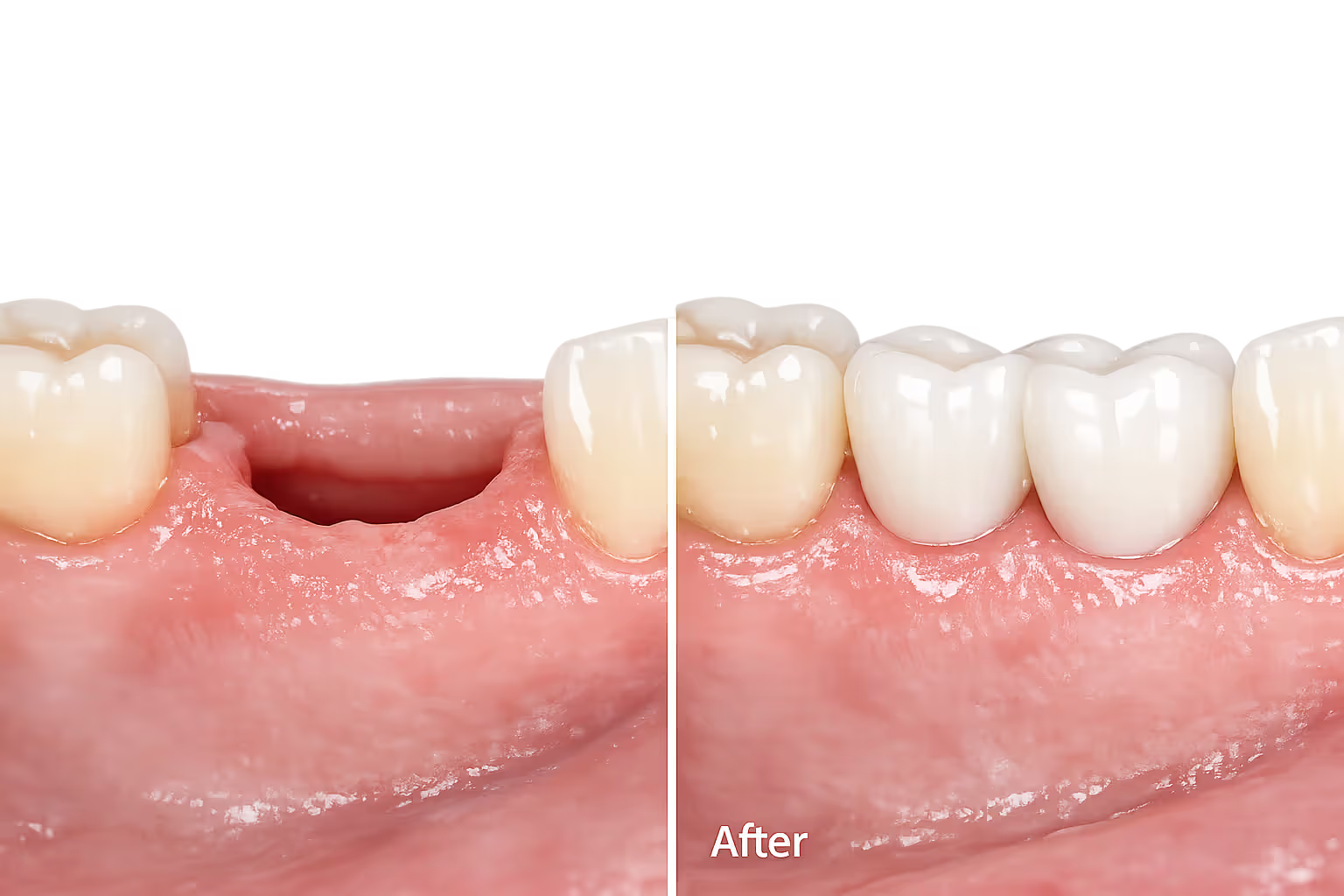
Author: Ashley Whitford;
Source: ladylesliebelize.com
How to Maximize Your Dental Implants Insurance Coverage
Smart planning transforms minimal coverage into actual financial help. Start these steps 6-12 months before your planned procedure date.
Obtain pre-authorization: Submit detailed treatment plans to your insurer before scheduling anything. Pre-authorization doesn't guarantee payment, but it shows you exactly what they'll cover and reveals denial reasons you can address upfront.
Document medical necessity: Even if your policy excludes cosmetic procedures, thorough documentation sometimes reclassifies implants as medically necessary. Get letters from your dentist explaining how missing teeth impair your nutrition, speech, or jaw function. A nutritionist documenting weight loss from chewing difficulties strengthens your case. Speech therapist evaluations showing articulation problems add powerful supporting evidence.
Code procedures strategically: Reimbursement often depends on how procedures get coded. CDT code D6010 (surgical placement of implant) frequently gets denied, while codes for bone grafting (D7950) or sinus lifts (D7951) see better approval rates. Work closely with your dentist's billing staff to code each component accurately but strategically.
Appeal denials systematically: Initial denials are standard operating procedure, but 30-40% of appeals succeed. Your first appeal should include additional documentation—specialist letters, research studies establishing implants as standard care, and specific policy language supporting coverage. Second-level appeals often involve peer-to-peer reviews where your surgeon discusses your case directly with the insurance company's dental director.
Split treatment across years: Annual maximums reset every January 1st. If your treatment involves multiple phases, schedule them to tap benefits across two or three calendar years. Extract teeth and perform bone grafting in December, place implants in June, attach final restorations the following January.
Maximize tax-advantaged accounts: Health Savings Accounts and Flexible Spending Accounts let you pay for dental work with pre-tax dollars. If you're in the 25% tax bracket, paying $40,000 through an HSA effectively saves $10,000 compared to using after-tax income. Max out contributions ($4,300 individual, $8,550 family for 2026) in the years before your procedure.
Request itemized estimates: Vague treatment plans get denied more frequently than detailed breakdowns. Ask for estimates that separately list each implant, abutment, crown, bone graft, and surgical fee. Itemization lets insurance approve covered components even when they deny others.

Author: Ashley Whitford;
Source: ladylesliebelize.com
Alternatives If Insurance Doesn't Pay for Dental Implants
When insurance falls short (and it usually does), several options make treatment financially accessible without sacrificing quality.
In-house payment plans: Many oral surgery practices offer interest-free payment plans for 12-24 months. You'll put down 20-30% and spread the balance across monthly installments. No credit check, no interest charges if you complete payments within the promotional window.
Medical credit cards: CareCredit and LendingClub dominate healthcare financing. They offer 0% APR promotional periods from 6-24 months depending on procedure cost. Major warning: if you don't pay the full balance before the promotional period ends, retroactive interest (often 26-30% APR) applies to the original amount. Set up automatic payments to avoid this expensive trap.
Dental schools: Accredited dental schools perform implant procedures at 30-50% below market rates. Treatment takes longer because students do the work under faculty supervision, and you'll have more appointments. Quality stays high—students use current techniques and equipment with experienced professors overseeing every step.
Dental tourism: Traveling to Mexico, Costa Rica, or Colombia for implants can slash costs by 50-70%. A $50,000 US procedure might run $18,000-$25,000 abroad, including travel. Risks include limited recourse for complications, difficulty attending follow-ups, and variable quality standards. Research credentials exhaustively and budget for potential revision work back home.
Phased treatment: Instead of full mouth restoration immediately, replace teeth gradually. Start with implants in visible areas (front teeth), then add back teeth as finances allow. This spreads costs across several years and multiple insurance benefit periods.
Clinical trials: Universities and implant manufacturers sometimes seek participants for research studies. You might receive free or heavily discounted treatment in exchange for letting researchers track your outcomes. Search ClinicalTrials.gov for active dental implant studies near you.
Nonprofit assistance: Organizations like Dental Lifeline Network and Donated Dental Services provide free dental care to elderly, disabled, or medically vulnerable patients meeting income requirements. Eligibility is strict, but qualifying patients receive comprehensive treatment at no cost.
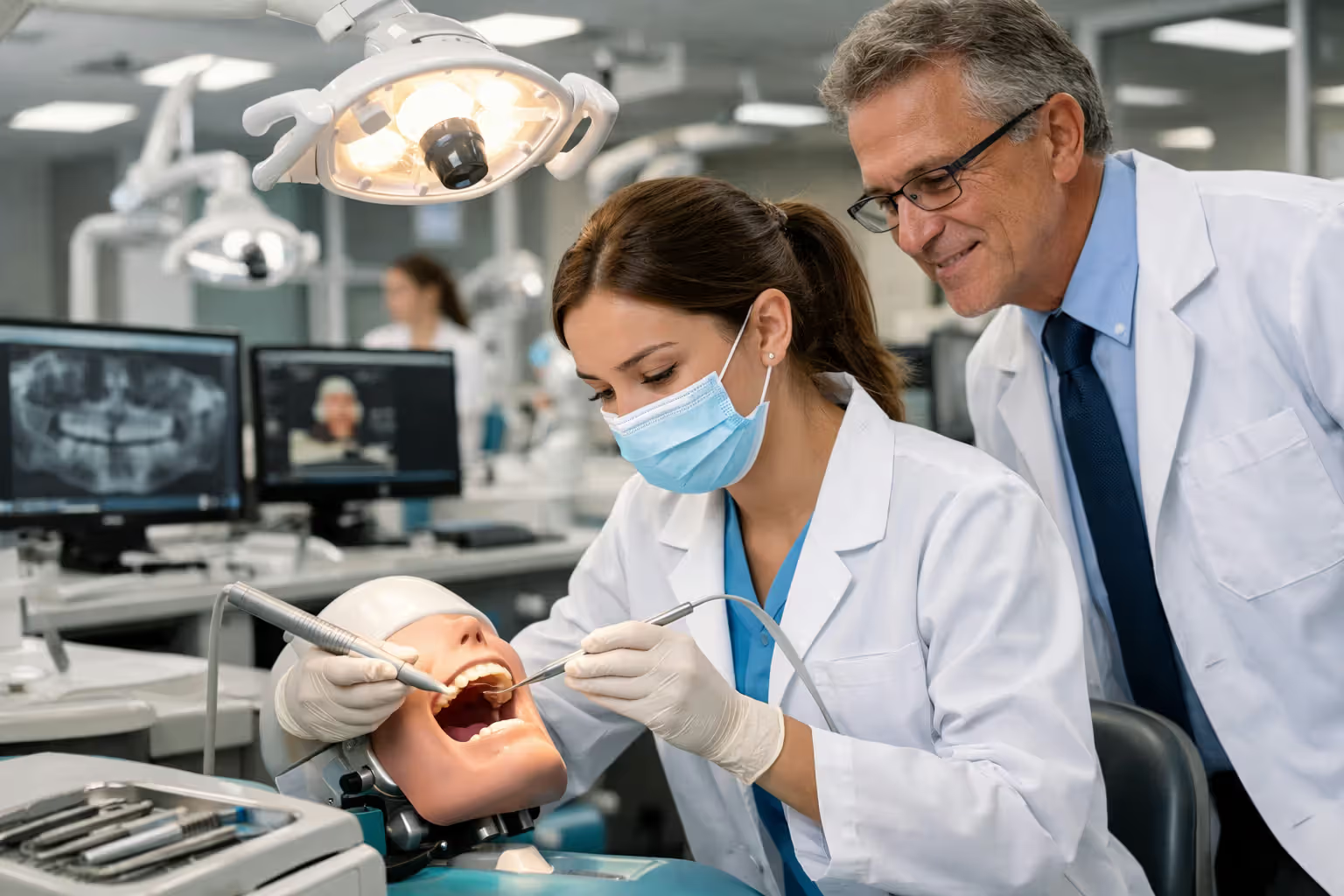
Author: Ashley Whitford;
Source: ladylesliebelize.com
Frequently Asked Questions About Dental Implant Insurance Coverage
Getting insurance to pay for full mouth dental implants requires realistic expectations combined with strategic planning. You'll probably pay most of the cost yourself, but maximizing available benefits can still save thousands.
Start by thoroughly reviewing your current coverage—specifically annual maximums, waiting periods, and exclusion lists. Contact your HR department or insurance broker to clarify whether your plan includes any implant coverage or if supplemental policies are available through your employer.
If your existing coverage proves inadequate, explore supplemental insurance at least 18 months before planned treatment. Waiting periods feel frustrating, but potential savings justify the delay for most patients.
For cases involving trauma, congenital conditions, or medical complications, pursue medical insurance coverage aggressively. The approval process demands persistence and meticulous documentation, but success means 70-80% coverage instead of 10-20%.
When insurance falls short, financing options and strategic treatment phasing make implants accessible without requiring full payment upfront. Avoiding the procedure entirely due to cost concerns often leads to worse outcomes—bone loss accelerates, remaining teeth shift, jaw function deteriorates.
The investment in full mouth dental implants extends well beyond cosmetic improvement. Patients consistently report better nutrition, improved confidence, and elimination of chronic pain associated with failing teeth or ill-fitting dentures. While insurance coverage remains limited, the long-term value often justifies out-of-pocket expense when you've exhausted other options.
Work closely with your oral surgeon's billing department throughout this process. Experienced staff members understand insurance nuances and can help structure treatment plans, code procedures favorably, and navigate appeals when necessary. Their expertise often makes the difference between minimal coverage and meaningful financial assistance.
Related Stories
Read more
Read more

The content on this website is provided for general informational and educational purposes only. It is intended to offer guidance on dental insurance topics, including coverage options, premiums, deductibles, waiting periods, annual maximums, claims processes, and procedures that may be covered by insurance such as implants, braces, crowns, dentures, and preventive care. The information presented should not be considered medical, dental, financial, or professional insurance advice.
All articles and explanations published on this website are for informational purposes only. Dental insurance policies may vary between providers, and details such as coverage limits, exclusions, reimbursement rates, waiting periods, and eligibility requirements can differ depending on the insurer, plan, and individual circumstances.
While we strive to keep the information accurate and up to date, this website makes no guarantees regarding the completeness or reliability of the content. Use of this website does not create a professional relationship. Visitors should review official policy documents and consult with licensed dental or insurance professionals before making decisions regarding dental care or insurance coverage.