
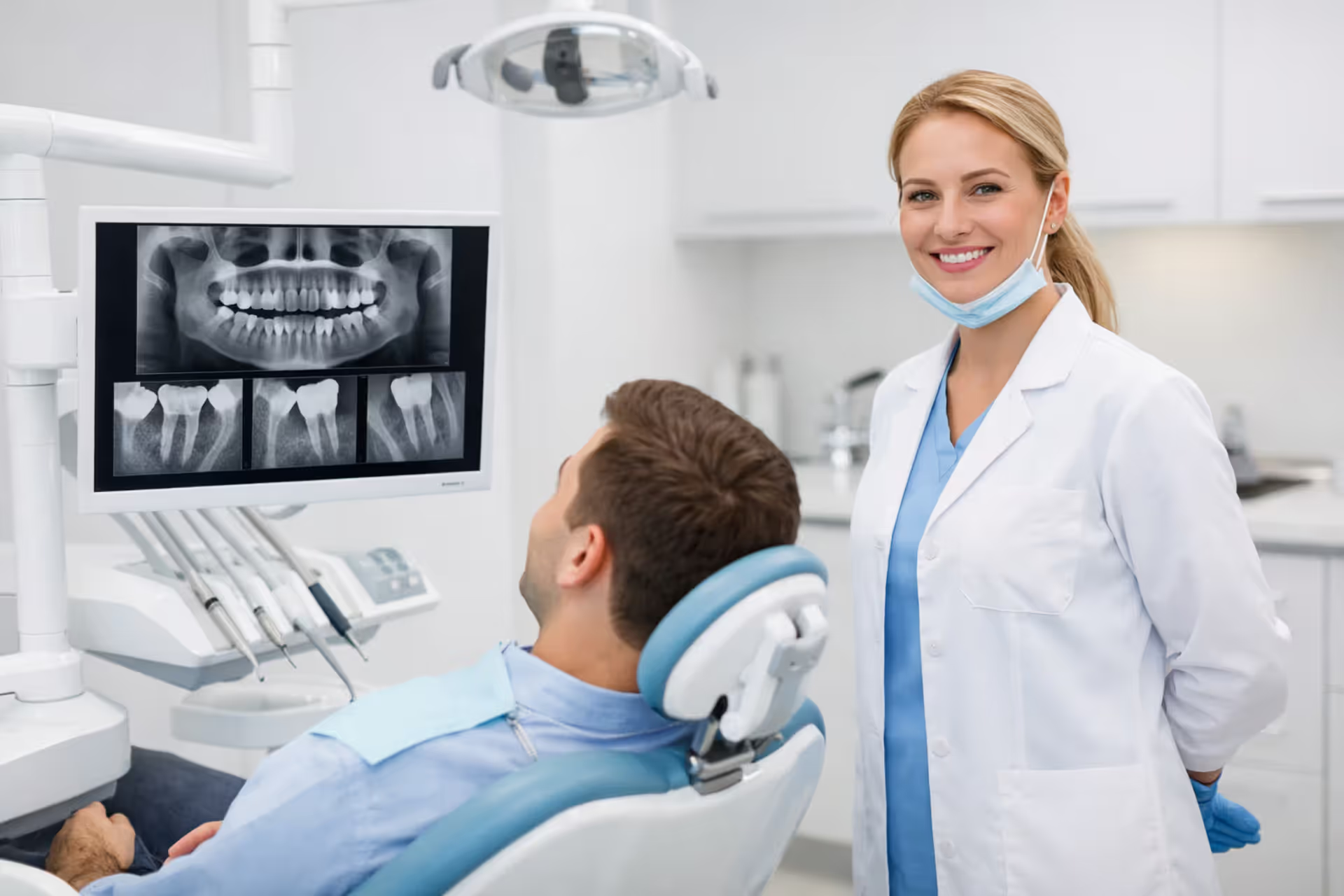
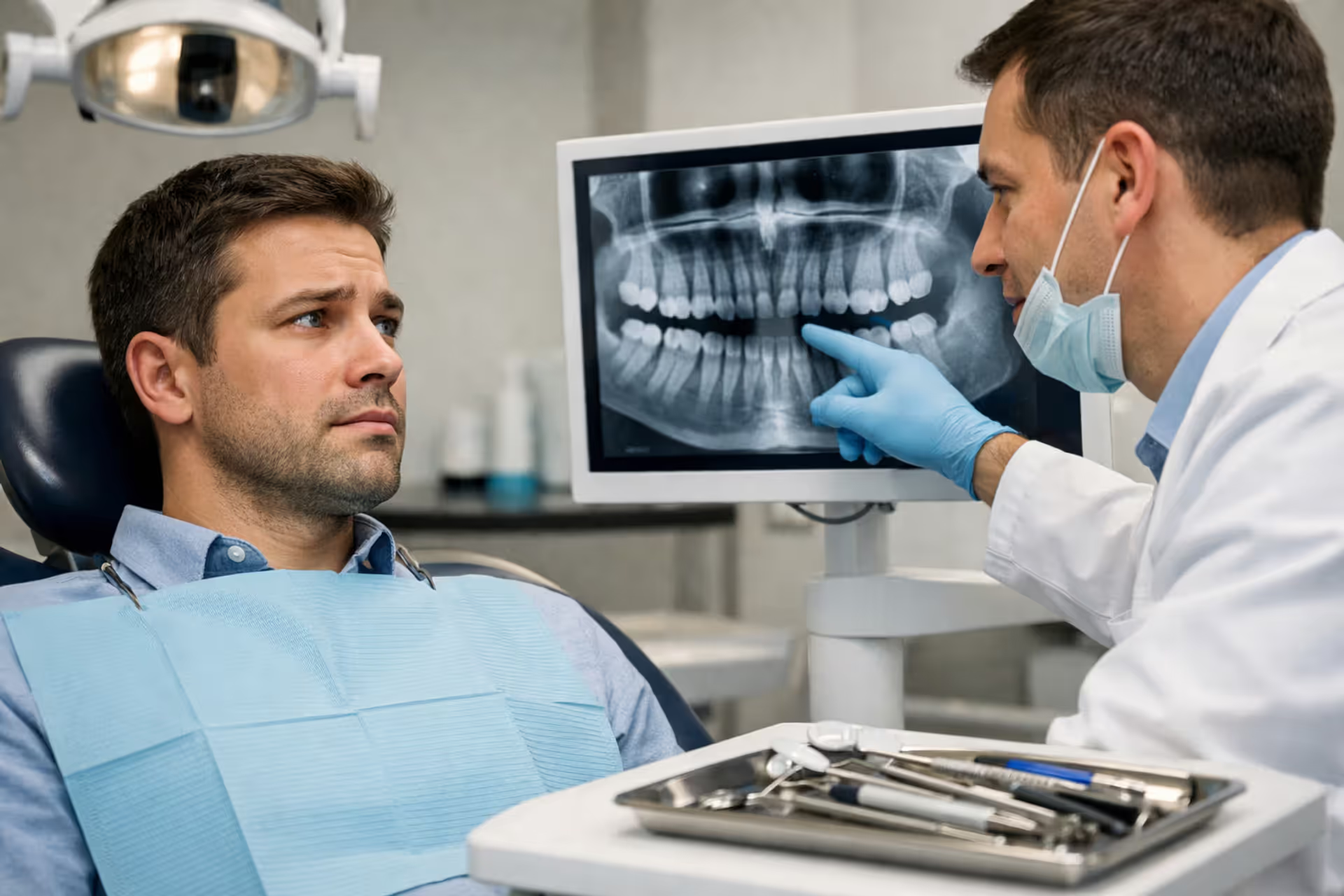
Modern dental office with a patient in a dental chair and a dentist reviewing dental x-ray images on a monitor screen
How Much Do Dental X Rays Cost With Insurance?

When you're sitting in the dentist's chair and they mention needing x-rays, your first thought is probably "what's this going to cost me?" If you've got dental insurance, you're looking at around $10-$50 coming out of your pocket for standard imaging. No coverage? That bill jumps to anywhere from $25 to north of $300, depending on what type of pictures your dentist needs to take.
Here's why that gap exists: insurance companies treat most routine x-rays as preventive care, which means they'll pick up 80-100% of the tab once you've cleared your deductible. But—and this is a big but—your actual costs swing wildly based on things like your plan's annual caps, how long you've been covered, and whether you're seeing someone in your insurance network.
The specifics of what you'll pay depend on multiple moving parts in your coverage. Your plan documents spell out which imaging procedures qualify for full coverage versus partial reimbursement, and those details make the difference between a $15 copay and a $100 surprise bill.
Average Cost of Dental X Rays by Type
Not all dental x-rays are created equal. The imaging your dentist orders depends on what they're trying to see. A quick bitewing that spots cavities hiding between teeth runs you far less than a 3D scan that maps every millimeter of your jawbone.
Let's break down what different procedures actually cost:
| X-Ray Type | Average Cost Without Insurance | Typical Cost With Insurance | What Insurance Usually Covers (%) |
| Bitewing (2-4 images) | $25-$75 | $0-$20 | 80-100% |
| Panoramic | $100-$200 | $20-$50 | 70-100% |
| Periapical (single tooth) | $15-$40 | $0-$15 | 80-100% |
| Full Mouth Series (FMX) | $150-$350 | $30-$100 | 50-100% |
| 3D Cone Beam CT | $250-$600 | $100-$300 | 0-50% |
Bitewings represent the bread-and-butter imaging most people get once or twice a year during cleanings. They're quick, simple, and focus on the crowns of your teeth where cavities love to hide. Without coverage, you'll rarely see charges above $75 for this type. The cost of dental x rays without insurance stays reasonable here because the procedure takes maybe five minutes start to finish.
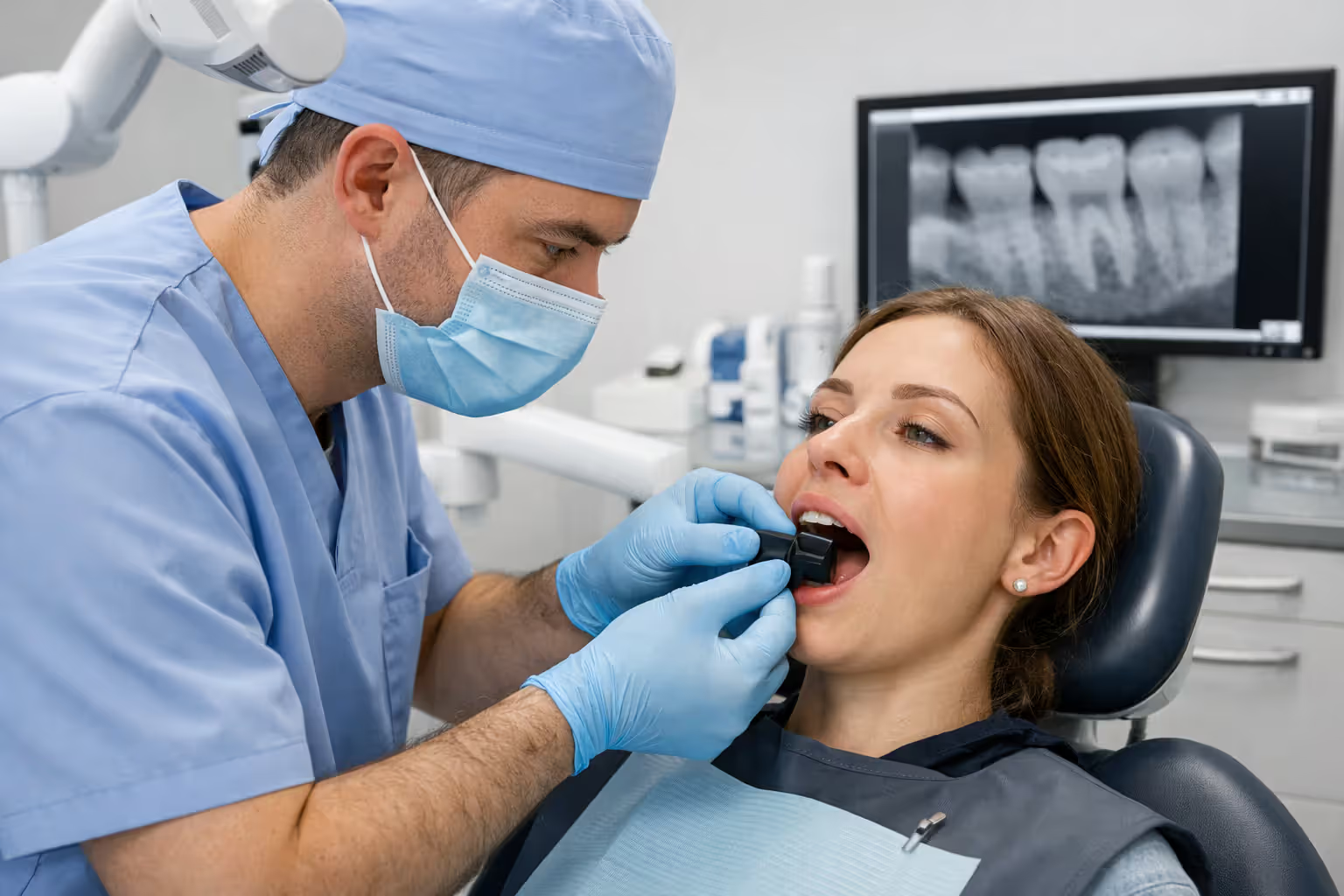
Panoramic imaging captures everything—teeth, jaw joints, sinuses, all in one shot. Orthodontists love these before starting braces. Oral surgeons order them before pulling wisdom teeth. The machine rotates around your head while you bite down on a positioning device. Expect $100-$200 if you're paying out of pocket, though some offices knock that down when it's bundled with new patient exams.
Full mouth series involve taking 14-21 separate images to document every tooth from crown to root. Dentists usually recommend these every three to five years for patients without major oral health issues. The dental x ray cost without insurance for a complete FMX ranges $150-$350—one of your heftier diagnostic expenses. Think of it as creating a complete baseline of your dental health.
Author: Daniel Mercer;
Source: ladylesliebelize.com
3D cone beam CT scans represent the high-tech end of dental imaging. These create detailed three-dimensional maps used for implant placement, complicated extractions, and diagnosing jaw joint problems. Insurance companies often classify these as specialty procedures with minimal coverage, sometimes none at all, even when your dentist says they're medically necessary.
What Dental Insurance Typically Covers for X Rays
Most dental plans operate on a three-tier system: preventive care gets covered at 80-100%, basic stuff at 70-80%, and major work at 50%. Routine x-rays usually land in that first bucket—the preventive category where coverage is strongest.
But here's where it gets tricky: timing and context matter more than the procedure itself. Schedule bitewings during your regular six-month cleaning? Preventive coverage applies, and you'll probably pay little to nothing. Need those same bitewings to figure out why your tooth hurts on a random Tuesday? Some carriers reclassify that as diagnostic care with weaker coverage.
Most plans let you have two checkups yearly with corresponding x-rays, and this preventive care typically doesn't chip away at your annual maximum (usually $1,000-$2,000). Once you need imaging beyond the standard schedule, though, those charges might start counting against your yearly cap.
New members face waiting periods with certain plans. Preventive services usually start immediately, but some insurers make you wait 6-12 months before they'll cover specific diagnostic imaging. If you've just signed up for coverage and need a full mouth series or panoramic scan, check your policy details first to avoid getting stuck with the full bill during your waiting period.
Network status creates massive price swings. In-network dentists have pre-negotiated rates with your insurer—you pay the contracted amount even if the dentist's usual fee runs higher. Out-of-network providers charge whatever they want, and your insurance reimburses based on "usual and customary" rates for your zip code. That leaves you paying the difference, which can be substantial.
PPO plans give you flexibility to see any dentist, with better coverage when you stay in-network. HMO plans lock you into a specific network but often charge zero or minimal copays for preventive x-rays. Discount dental plans aren't actually insurance—they're more like membership programs that get you 10-60% off standard fees at participating dentists.
Cost of Dental X Rays Without Insurance
Roughly 64 million Americans lack dental coverage, which means understanding how much is dental x ray without insurance becomes a crucial part of healthcare planning. Without negotiated insurance rates, you're paying whatever the dentist decides to charge—and those prices bounce around considerably.
Location drives pricing more than almost anything else. That $30 bitewing in rural Iowa might cost $75 in Manhattan. Rent, staff salaries, malpractice insurance, equipment financing—all those overhead costs vary by location and get passed along to patients.
General dentists versus specialists price their services differently too. An oral surgeon might charge $200 for a panoramic x-ray while your general dentist charges $125 for identical imaging. Specialists justify premium pricing through extra training and specialized equipment, but for routine imaging, general dentists typically offer better value.
Many practices offer "cash discounts" if you pay when services are rendered rather than billing insurance. These savings usually run 5-20% off standard fees. Here's the thing: most offices won't advertise these discounts prominently, but they'll apply them if you ask. Always inquire about cash pricing before your appointment starts.
Corporate chains like Aspen Dental sometimes run new patient promotions—free x-rays with initial exams, that sort of thing. These deals can save money upfront, just read the fine print carefully. Some promotions come with strings attached, like requirements that you complete recommended treatment at their office. Their treatment plans can be more aggressive than independent practitioners.
Emergency situations deserve special mention. Show up at an emergency dental clinic with severe pain, and they'll snap diagnostic x-rays before treating you. Emergency clinics typically charge 20-50% premiums over regular offices because they're open odd hours and see you immediately. That $25 periapical x-ray from your regular dentist? Might run $40-$50 at an emergency clinic.

Author: Daniel Mercer;
Source: ladylesliebelize.com
Factors That Affect Dental X Ray Pricing
Technology investments shape what practices charge. Offices still using traditional film x-rays (increasingly rare these days) face lower equipment costs but higher processing expenses. Digital systems require serious upfront investment—anywhere from $5,000 to $50,000 depending on sophistication—but each individual image costs less and displays instantly. Dentists build these technology costs into their fee schedules.
The complexity of what your dentist needs to see changes the equation dramatically. A single periapical x-ray checking one tooth takes a few minutes with minimal positioning. A full mouth series demands careful patient positioning, multiple exposures from different angles, and significantly more time from both dentist and assistant. This labor component explains why dental x rays without insurance carry higher price tags for comprehensive imaging.
Practice overhead varies enormously from office to office. Solo practitioners working from modest offices with one assistant operate lean and mean compared to multi-doctor practices in premium locations with extensive support staff. These operational costs flow directly to pricing—though interestingly, high-volume practices might charge less per x-ray by spreading fixed costs across more patients, or they might charge more to support their larger infrastructure. It varies.
Bundling makes pricing comparison tricky. Some dentists fold routine bitewing x-rays into their comprehensive exam fee, making the x-rays appear "free" while building costs into the exam price. Others itemize every single service separately. When comparing prices between offices, always ask for a complete breakdown showing what's included in quoted fees.
Equipment age and quality affect specialized imaging particularly. An older panoramic machine produces adequate images but might need retakes more often than newer models with superior sensors and positioning aids. Practices with cutting-edge equipment often charge premium prices, though improved image quality can eliminate the need for additional imaging down the road.
Ways to Reduce Dental X Ray Costs
Dental Savings Plans and Discount Programs
Think of dental savings plans as membership clubs for your teeth. You pay an annual fee (typically $80-$200) and get discounted rates at participating dentists. These plans commonly reduce dental x ray cost no insurance by 10-60%, with preventive services like x-rays receiving some of the steepest discounts.
They work completely differently from insurance. No waiting periods, no annual maximums, no claim forms to fill out. You pay the discounted rate straight to the dentist when you're there. For folks who need regular checkups but can't swing traditional insurance premiums, these plans often deliver better value than paying full retail.
Major networks include Careington, DentalPlans.com, and Aetna Dental Access. Before signing up, verify your preferred dentist actually participates and check the exact discount percentages for the imaging types you need. Some plans heavily discount basic procedures but offer minimal savings on diagnostic imaging.
Payment Plans and Financing Options
Many dental offices offer in-house payment plans spreading costs across 3-12 months interest-free. These work best for bigger expenses like full mouth series or 3D scans. Most practices want a down payment (usually 25-50%) plus monthly installments until you're paid up.
Third-party financing through CareCredit, LendingClub, or similar healthcare credit cards provides another avenue. They offer promotional periods (6-24 months) with zero interest if you pay the full balance before the promotion expires. Miss that deadline? You're facing retroactive interest charges, often exceeding 20% annually.
Some dentists work with point-of-service financing platforms like Cherry or Sunbit that give instant approval while you're sitting in the office. These help when you need immediate imaging but don't have ready cash, though you should scrutinize interest rates and repayment terms before committing.
Community Health Centers and Dental Schools
Federally Qualified Health Centers provide dental care using sliding scales tied to household income. If you're at or below 200% of federal poverty guidelines, you might get x-rays for dramatically reduced rates—sometimes just $10-$20 for procedures running $100+ at private practices.
These centers prioritize serving uninsured and low-income patients, though anyone can receive care regardless of insurance or ability to pay. Wait times can stretch several weeks for non-emergency appointments, and available services may be more limited than private practices offer.
Dental schools offer another budget-friendly option. Students perform procedures while licensed dentists supervise, and schools charge 30-60% below private practice rates. A $250 full mouth series at a private office might run $100-$150 at a dental school clinic. The tradeoff? Longer appointments, since students work more methodically than experienced dentists, and supervising faculty check each step.
Most dental schools accept patients for routine care regardless of case complexity, though they prioritize cases offering good educational value for students. Schools typically maintain waiting lists, and you might wait 4-8 weeks for an initial appointment during busy terms.
Author: Daniel Mercer;
Source: ladylesliebelize.com
When Dental X Rays Are Medically Necessary
The American Dental Association publishes evidence-based guidelines for x-ray frequency based on patient age, oral health status, and risk factors. These recommendations help dentists balance diagnostic benefits against radiation exposure and costs.
For healthy adults with clean dental histories—no cavities, no gum disease—bitewing x-rays every 24-36 months typically suffice. Adults at higher cavity risk should get bitewings every 12-18 months. Kids and teenagers often need more frequent imaging because their teeth change rapidly—bitewings every 12-24 months depending on cavity risk.
Full mouth series generally come recommended every three to five years for adults with stable oral health. New patients usually get a complete set establishing a baseline, then follow standard intervals. Patients dealing with periodontal disease, extensive dental work, or other risk factors may need more frequent comprehensive imaging.
Certain situations mandate x-rays regardless of schedule. Before any extraction, dentists need x-rays visualizing root structure and surrounding bone. Implant placement requires either panoramic x-rays or 3D scans assessing bone density and nerve proximity. Root canal treatment demands periapical x-rays before, during, and after procedures to verify complete treatment.
Insurance companies reference these ADA guidelines when determining coverage. If your dentist orders x-rays more frequently than guidelines recommend, your insurance may deny the claim or demand documentation of medical necessity. Dentists must provide notes explaining why additional imaging is needed—new symptoms, trauma, or monitoring a specific condition, for example.
You can decline x-rays, though your dentist may refuse treatment without adequate diagnostic information. Some patients worry about radiation exposure, but modern digital x-rays expose you to less radiation than a cross-country flight. A full mouth series delivers roughly 0.005 millisieverts of radiation. A single flight from New York to Los Angeles? About 0.04 millisieverts.
Patients deserve complete transparency about x-ray costs before we take a single image. I always discuss which x-rays I'm recommending, why they're necessary, and what the patient will pay out-of-pocket. Nobody should face surprise bills for preventive care that's supposed to protect their health
— Dr. Jennifer Martinez
Frequently Asked Questions About Dental X Ray Costs
Knowing what dental x-rays actually cost helps you make smart healthcare decisions and avoid bills that blindside you. With insurance, most routine x-rays cost $0-$50 out of pocket. Without coverage, you're looking at $25 for simple bitewings up to $350 for comprehensive full mouth series. Where you live, what type of practice you visit, and which imaging technology they use all influence your final bill.
If you've got dental insurance, maximize those benefits by scheduling routine x-rays during preventive care visits and confirming coverage before expensive imaging like panoramic or 3D scans. Without insurance? Explore dental savings plans, work out payment arrangements, and investigate community resources like dental schools or FQHCs offering services at reduced rates.
Always request complete cost estimates before any dental procedure, x-rays included. Practices should provide transparent pricing and explain what insurance will cover versus what you'll pay. If costs seem excessive, don't hesitate seeking second opinions or exploring different providers—dental care pricing varies dramatically, and shopping around can save hundreds on comprehensive imaging.
Regular dental x-rays remain a smart investment in oral health, helping dentists catch problems early when treatment stays simpler and less expensive. Skipping necessary imaging to save money often leads to pricier interventions later. Balance financial concerns with health needs by working with your dentist establishing an appropriate x-ray schedule that provides adequate monitoring without unnecessary expenses.
Related Stories
Read more
Read more

The content on this website is provided for general informational and educational purposes only. It is intended to offer guidance on dental insurance topics, including coverage options, premiums, deductibles, waiting periods, annual maximums, claims processes, and procedures that may be covered by insurance such as implants, braces, crowns, dentures, and preventive care. The information presented should not be considered medical, dental, financial, or professional insurance advice.
All articles and explanations published on this website are for informational purposes only. Dental insurance policies may vary between providers, and details such as coverage limits, exclusions, reimbursement rates, waiting periods, and eligibility requirements can differ depending on the insurer, plan, and individual circumstances.
While we strive to keep the information accurate and up to date, this website makes no guarantees regarding the completeness or reliability of the content. Use of this website does not create a professional relationship. Visitors should review official policy documents and consult with licensed dental or insurance professionals before making decisions regarding dental care or insurance coverage.