
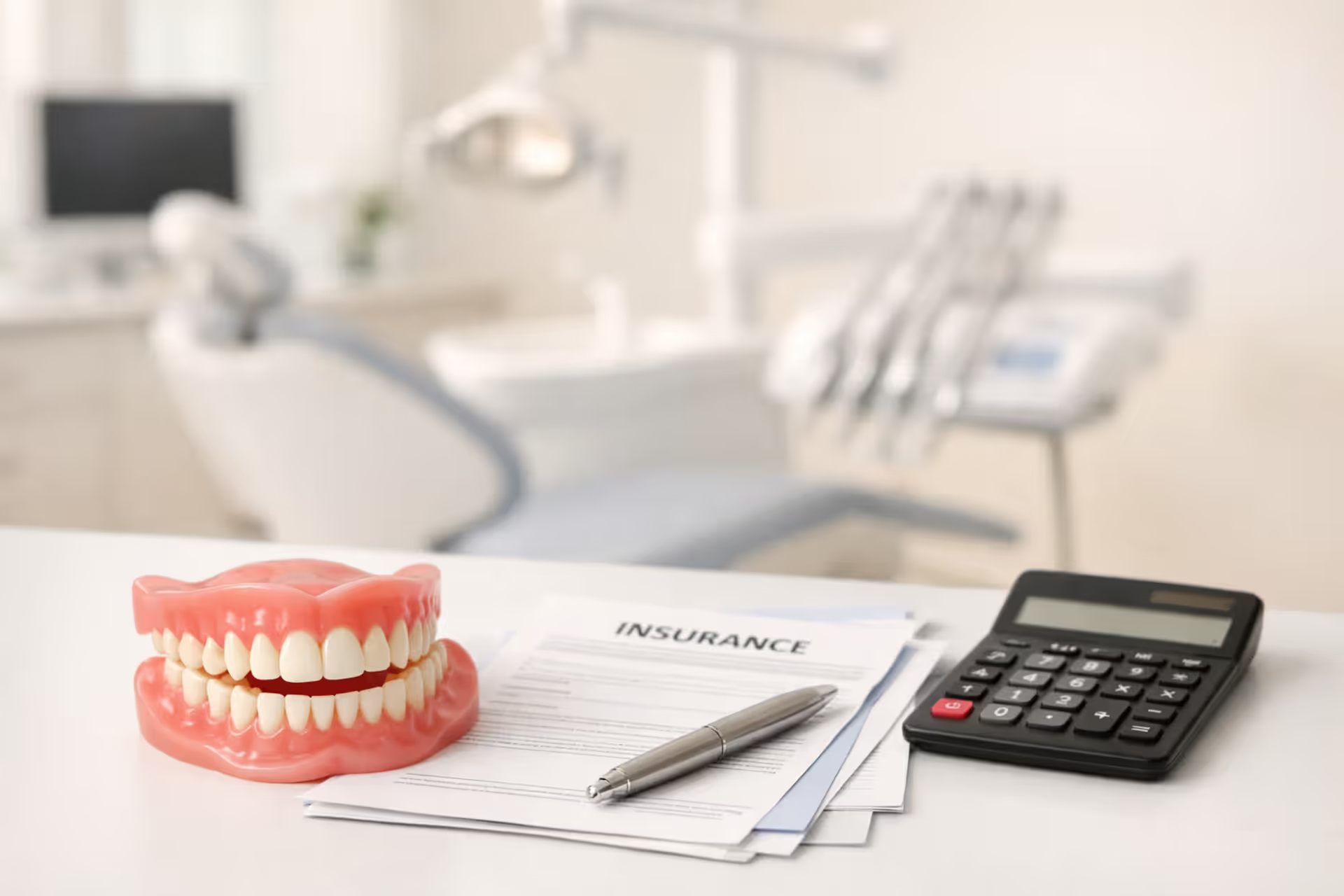
Dental office table with complete upper and lower dentures next to insurance documents and a calculator
Dental Insurance for Dentures Coverage

Need dentures and trying to figure out if your insurance will actually help? Most people discover their plan treats dentures the same as complex root canals—filed under "major restorative procedures" with coverage that barely puts a dent in the final bill.
Here's what nobody tells you upfront: that 50% reimbursement your plan advertises doesn't start until you've paid your deductible. Plus, there's a ceiling. Most policies cap annual payouts between $1,000-$2,000, which sounds helpful until your dentist estimates $3,500 for a full upper denture.
The surprise comes when you run the actual numbers. You'll pay premiums for months (sometimes a full year) before coverage even starts. Then insurance chips in their portion, but only up to that maximum. Everything beyond that cap? Straight from your checking account.
We'll walk through the real costs, the waiting game, and which plan structures actually deliver value for denture work.
How Dental Insurance Covers Dentures
Most dental policies divide services into three tiers. Routine stuff like cleanings and checkups? Those get 100% coverage, no questions asked. Fillings and simple extractions fall into tier two—you'll see around 70-80% reimbursement. Dentures land in tier three alongside crowns and surgical work.
That third tier typically pays 50% of your costs. Some bare-bones plans go lower—40% isn't unusual if you bought the cheapest available policy. Premium options might stretch to 60%, though you'll recognize the difference in your monthly bill.
Every plan sets a yearly spending limit. Hit that ceiling and you're on your own until next January rolls around. Standard caps run $1,000-$1,500. Better plans offer $2,000-$2,500. Sounds reasonable until you price out dentures—a single arch averages $2,500-$3,500 depending on your location and the materials used.
Author: Tyler Grant;
Source: ladylesliebelize.com
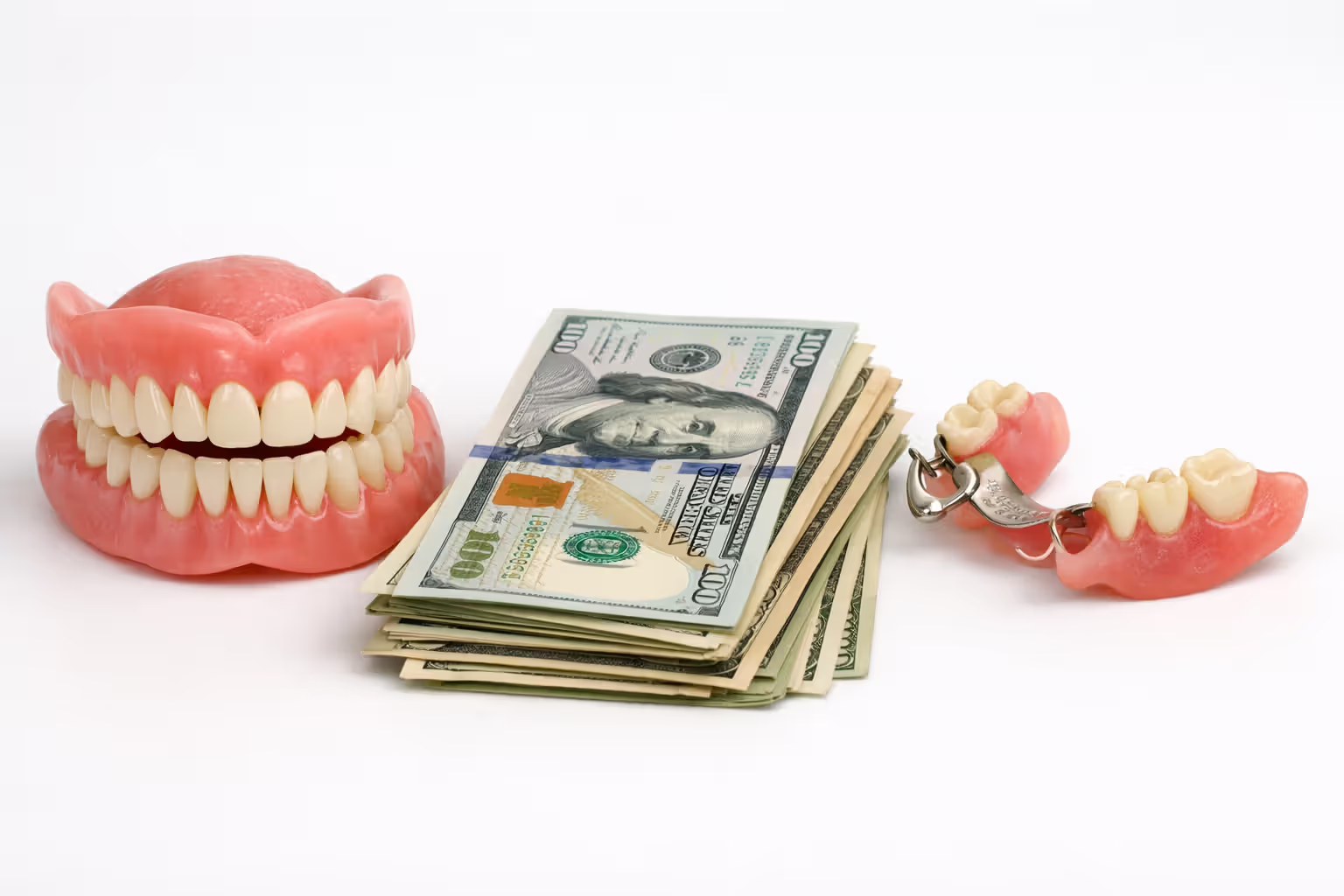
Say you need upper and lower dentures totaling $6,000. Your plan covers 50% but maxes out at $1,500 annually. Insurance pays their $1,500. You're covering the remaining $4,500, and that's after you've already met your $50-100 deductible.
Plan type makes a difference too. HMO dental coverage often reimburses just 40% of major work. PPO policies might reach 60%, but monthly premiums run $15-30 higher to get that boost.
You can't just decide you want dentures and expect approval either. Your dentist submits documentation proving medical necessity—X-rays showing bone loss, photos of damaged teeth, notes explaining how missing teeth affect your ability to chew or speak properly. Cosmetic requests? Denied almost immediately.
Types of Dentures and What Insurance Pays
Full Dentures vs. Partial Dentures

Author: Tyler Grant;
Source: ladylesliebelize.com
Full dentures replace an entire arch—all your upper teeth or all your lower teeth. Partials work differently. You've still got some natural teeth holding strong, and the partial fills gaps where teeth are missing.
Both count as major procedures under insurance rules, but the price tags diverge significantly. A partial for one arch typically costs $1,200-$1,800. Apply 50% coverage from a policy capped at $1,500 yearly, and you'll pay roughly $600-$900 yourself for a single partial.
Complete dentures run $2,000-$3,500 per arch. Need both upper and lower? You're looking at $4,000-$7,000 combined. Even with half covered, you're personally paying $3,000-$4,500—more if your work exceeds the annual maximum.
Material selection affects your bottom line. Basic partials use metal clasps that hook onto existing teeth. Flexible frameworks or precision attachments cost extra. Your insurance calculates reimbursement based on the cheapest option that gets the job done. Want premium materials for comfort or aesthetics? That upgrade comes from your wallet.
Implant-Supported Dentures
These involve titanium posts surgically placed in your jawbone, topped with dentures that snap onto the implants. Stability blows traditional dentures out of the water—no slipping while eating or talking.
Insurance coverage? That's where things get complicated fast. Most carriers classify implants as cosmetic procedures. Translation: $0 in benefits. Even plans that acknowledge implants have legitimate medical value often write specific exclusions into their policy documents.
A few carriers will cover the denture piece while refusing to pay for the surgical implant work. You might recover 50% on a $2,500 denture while absorbing the full $15,000-$25,000 implant surgery yourself.
Medicare Advantage plans occasionally approve implants, but only under narrow circumstances—severe bone deterioration making regular dentures physically impossible to use. These claims demand extensive proof through imaging and specialist evaluations. Standard Medicare Parts A and B? They exclude dental entirely unless it's directly connected to a covered medical emergency like facial trauma.
Waiting Periods and How to Avoid Them
Major procedures come with waiting periods stretching 6-12 months from your enrollment date. You'll pay premiums the whole time without receiving benefits for dentures. This delay stops people from buying insurance right before expensive treatment, then canceling after they get their dentures.
A 12-month waiting period on a $45/month policy means dropping $540 before your coverage activates for major work. Factor that into your total expense math. Sometimes waiting still beats paying full freight, but crunch the numbers first.

Author: Tyler Grant;
Source: ladylesliebelize.com
Several paths around these delays exist. Employer dental plans usually waive waiting periods for new employees. Enrolling during your company's open enrollment window typically skips major service delays if you're switching from another qualifying plan without a gap in coverage.
Discount dental programs operate differently—they're membership clubs, not insurance. Pay a yearly fee ($100-$200) for reduced rates at participating dentists. No waiting periods because you're not filing claims—just paying discounted cash prices directly. Savings range 10-60% depending on the provider and procedure. If you need dentures within the next few months, a discount plan might cost less overall than paying insurance premiums during a waiting period.
Some Medicare Advantage policies eliminate waiting periods during annual enrollment windows. These plans combine medical and dental coverage into one package, often delivering broader benefits than original Medicare. Coverage caps stay modest—think $1,000-$2,500 yearly—but immediate access helps if you're already Medicare-eligible.
Plans That Cover Dentures at Higher Rates
PPO plans generally outperform HMO options for denture coverage. PPOs let you see any licensed dentist, though staying inside their network maximizes reimbursement. Step outside? Coverage might drop from 50% to 30%, and you'll pay the difference between your dentist's actual charge and what your plan deems "reasonable and customary."
HMO dental plans require selecting a primary dentist from their approved network. Need specialist care? Referral required. The benefit: lower monthly premiums and occasionally no annual maximums. Instead of percentage-based coverage, HMOs charge flat copays. You might pay $450 for complete dentures whether your dentist's regular fee is $2,000 or $3,500. That's fantastic when procedures run expensive. Less appealing if you found a provider charging $1,600.
True 100% denture coverage basically doesn't exist except in rare situations. Some union contracts or government employee benefits cover major work at 80-100% after you've been enrolled for a full year. A handful of direct-to-consumer plans advertise 100% denture coverage—buried in the fine print, that only applies to the absolute cheapest denture option and only after surviving a 12-month waiting period. Prefer more comfortable or natural-looking dentures? You're funding upgrades yourself.
Medicare Advantage plans fluctuate dramatically between carriers. One company might offer $1,000 yearly in dental benefits with 50% denture coverage. Another provides $2,500 with 80% coverage but charges $25 more monthly. During Medicare's annual enrollment period (October 15-December 7), compare plans specifically for dental benefits if denture work is on your horizon.
Costs Without Insurance vs. With Coverage
| Denture Type | Typical Cash Price | With 50% Coverage ($1,500 cap) | With Premium Plan (80% coverage, $2,000 cap) |
| Partial (one arch) | $1,200–$1,800 | $600–$900 | $240–$360 |
| Complete (one arch) | $2,500–$3,500 | $1,750–$3,000* | $1,100–$2,300* |
| Complete (both arches) | $4,000–$7,000 | $4,750–$6,250* | $3,600–$5,800* |
| Implant-supported (per arch) | $15,000–$25,000 | $14,250–$24,250** | $13,000–$23,000** |
Annual maximum reduces coverage on higher-cost procedures
*Assumes only the denture portion receives coverage; implant surgery excluded
Notice how annual maximums matter more than percentages? Even an 80% reimbursement plan leaves you holding thousands when denture costs exceed the cap. A $2,000 maximum barely impacts $7,000 in complete dentures for both arches.
Implant-supported dentures rarely justify traditional insurance financially. The $1,000-$1,500 you might save through partial coverage doesn't offset a year of premium payments. Direct financing or dental savings memberships typically deliver better value for implant cases.
How to Choose the Right Dental Insurance for Dentures
Begin by estimating your total expected costs. Need complete dentures for both arches within the next 18 months? Get quotes from local dentists first. Geography matters—dentures in rural Tennessee might cost 40% less than metropolitan Los Angeles.
Match annual maximums to your actual needs. A $2,000 cap handles one partial denture comfortably. Extensive work requiring multiple procedures? You'll fall short. Some insurers sell plans with $3,000 or $5,000 annual limits at higher premiums. Calculate the trade-off: upgrading from a $1,500 to $3,000 maximum might cost an extra $30 monthly ($360 yearly). You only come out ahead if your denture work exceeds $2,860.

Author: Tyler Grant;
Source: ladylesliebelize.com
Study network restrictions carefully. HMO plans with limited networks might exclude experienced prosthodontists—specialists focusing specifically on dentures and complex restorations. PPO networks provide broader choices, but confirm your preferred dentist participates before enrolling. Out-of-network coverage plummets dramatically, erasing the advantage of higher reimbursement rates.
Review waiting periods closely. Six months? Potentially manageable. Twelve months? Often too long if you're dealing with deteriorating dental health. Urgent situations sometimes make more financial sense paying cash or using a discount plan rather than a year of premiums plus eventual copays.
Don't choose based solely on the lowest monthly payment. A $25/month plan with a $1,000 maximum and 12-month waiting period costs $300 in premiums before coverage activates, then pays only half your costs up to $1,000. A $50/month plan with immediate coverage and a $2,000 maximum might cost more initially but deliver superior total value for urgent needs.
Look for plans covering relines and adjustments. New dentures require multiple adjustment visits during the first year as your gums and bone adapt. Some policies cover these follow-ups at 100% as preventive care. Others classify them as major work, eating into your remaining annual maximum.
Patients regularly tell me they had no idea their dental insurance wouldn't come close to covering their full denture costs.Annual maximums on typical plans were set decades ago and haven't kept pace with actual treatment costs. I tell patients to read policy details thoroughly before assuming coverage makes dentures affordable. Sometimes paying cash and negotiating directly with your dentist results in lower total costs than routing everything through insurance—especially when you factor in a full year of premium payments during waiting periods. The important step is running the numbers for your exact situation rather than assuming insurance automatically saves you money
— Dr. Michael Chen
Frequently Asked Questions
Choosing dental insurance for dentures means balancing premiums, coverage percentages, annual maximums, and waiting periods against your specific timeline and financial situation. No single "best plan" exists—your optimal choice depends on whether you need treatment immediately or can wait, your financial flexibility for upfront costs versus monthly payments, and whether you can access employer-sponsored coverage.
Calculate your expected total costs including premiums during waiting periods. A plan costing $40 monthly with a 12-month waiting period means spending $480 before coverage activates. Add that to your eventual copay when comparing options. Sometimes a pricier plan with immediate coverage costs less overall, particularly when you need dentures within six months.
Think beyond traditional insurance. Dental savings programs, payment plans offered directly by dental offices, and healthcare credit cards with promotional interest rates might deliver superior value for major one-time expenses like dentures. Many prosthodontists offer 10-20% discounts for upfront cash payment, potentially saving more than insurance reimbursement after paying premiums for a year.
Time your decisions around enrollment windows—employer open enrollment periods or Medicare's annual enrollment for those 65 and older. Miss these windows? You might wait another full year to modify coverage. If your dental health is declining rapidly and you can't delay, explore immediate solutions like discount plans or financing rather than postponing necessary treatment.
The smart approach combines realistic expectations about actual insurance coverage with methodical comparison of your specific options. Dentures represent a substantial investment in your daily quality of life—eating comfortably, speaking clearly, smiling confidently. Understanding your coverage thoroughly positions you to make that investment wisely.
Related Stories
Read more
Read more

The content on this website is provided for general informational and educational purposes only. It is intended to offer guidance on dental insurance topics, including coverage options, premiums, deductibles, waiting periods, annual maximums, claims processes, and procedures that may be covered by insurance such as implants, braces, crowns, dentures, and preventive care. The information presented should not be considered medical, dental, financial, or professional insurance advice.
All articles and explanations published on this website are for informational purposes only. Dental insurance policies may vary between providers, and details such as coverage limits, exclusions, reimbursement rates, waiting periods, and eligibility requirements can differ depending on the insurer, plan, and individual circumstances.
While we strive to keep the information accurate and up to date, this website makes no guarantees regarding the completeness or reliability of the content. Use of this website does not create a professional relationship. Visitors should review official policy documents and consult with licensed dental or insurance professionals before making decisions regarding dental care or insurance coverage.