

Modern dental office with dental instruments on a tray and a dental chair in the background under warm lighting
Dental Insurance That Covers Root Canals Without Waiting

Root canals rank among the most dreaded dental procedures—not just because of the discomfort, but because of the price tag. Without insurance, a single root canal can cost anywhere from $700 to $1,800, depending on which tooth needs treatment and where you live. That's why understanding your coverage options before you're sitting in a dentist's chair with a throbbing molar matters more than most people realize.
The challenge? Most dental insurance plans treat root canals as major procedures, which typically come with waiting periods that can stretch from six months to a full year. If you're dealing with an infected tooth right now, that's not helpful. But there are legitimate ways to get coverage without those delays—you just need to know where to look and what questions to ask.
Does Dental Insurance Cover Root Canals?
Yes, the majority of dental insurance plans do cover root canals, but the details vary significantly between policies. Most plans classify root canals as "major restorative" procedures rather than basic preventive care, which affects both the percentage they'll pay and when that coverage kicks in.
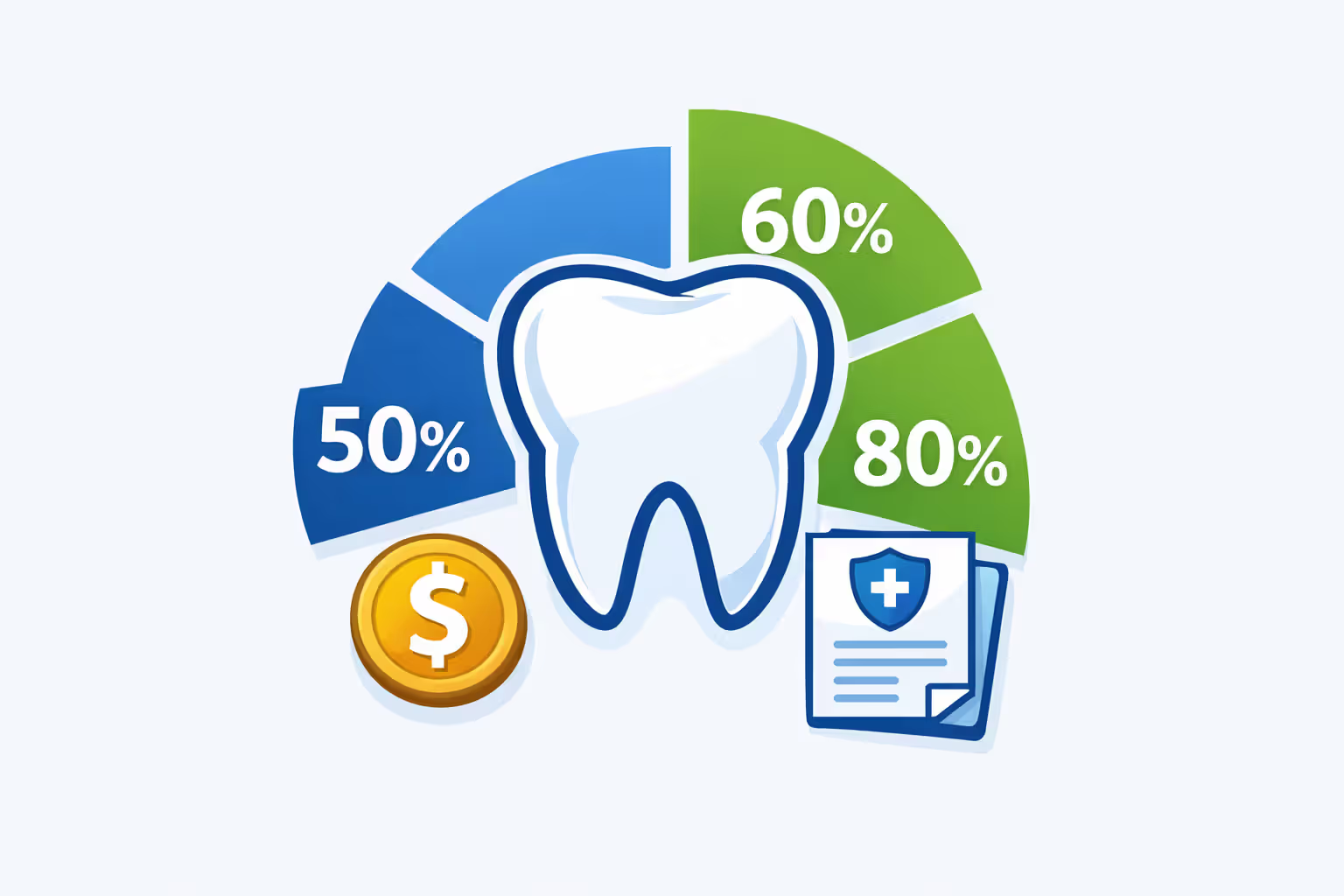
Typical coverage for root canals falls between 50% and 80% of the procedure cost, after you've met your annual deductible. The most common arrangement you'll encounter is 50% coverage for major procedures, though some more generous plans offer 60% or even 80%. This means if your root canal costs $1,200, you'd still be responsible for $600 out of pocket with a standard 50% coverage plan.
Annual maximums present another limitation. Most dental insurance plans cap their total payout at $1,000 to $2,000 per calendar year. If you need multiple procedures—say, a root canal and a crown on the same tooth—you could hit that ceiling quickly. Once you've reached your annual maximum, you're paying 100% of any additional costs until the next calendar year.
Author: Olivia Davenport;
Source: ladylesliebelize.com
The waiting period issue creates the biggest headache for people who need immediate treatment. Industry-standard waiting periods for major procedures typically range from 6 to 12 months after your policy starts. Some plans impose a 3-month waiting period for basic procedures and a separate 12-month wait for major work. A few budget plans stretch this to 18 months for complex procedures. During these waiting periods, your plan won't pay a cent toward the procedure, even though you're paying monthly premiums.
How Root Canal Coverage Works Under Dental Plans
Dental insurance divides procedures into three categories: preventive, basic, and major. Root canals almost always fall into the "major restorative" category, alongside crowns, bridges, and dentures. This classification matters because it determines your out-of-pocket costs.
A typical plan structure might cover preventive care (cleanings, exams, X-rays) at 100%, basic procedures (fillings, simple extractions) at 80%, and major procedures (root canals, crowns) at 50%. You'll also encounter a deductible—usually $50 to $100 per person annually—that applies to basic and major services but not preventive care.
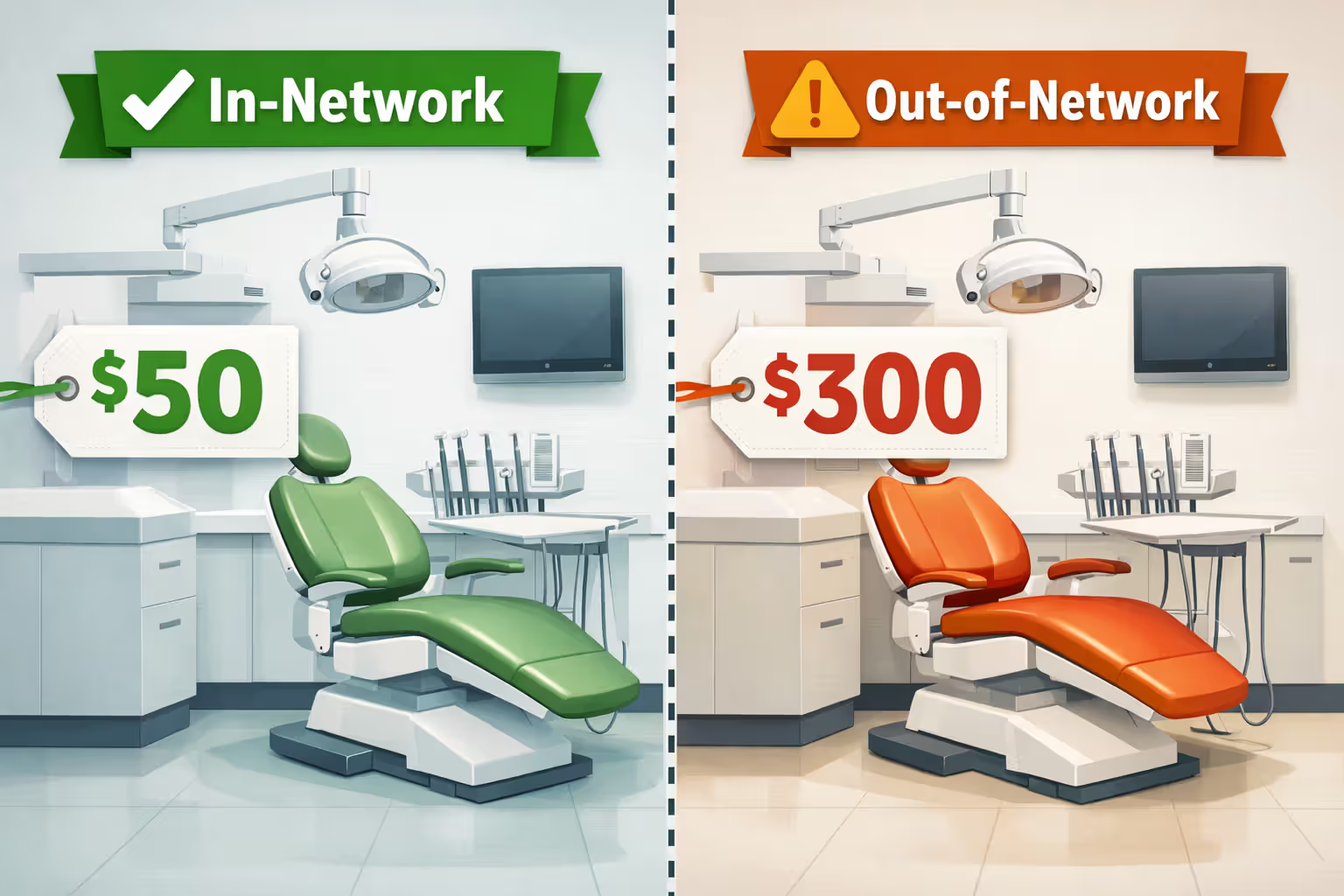
The in-network versus out-of-network distinction makes a substantial difference in what you'll actually pay. In-network dentists have negotiated rates with your insurance company, which means the starting price for the procedure is lower before your coverage percentage even applies. An in-network root canal might be billed at $900, while the same procedure out-of-network could be $1,400. Your 50% coverage on the in-network procedure leaves you with a $450 bill; out-of-network, you might pay $700 or more, plus your insurer might only reimburse based on their "usual and customary" rate rather than what the dentist actually charged.
Author: Olivia Davenport;
Source: ladylesliebelize.com
What Percentage Do Most Plans Cover?
The 50% coverage rate for root canals represents the industry standard across most PPO and HMO dental plans available to individuals and small businesses. However, employer-sponsored plans through larger companies sometimes offer better terms—60% or 70% coverage isn't uncommon for major procedures when you're part of a group plan with 100+ employees.
HMO dental plans (also called DHMO plans) work differently. Instead of percentages, they charge fixed copays for each procedure. You might pay a flat $350 copay for a root canal regardless of the tooth or complexity, but you're restricted to a specific network of dentists. These plans rarely have waiting periods, which makes them attractive if you need immediate treatment.
Discount dental plans—technically not insurance—don't cover a percentage at all. They provide reduced rates, typically 10% to 60% off standard fees, but you pay the discounted amount in full at the time of service. These activate immediately with no waiting periods.
Common Exclusions and Limitations
Beyond waiting periods and annual maximums, several exclusions can trip you up. Most plans won't cover root canals on teeth that were already damaged or symptomatic before your coverage started. This "pre-existing condition" clause means if you enrolled in January but your tooth started hurting in December, you might not have coverage even after the waiting period ends.
Replacement limitations affect coverage if you've had a root canal on the same tooth before. Many plans won't pay for retreatment within five years of the original procedure, assuming the first treatment should have solved the problem permanently.
Some budget plans exclude coverage for certain teeth entirely—particularly wisdom teeth or teeth that are considered "cosmetic" rather than medically necessary. Always check the fine print about which teeth qualify for coverage.
Missing tooth clauses create problems if you're trying to get coverage for a tooth that was already missing when you enrolled. While this doesn't directly affect root canals (since you need the tooth to be present), it matters for the crown that usually follows a root canal.
Dental Insurance Plans With No Waiting Period for Root Canals
Finding legitimate coverage without waiting periods requires knowing which plan types typically waive these delays.
Employer-sponsored group plans frequently include no waiting periods for any procedures, including major work like root canals. This is one of the most valuable benefits of working for a larger company. If you're job hunting and need dental work, the quality of the dental coverage should factor into your decision—a plan with no waiting periods and an $1,800 annual maximum could save you over $1,000 on a single root canal.
Medicaid dental coverage for adults varies dramatically by state, but where it exists, it typically includes no waiting periods. As of 2026, 38 states offer some level of adult dental benefits through Medicaid, though coverage ranges from emergency-only to comprehensive. States like California, New York, and Connecticut provide extensive coverage including root canals with no waiting period if you qualify based on income.
DHMO plans (dental HMOs) rarely impose waiting periods because they control costs through network restrictions and fixed copays instead. You'll pay $200 to $500 as a copay for a root canal depending on which tooth needs treatment, but you can usually get the procedure done within weeks of enrolling.
Dental discount plans activate within 1-3 business days of enrollment. These aren't insurance—you're paying a membership fee (typically $100-$200 annually for an individual) to access negotiated rates. You'll save 20% to 50% off the dentist's standard fees, but you pay the discounted rate in full.
Some PPO plans marketed as "no waiting period" plans do exist, but read carefully. They often have no waiting period for basic procedures while still imposing 6-12 month waits for major procedures. True no-wait PPO plans with major coverage from day one typically cost 30% to 50% more in monthly premiums than standard plans.
The biggest mistake I see patients make is assuming their new insurance will cover an urgent root canal right away. At least twice a month, someone sits in my chair needing immediate treatment, only to discover they're still in their waiting period. Always call your insurance company and ask specifically about waiting periods for major procedures before you need care—not when you're already in pain
— Dr. Jennifer Martinez
How to Get Dental Insurance That Covers Root Canals Immediately
If you need coverage now rather than six months from now, these strategies can help you access treatment without devastating your budget.
Employer open enrollment: If your company offers dental insurance and you're currently not enrolled, you typically can't add it outside the annual open enrollment period unless you have a qualifying life event (marriage, birth of a child, loss of other coverage). However, if you're starting a new job, your coverage usually begins on your first day or within 30 days, often with no waiting periods. Some people specifically time job changes around needed dental work—not the primary reason to switch jobs, but a legitimate factor if you're already considering a move.
Medicaid eligibility: Check your state's Medicaid dental benefits if your income is below 138% of the federal poverty level (about $20,780 for an individual or $43,056 for a family of four in 2026). Apply at healthcare.gov or your state's Medicaid office. In states with comprehensive adult dental benefits, approval can happen within 30-45 days, and coverage includes root canals with no waiting period.
Dental savings plans: Companies like Careington, DentalPlans.com, and Cigna Dental Savings offer discount plans that activate within 1-3 business days. You'll pay $100-$250 per year for individual coverage, then receive 20%-60% off most procedures. For a $1,200 root canal, a 40% discount saves you $480—more than the annual membership fee. The catch: you must use network dentists, and not all dentists participate.
Same-day DHMO enrollment: Some DHMO plans allow you to enroll and schedule treatment within the same month, though you'll typically need to wait at least 2-3 weeks after enrollment. Monthly premiums run $15-$40 for an individual, with fixed copays of $300-$500 for root canals. This works if you have a few weeks before your procedure becomes urgent.
Negotiate directly with your dentist: Many dentists offer in-house payment plans or cash discounts if you're uninsured. A 10%-15% discount for paying in full upfront is common. Monthly payment plans might spread a $1,200 procedure over 6-12 months with little or no interest if you ask before treatment begins.

Author: Olivia Davenport;
Source: ladylesliebelize.com
Comparing Your Options: Insurance vs. Discount Plans
Understanding the trade-offs between different coverage types helps you choose the right option for your situation.
| Plan Type | Typical Coverage % | Waiting Period | Monthly Cost | Best For |
| Traditional PPO | 50-80% after deductible | 6-12 months for major procedures | $30-$80 individual | People planning ahead; those needing multiple procedures annually |
| DHMO Plan | Fixed copay ($300-$500) | Usually none | $15-$40 individual | Immediate needs; willingness to use network dentists only |
| Dental Discount Plan | 20-60% discount | None (1-3 days activation) | $8-$20 monthly | Emergency situations; uninsured individuals; supplementing insurance |
| Employer Group Plan | 50-80% after deductible | Often none | $10-$50 individual (subsidized) | Anyone with access; best overall value |
| Medicaid (where available) | 80-100% | None | $0 | Low-income individuals; best coverage if eligible |
| Out-of-Pocket | N/A | None | $0 monthly | Single procedure; good negotiation skills; dental school option |
The math matters here. If you need a $1,200 root canal immediately and you're choosing between options:
- Discount plan: Pay $150 annual fee + $720 (40% discount) = $870 total
- DHMO plan: Pay $30/month × 2 months + $400 copay = $460 total (if you can wait 2 months)
- Traditional PPO with waiting period: Pay $50/month × 6 months + $600 (50% after deductible) = $900 total (if you can wait 6 months)
- Out-of-pocket with 10% cash discount: $1,080 total
The DHMO plan wins if you can wait a few weeks. The discount plan makes sense if you need treatment within days. The traditional PPO only makes sense if you're planning ahead or expect multiple procedures over the next year.
What to Do If You Need a Root Canal Right Now
When you're dealing with severe tooth pain or an infection that can't wait for insurance enrollment and waiting periods, you still have options that won't require a second mortgage.
Dental school clinics provide the same procedures performed by supervised students at 40%-70% below market rates. A root canal that costs $1,200 at a private practice might be $350-$500 at a dental school. The trade-off: appointments take longer (sometimes twice as long) and scheduling can be less flexible. Search for accredited dental schools through the American Dental Association website—most major cities have at least one program.

Author: Olivia Davenport;
Source: ladylesliebelize.com
Community health centers offer sliding-scale fees based on income. Federally Qualified Health Centers (FQHCs) exist in every state and provide dental services at reduced rates if you're uninsured or underinsured. Find locations through findahealthcenter.hrsa.gov.
Dental emergency grants and charities sometimes help with urgent procedures. Organizations like the Dental Lifeline Network, United Way, and state-specific dental foundations occasionally provide grants or connect patients with volunteer dentists. These programs prioritize severe cases and have limited funding, but they're worth researching if you're in genuine financial hardship.
CareCredit and medical credit cards offer promotional financing—often 6-24 months interest-free if you pay the balance before the promotional period ends. The catch: if you don't pay in full before the deadline, you'll owe retroactive interest at rates often exceeding 26%. Only use this option if you're certain you can pay it off within the promotional window.
Payment plans directly with dentists remain one of the most overlooked options. Many practices would rather set up a 6-12 month payment plan at low or zero interest than lose a patient to a competitor or have unpaid bills sent to collections. Ask before assuming you need to pay everything upfront.
Urgent care vs. emergency room: If you're in severe pain over a weekend, understand that hospital emergency rooms will prescribe antibiotics and pain medication but rarely perform the actual root canal. You'll pay emergency room fees (often $500-$2,000 without insurance) just for temporary relief. Urgent dental clinics that specifically handle dental emergencies are a better option—they can often perform the procedure same-day or within 48 hours.
Frequently Asked Questions About Root Canal Insurance Coverage
Root canal coverage doesn't have to be a mystery that leaves you with a massive bill and a payment plan you'll be managing for the next year. The key is matching your timeline to the right coverage option.
If you're planning ahead and have at least six months before you need treatment, a traditional PPO plan makes sense—especially if you anticipate needing other dental work within the same year. The annual maximum and percentage-based coverage work in your favor when you're spreading multiple procedures across several months.
If you need treatment within the next few weeks, DHMO plans or dental discount plans provide the fastest access to affordable care. Yes, you'll have network restrictions or pay a larger portion out-of-pocket, but you'll avoid the financial devastation of paying full price with no coverage at all.
If you're employed, review your benefits package carefully. Many people leave valuable dental coverage on the table simply because they didn't enroll during their initial eligibility period or didn't realize their employer plan includes immediate coverage with no waiting periods.
The worst approach is doing nothing until the pain becomes unbearable. Infected teeth don't improve on their own, and delaying treatment typically results in more complex (and expensive) procedures down the road. An untreated infection can spread, potentially requiring extraction and implant placement instead of a straightforward root canal—turning a $1,200 procedure into a $4,000+ problem.
Start by calling your current insurance provider (if you have one) and asking three specific questions: Does my plan cover root canals? What percentage is covered? Is there a waiting period? If you don't have coverage, spend an hour researching the options outlined here before your next dental appointment. That hour of research could save you a thousand dollars and weeks of unnecessary pain.
Related Stories
Read more

Read more



The content on this website is provided for general informational and educational purposes only. It is intended to offer guidance on dental insurance topics, including coverage options, premiums, deductibles, waiting periods, annual maximums, claims processes, and procedures that may be covered by insurance such as implants, braces, crowns, dentures, and preventive care. The information presented should not be considered medical, dental, financial, or professional insurance advice.
All articles and explanations published on this website are for informational purposes only. Dental insurance policies may vary between providers, and details such as coverage limits, exclusions, reimbursement rates, waiting periods, and eligibility requirements can differ depending on the insurer, plan, and individual circumstances.
While we strive to keep the information accurate and up to date, this website makes no guarantees regarding the completeness or reliability of the content. Use of this website does not create a professional relationship. Visitors should review official policy documents and consult with licensed dental or insurance professionals before making decisions regarding dental care or insurance coverage.