

Person comparing individual dental insurance plans on a laptop at home
Individual Dental Insurance Guide

No dental coverage through work? You're far from alone. Millions of Americans—freelancers, consultants, part-timers, early retirees—face the same challenge. The good news: you can buy dental insurance directly, without an employer involved. The catch? You'll foot the entire bill yourself, and navigating your options takes some homework.
Here's what matters: a single unexpected root canal can set you back $2,000 or more. Annual insurance might cost $400. That math works in your favor when trouble strikes. But not all plans deliver equal value, and some people actually lose money on coverage they never use.
Let's break down how direct-purchase dental plans actually work, what they cost, and whether buying one makes sense for your situation.
What Is Individual Dental Insurance?
Think of this as dental coverage you arrange yourself, not through a job. You pick a policy, write the monthly check, and get dental services covered based on what you selected. No employer splits the cost with you or narrows your choices to a few pre-selected options.
Here's how the financial side works. Monthly premiums keep your coverage active. Deductibles represent what you spend before insurance starts paying—often $50 to $100 yearly. Coinsurance describes the percentage split: you might pay 20% of a filling's cost while insurance handles 80%.
Plans typically sort dental work into three buckets. Preventive stuff (cleanings, checkups, X-rays) usually costs you nothing after insurance kicks in. Basic work like fillings might split 80/20 between insurance and you. Major procedures—think crowns or root canals—often flip that to 50/50.
Who buys these plans? Freelance graphic designers. Uber drivers. People who retired at 60 but won't get Medicare until 65. Part-time retail workers whose schedules don't qualify them for benefits. Anyone switching jobs with a gap in coverage. The self-employed crowd makes up a huge chunk of this market.
The fundamental difference from workplace plans comes down to risk spreading. When 500 employees share a group plan, insurance companies can offer better rates because they're betting some people won't use much care. When you're buying solo, that math changes. You can't get rejected for bad teeth—that's illegal now—but you'll wait months before coverage kicks in for expensive work.
Here's the reality check: if your teeth are healthy and you just need twice-yearly cleanings, you might spend $300 out-of-pocket annually without insurance. But pay $500 in premiums for coverage you barely use? That's a net loss. Insurance shines when the unexpected hits. One emergency extraction and temporary crown can run $1,800. Insurance might cut that to $900 out of your pocket. That's when the annual premium pays off.

Author: Tyler Grant;
Source: ladylesliebelize.com
Types of Individual Dental Insurance Plans
Shopping for dental insurance feels like picking a phone plan—multiple options with different trade-offs between cost, flexibility, and features. Let's cut through the jargon.
Individual Dental Insurance PPO Plans
PPO networks give you the most wiggle room. Insurers negotiate discounts with thousands of dentists who join their network. You can visit anyone you want, but staying in-network typically saves you 20% to 40% compared to going outside the network.
No gatekeepers here. Need a periodontist for gum treatment? Schedule directly—no referral needed from your regular dentist. Insurance pays its share of the allowed fee based on service type: usually everything for preventive visits, 70% to 80% for basic work, half for major procedures. That's after your deductible.
Expect to pay $30 to $80 monthly if you're covering just yourself. Family coverage runs $100 to $200. Higher premiums generally buy you bigger networks, lower personal spending caps, and higher annual benefit limits. Most PPOs max out at $1,000 to $2,000 in annual benefits—once you hit that ceiling, you're paying everything beyond it yourself.
The upside: freedom to choose. Keep your current dentist (if they're in-network) or switch providers without hassle. The downside: higher monthly costs, and you'll still pay significant chunks of major work even with coverage active.
Dental HMO and Discount Plans
HMO dental plans flip the script. You'll pick one primary dentist from their network at signup. That dentist becomes your hub—all care flows through them. Specialists require referrals from your primary dentist, and stepping outside the network means paying everything yourself.
The reward for accepting these limits? Monthly costs might drop to $15 to $40. Copays work as flat fees instead of percentages—maybe $10 for a cleaning, $50 for a filling, $400 for a crown. No surprises when you check out. Budgeting becomes straightforward, though your dentist choices narrow considerably.
Discount programs operate completely differently. They're not insurance—you're buying a membership. Pay $100 to $200 yearly and you get access to dentists who've agreed to discount their services 10% to 60% off standard rates. You pay that discounted amount directly when services happen. No deductibles. No annual caps. No waiting periods. Use it immediately for anything.

Author: Tyler Grant;
Source: ladylesliebelize.com
These programs make sense if you need substantial dental work soon, want to skip monthly premiums, and can handle paying reduced (but still significant) amounts at each visit. Regular insurance works better if you want the carrier actually paying a big chunk of expensive procedures.
The old-school indemnity plans—see any dentist, get reimbursed based on a fee schedule—have mostly vanished from the individual market. High premiums, complex reimbursement processes, and similar restrictions to PPOs made them unattractive. You'll rarely encounter these anymore.
What Does Individual Dental Insurance Cover?
Insurance companies split dental work into three categories with wildly different cost-sharing rules. Understanding this structure prevents sticker shock when bills arrive.
Preventive services get covered completely in most plans—you pay nothing beyond your monthly premium. This bucket includes twice-yearly cleanings, annual exams, routine X-rays, and fluoride treatments for kids. Sometimes sealants for children get 100% coverage too. Insurers love covering prevention because catching cavities early beats paying for crowns later.
Basic procedures fall under 70% to 80% coverage once you've met your deductible—commonly $50 to $100 per person annually. We're talking fillings, simple tooth extractions, scaling for gum disease, and emergency pain treatment. Say you need a filling and the approved cost is $200. You might pay your $50 deductible plus 20% of the remaining $150 ($30), totaling $80 out of pocket.
Major services get 50% coverage after your deductible. This includes crowns, bridges, dentures, root canals, and oral surgery. A $1,200 crown might cost you $650 after your $50 deductible—you're paying the deductible plus half of what's left. This is where annual maximums hurt. If your plan caps benefits at $1,500 and you need two crowns, the second one comes almost entirely from your wallet.
Waiting periods delay when you can actually use certain benefits. Prevention usually starts immediately. Basic procedures might lock you out for three to six months. Major work often requires waiting six to twelve months. Need a crown next month? Buying insurance today won't help—you're stuck waiting until the coverage period expires. Insurance companies do this to prevent people from buying coverage only when expensive work looms, then canceling after treatment.
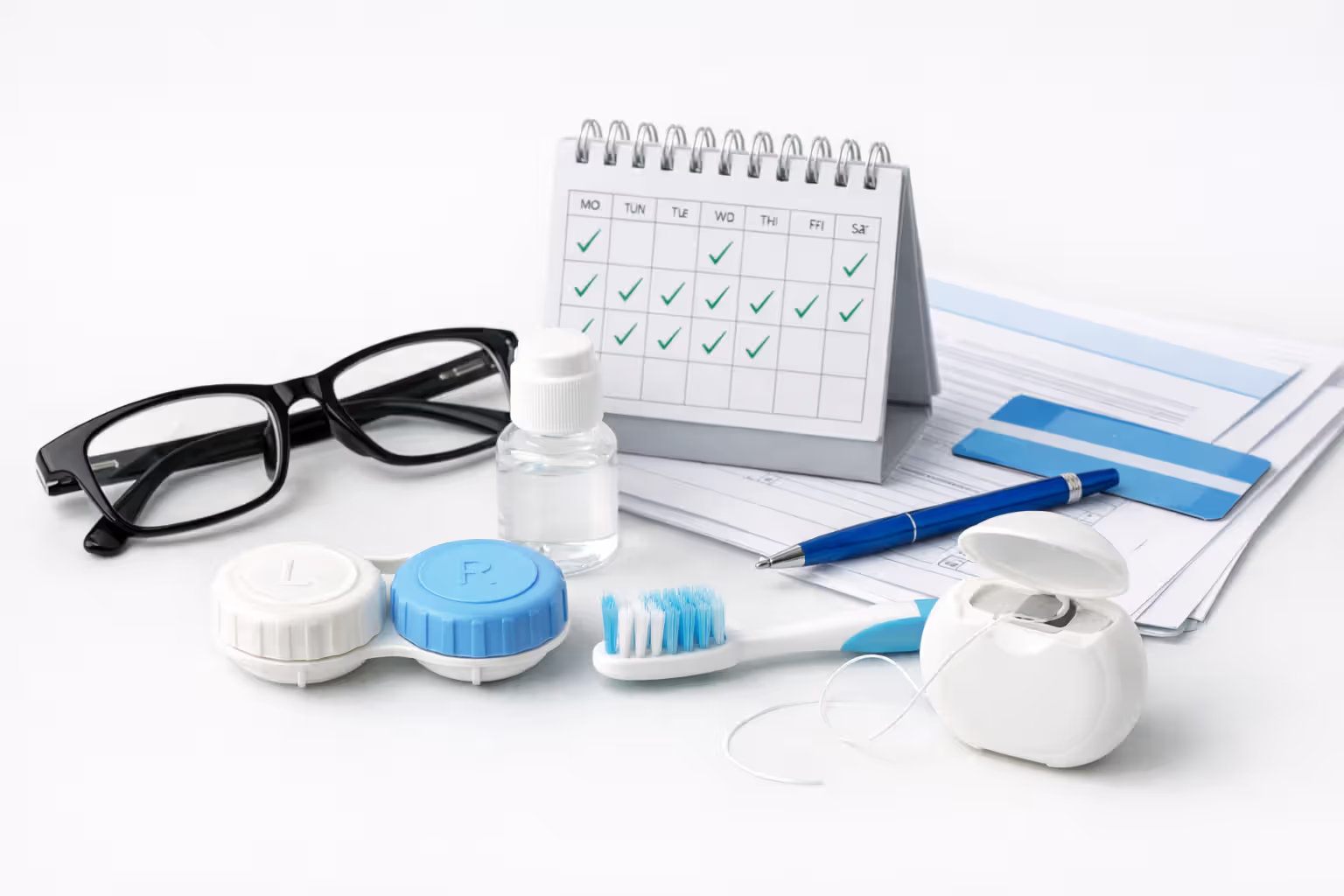
Bundled dental-and-vision packages are showing up everywhere now. Add vision coverage for roughly $5 to $15 more monthly. Vision benefits typically cover annual eye exams, kick in $100 to $150 toward glasses or contacts, and discount LASIK procedures. If you wear corrective lenses, bundling usually beats buying separate vision insurance at $15 to $25 monthly. Just note the dental and vision sides often use completely different provider networks.
Author: Tyler Grant;
Source: ladylesliebelize.com
Orthodontic coverage exists on some plans but comes loaded with restrictions. Adult braces might get zero coverage. When covered, lifetime maximums often cap at $1,000 to $1,500—barely denting the $5,000 to $8,000 braces typically cost. Children's orthodontics gets better treatment on some plans, but expect to wait 12 to 24 months after buying coverage before benefits turn on.
How to Choose Individual Dental Insurance
Premium price matters, sure. But a cheap plan that excludes your dentist or skimps on procedures you need ends up costing more, not less. Smart shopping means looking beyond that monthly number.
Start by confirming your current dentist accepts the plan you're considering. Call the office directly and ask which insurance they take, or search the insurer's provider directory online. Switching dentists to save $10 monthly rarely makes sense if you've built trust with a provider, especially when you're managing ongoing dental issues that benefit from continuity.
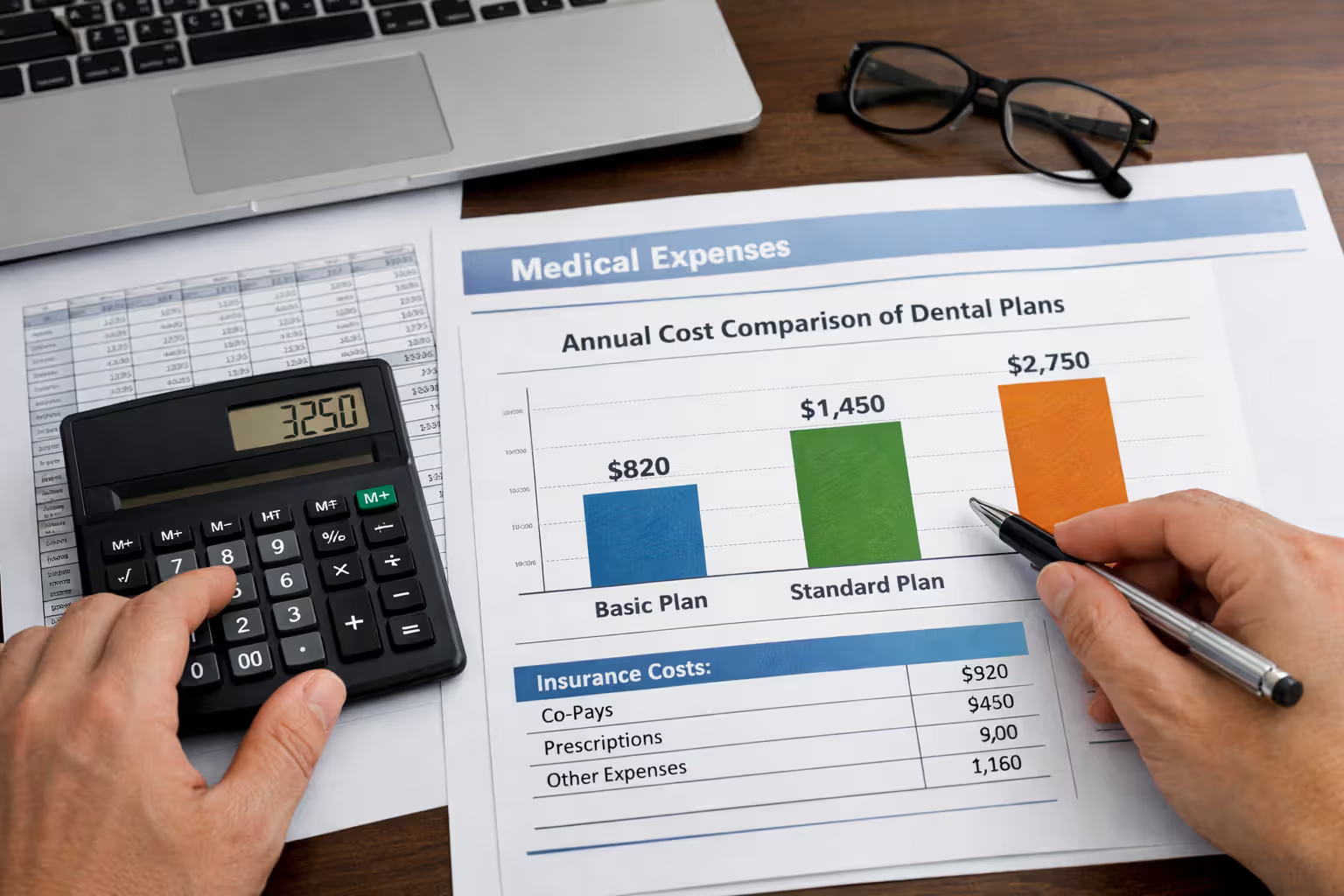
Calculate your true annual cost. Add monthly premiums, your annual deductible, and realistic estimates for procedures you'll likely need. Suppose you need one crown this year. A plan charging $40 monthly ($480 yearly) with 50% major coverage might cost less total than a $25 monthly plan ($300 yearly) offering only 40% major coverage, despite the higher monthly bill.
Author: Tyler Grant;
Source: ladylesliebelize.com
Scrutinize annual maximums closely. Most plans cap payouts at $1,000 to $2,000 per calendar year. If extensive work awaits you—multiple crowns, a bridge, periodontal surgery—you'll blow through this limit fast. Sometimes people needing major dental work get better value negotiating payment plans directly with dentists or using discount programs instead of paying premiums for coverage that won't come close to covering everything.
Think about your dental track record. No cavities in 20 years and you just want cleanings? A basic plan covering preventive care completely might be plenty. History of dental problems? Invest in more robust coverage with higher annual caps and better major service coverage, even if premiums run higher.
For those eyeing bundled dental-and-vision packages, compare against buying separate policies. Bundling typically saves $5 to $10 monthly, but verify both networks include convenient providers. Great dental network paired with a vision network lacking nearby eye doctors delivers little value.
How Much Does Individual Dental Insurance Cost?
Dental insurance pricing varies based on plan design, coverage depth, your location, and whether you're covering yourself solo or bringing family along. Knowing typical ranges helps spot both bargains and red flags.
Monthly premiums for solo coverage generally land between $20 and $80. Basic HMO options start around $15 to $25 monthly—limited networks, flat copays. Mid-tier PPO plans run $30 to $50 monthly—broader networks, percentage-based coverage. Premium PPO options with extensive networks, higher annual caps, and lower personal spending can hit $60 to $80 monthly.
Family coverage costs more but not proportionally. Covering two adults and two kids might run $100 to $200 monthly—compare that to $80 to $320 if each family member bought individual coverage. Carriers typically cap family rates at three or four individual premiums, so bigger families get better per-person value.
Deductibles commonly range from $50 to $100 per person each year. Some plans waive deductibles for preventive care; others apply them universally. High-deductible options exist at $150 to $250 deductibles in exchange for lower monthly premiums, though these appear less frequently in dental than in medical insurance.
Where you live affects what you pay. Urban areas with abundant dentists tend to feature lower premiums than rural regions with scarce providers. High cost-of-living states generally see higher rates—California or New York residents pay more than those in Mississippi or Oklahoma for similar coverage.
Age doesn't impact dental premiums the way it hammers health insurance. A 60-year-old pays basically the same as a 30-year-old for identical coverage. Seniors often need more dental work though, making comprehensive coverage more valuable despite equal premiums.
The real question isn't just premium cost—it's return on investment. Pay $480 in annual premiums and receive $1,000 in covered services (two cleanings at $200, one filling at $200, one crown where insurance pays $600)? You've gained $520 in value. Pay $480 but only use two cleanings worth $200 in services? You've lost $280. Most people maintaining good oral health who only need prevention break roughly even or lose slightly, but they're buying protection against surprise expensive procedures.
The biggest mistake I see is people fixating on monthly premiums while ignoring coverage limits. A $25-per-month plan covering only 40% of major services with a $1,000 annual cap might cost you more total than a $45 plan offering 50% major coverage and a $1,500 annual maximum. Calculate expected total costs every time, not just the monthly charge.
— Sarah Mitchell
Where to Buy Individual Dental Insurance
You've got several routes to purchase dental insurance yourself, each offering distinct advantages and potential hassles. Your buying channel affects not just which plans you can access but also what support you get when selecting coverage or dealing with claims.

Author: Tyler Grant;
Source: ladylesliebelize.com
Health insurance marketplaces created under the Affordable Care Act sell dental plans, though dental coverage remains optional unlike medical. You can grab standalone dental through Healthcare.gov or your state's exchange. The upside: one centralized platform comparing multiple carriers side-by-side. The downside: marketplace dental options often number just a handful and might exclude carriers selling in your state. Marketplace dental plans don't qualify for premium subsidies like medical plans, so you pay full freight regardless of income.
Private insurance carriers sell dental plans directly via their websites or phone lines. Major players like Delta Dental, Cigna, Humana, and Guardian all offer direct-to-consumer options. Buying directly grants you access to their complete plan lineup plus customer service resources. The hassle: you'll need to visit multiple carrier sites to compare—no single platform displays all available choices.
Insurance brokers serve as middlemen, helping you compare plans across multiple carriers and handling enrollment paperwork. Brokers don't bill you directly—they earn commissions from insurers when you sign up. A skilled broker explains plan nuances, clarifies network and coverage details, and troubleshoots post-enrollment headaches. The limitation: brokers only show carriers they've contracted with, so you might miss some options. Confirm any broker you work with holds a valid state license.
Online insurance marketplaces (different from ACA exchanges) aggregate plans from various carriers on private websites. These platforms let you enter your zip code and needs, then display options with comparison features. They function like travel booking sites—handy for shopping but sometimes overwhelming given the sheer volume of choices. These sites also earn carrier commissions, though this shouldn't affect your premium.
Dental discount plan companies sell memberships directly through their sites. Outfits like Careington, Aetna Dental Access, and DentalPlans.com offer these non-insurance alternatives. Remember these aren't insurance—you're purchasing access to negotiated fee reductions, not actual coverage.
When picking a buying channel, consider your comfort with insurance terminology and your need for hand-holding. Feel confident parsing plan documents and understanding coverage mechanics? Buying directly from a carrier or through an online marketplace works fine. Want guidance? A broker or marketplace rep can help, though you should verify their advice by reading plan documents yourself.
Frequently Asked Questions About Individual Dental Insurance
Picking dental insurance means weighing coverage against budget while grasping a fundamental truth about dental insurance structure. Unlike medical plans, dental coverage caps annual benefits pretty low—typically $1,000 to $2,000. These policies function more as cost-sharing arrangements than true catastrophic coverage.
The smartest approach treats dental insurance as one piece of a larger oral health puzzle. Consistent preventive care, solid home hygiene, and tackling problems early reduce the chances of expensive major work that exhausts annual benefit limits quickly. When significant work becomes necessary, insurance helps but rarely covers everything.
Before you buy, confirm your preferred dentist participates in the network, calculate total annual costs including both premiums and anticipated out-of-pocket spending, and review waiting periods to ensure coverage activates when needed. For folks who mainly need preventive care, a basic plan covering cleanings and exams fully might be sufficient. If ongoing dental issues plague you or major work looms ahead, invest in more comprehensive coverage despite steeper premiums.
Direct-purchase dental insurance serves a genuine need for millions of Americans without employer coverage. It won't eliminate dental expenses, but it can reduce them substantially while providing budget predictability and encouraging preventive care that maintains healthy teeth long-term. Invest time comparing options, read plan documents thoroughly, and select coverage aligning with both your dental health requirements and your financial reality.
Related Stories
Read more
Read more

The content on this website is provided for general informational and educational purposes only. It is intended to offer guidance on dental insurance topics, including coverage options, premiums, deductibles, waiting periods, annual maximums, claims processes, and procedures that may be covered by insurance such as implants, braces, crowns, dentures, and preventive care. The information presented should not be considered medical, dental, financial, or professional insurance advice.
All articles and explanations published on this website are for informational purposes only. Dental insurance policies may vary between providers, and details such as coverage limits, exclusions, reimbursement rates, waiting periods, and eligibility requirements can differ depending on the insurer, plan, and individual circumstances.
While we strive to keep the information accurate and up to date, this website makes no guarantees regarding the completeness or reliability of the content. Use of this website does not create a professional relationship. Visitors should review official policy documents and consult with licensed dental or insurance professionals before making decisions regarding dental care or insurance coverage.