

Senior couple reviewing dental insurance documents at home with laptop and brochures on table
Does Medicare Have Dental Insurance for Seniors?

Content
Content
Most Americans reaching age 65 discover a surprising gap in their Medicare coverage: dental care. Unlike hospital stays and doctor visits, routine dental services fall outside the scope of Original Medicare, leaving millions of seniors scrambling to find affordable options for cleanings, fillings, and dentures.
Understanding your dental insurance options as a Medicare beneficiary requires navigating several distinct pathways—from Medicare Advantage plans that bundle dental benefits to standalone policies designed specifically for seniors. Each approach carries different costs, coverage limits, and enrollment restrictions that can dramatically affect your annual healthcare spending.
What Dental Services Does Original Medicare Cover
Original Medicare—comprising Part A (hospital insurance) and Part B (medical insurance)—provides extremely limited dental coverage. The program covers dental services only when they're integral to a covered medical procedure, not for routine oral health maintenance.
Medicare Part A covers dental care exclusively in hospital settings when the dental procedure is necessary for another covered medical treatment. For example, if you require jaw reconstruction following an accident or need a dental exam before heart valve replacement surgery, Part A may cover those services. Emergency dental work performed in a hospital emergency room might also qualify for coverage if the dental issue threatens your immediate health.
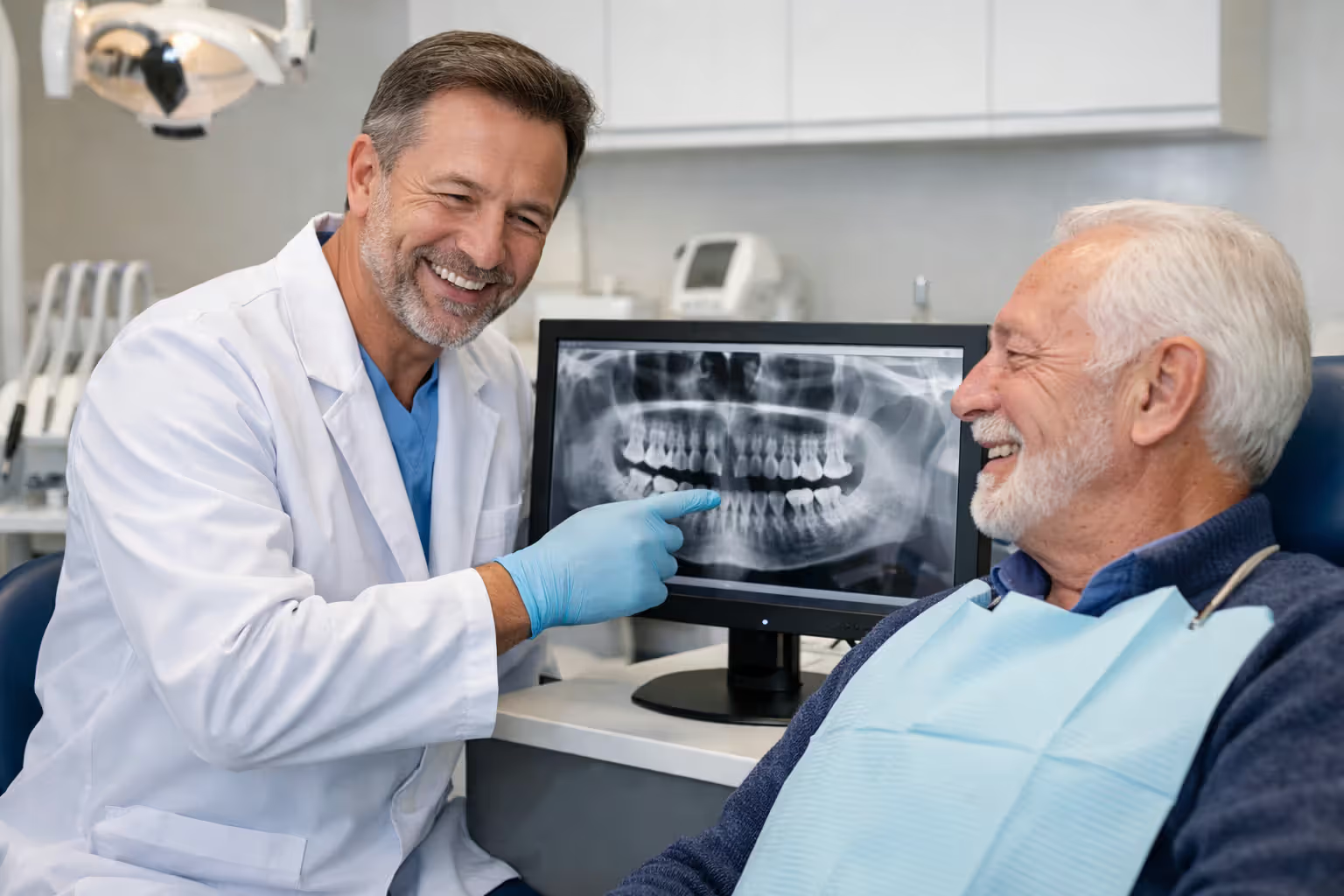
Part B covers dental services in equally narrow circumstances. The program pays for dental examinations performed before kidney transplants or heart valve procedures, since oral infections can complicate these surgeries. Part B also covers jaw X-rays to determine whether you have a jaw disease or fracture, but it won't pay for X-rays related to routine dental care or tooth problems.
Author: Daniel Mercer;
Source: ladylesliebelize.com
What does medicare offer dental insurance beneficiaries beyond these limited scenarios? Nothing under Original Medicare. The program explicitly excludes routine dental care, including cleanings, fillings, tooth extractions, dentures, and dental plates. Medicare also won't cover dental X-rays performed for general dental purposes, root canals, crowns, or orthodontics. This exclusion extends to periodontal care, even though gum disease correlates strongly with other health conditions Medicare does cover, such as diabetes and heart disease.
The rationale dates back to Medicare's creation in 1965, when policymakers viewed dental care as a predictable, budgetable expense rather than an unpredictable medical risk requiring insurance protection. This distinction persists today, despite mounting evidence linking oral health to overall systemic health outcomes.
The lack of comprehensive dental coverage in Original Medicare remains one of the most significant blind spots for new beneficiaries. Many retirees assume their government health insurance will mirror their former employer plans, only to face unexpected out-of-pocket costs at their first dental appointment
— Michael Harrington
Medicare Advantage Plans with Dental Coverage
Medicare Advantage (Part C) plans represent the most popular route for obtaining dental insurance with medicare coverage. These private insurance plans contract with Medicare to provide all Part A and Part B benefits, and approximately 85% of available Medicare Advantage plans now include some level of dental coverage.
Medicare Advantage dental benefits typically fall into three tiers: preventive, basic, and major services. Preventive coverage includes routine cleanings (usually two per year), oral exams, and diagnostic X-rays. Basic services encompass fillings, simple extractions, and periodontal maintenance. Major services cover crowns, bridges, dentures, and root canals—though coverage for these expensive procedures varies significantly between plans.
The dental insurance for medicare patients enrolled in Advantage plans differs substantially from standalone dental policies. Most Medicare Advantage dental benefits operate on a copayment structure rather than the coinsurance model common in private dental insurance. You might pay $0-$20 for a preventive cleaning, $40-$75 for a filling, and $200-$400 for a crown, depending on your specific plan.
Many Medicare Advantage plans impose annual maximum benefits for dental services, typically ranging from $1,000 to $3,000. Once you reach this cap, you pay 100% of additional dental costs for the remainder of the calendar year. Some premium Medicare Advantage plans offer higher caps or even unlimited preventive coverage, but these plans generally charge higher monthly premiums.
Network restrictions present another consideration. Medicare Advantage dental benefits usually require you to visit in-network dentists to receive coverage. Out-of-network care either costs significantly more or receives no coverage at all. Before enrolling, verify that your current dentist participates in the plan's network or prepare to switch providers.
Enrollment in Medicare Advantage plans occurs during specific periods: the Initial Enrollment Period (when you first become Medicare-eligible), the Annual Enrollment Period (October 15 through December 7 each year), or during Special Enrollment Periods triggered by qualifying events like moving to a new service area.
Standalone Dental Insurance Options for Medicare Beneficiaries
Stand alone dental insurance for seniors on medicare operates independently from your Medicare coverage. These policies function like traditional dental insurance, with premiums, deductibles, and coverage tiers designed specifically for the senior market.
Insurance carriers offering standalone dental plans include major providers like Delta Dental, Humana, Cigna, and Renaissance Dental. These policies typically organize coverage into three categories mirroring the Medicare Advantage structure: preventive (Class I), basic (Class II), and major (Class III) services.
A typical standalone dental policy might cover 100% of preventive services after you meet your deductible, 80% of basic services, and 50% of major services. Annual deductibles usually range from $50 to $100 per person, with separate deductibles sometimes applying to different service categories.
Dental insurance for people on medicare through standalone policies generally costs between $20 and $60 monthly for individual coverage. Premium factors include your age, location, chosen coverage level, and whether you select a PPO (Preferred Provider Organization) or HMO (Health Maintenance Organization) plan structure.
Waiting periods represent a significant drawback of standalone dental insurance. Most policies impose waiting periods before coverage begins for certain services: zero to three months for preventive care, six months for basic procedures, and 12 to 18 months for major services like crowns and dentures. If you need immediate dental work, these waiting periods can render the insurance temporarily useless.
Annual maximum benefits on standalone plans typically range from $750 to $2,000, though some comprehensive plans offer higher limits. This cap applies to the insurance company's payment, not your out-of-pocket costs. For example, with a 50% coinsurance rate on a $2,000 crown and a $1,000 annual maximum, the insurer pays $1,000 (the maximum), and you pay $1,000—not the $1,000 coinsurance you might expect.
Dental discount plans offer an alternative to traditional insurance. These programs aren't insurance but membership plans providing negotiated discounts (typically 10-60%) on dental services at participating providers. Monthly fees run $8-$20 for individuals, with no waiting periods, deductibles, or annual maximums. However, you pay the discounted rate in full at the time of service, making discount plans most suitable for seniors with predictable dental needs and available cash flow.

Author: Daniel Mercer;
Source: ladylesliebelize.com
Medicare Supplement Plans and Dental Coverage
Medicare Supplement insurance (Medigap) policies fill gaps in Original Medicare coverage but typically exclude dental benefits. These standardized plans, labeled with letters (Plan A, Plan B, Plan G, etc.), focus on covering Medicare deductibles, copayments, and coinsurance for services Medicare already covers.
Do Medicare Supplement plans include dental coverage? The short answer: not in the standardized benefit packages. Federal regulations governing Medigap policies don't permit dental coverage as part of the core benefits. Medigap Plan A through Plan N cover various combinations of Medicare cost-sharing but leave dental care entirely unaddressed.
Some insurance companies bundle supplemental dental insurance for medicare beneficiaries with their Medigap policies as an optional add-on. These bundled offerings package a Medigap plan with a separate dental insurance policy, sometimes at a slight discount compared to purchasing each independently. The dental component operates as a distinct policy with its own premiums, deductibles, and coverage limits.
Medicare supplemental dental and vision insurance packages have grown more common as insurers recognize seniors' demand for comprehensive coverage. These bundled products simplify administration by consolidating billing and customer service, but the dental coverage itself functions identically to standalone dental insurance—complete with waiting periods, annual maximums, and network restrictions.
When evaluating Medigap plans with dental add-ons, examine the dental coverage terms carefully. Insurers sometimes offer basic dental discount programs rather than true insurance, providing modest savings but leaving you responsible for most costs. Compare the bundled price against purchasing Medigap and dental coverage separately to ensure you're receiving genuine value.
One strategic consideration: Medigap policies guarantee renewable for life and lock in your acceptance without medical underwriting if you enroll during your Medigap Open Enrollment Period (the six months starting when you're 65 or older and enrolled in Medicare Part B). Dental insurance purchased later doesn't carry the same protections, though dental insurers rarely deny coverage based on oral health conditions.
How to Choose Dental Coverage When You Have Medicare
Selecting appropriate dental insurance for medicare beneficiaries requires analyzing your specific dental needs, budget constraints, and risk tolerance. The right choice for someone with excellent oral health and minimal dental history differs dramatically from someone facing extensive restorative work.
| Coverage Type | Monthly Cost Range | Dental Services Included | Enrollment Period | Best For |
| Medicare Advantage with dental | $0-$150 (total plan premium) | Preventive, basic, and major services with copays; $1,000-$3,000 annual max | Oct 15 - Dec 7 (Annual Enrollment); Initial Enrollment Period | Seniors comfortable with network restrictions who want bundled medical and dental coverage |
| Standalone dental insurance | $20-$60 | Tiered coverage: 100% preventive, 80% basic, 50% major; $750-$2,000 annual max | Year-round enrollment available | Medicare beneficiaries keeping Original Medicare who need comprehensive dental coverage |
| Discount dental plans | $8-$20 | 10-60% discounts on all services; no annual maximum | Year-round enrollment available | Seniors with predictable dental needs and ability to pay discounted rates upfront |
| Medicaid (dual eligible) | $0 | Varies by state; often includes preventive and emergency dental | Based on Medicaid eligibility | Low-income Medicare beneficiaries qualifying for both programs |
Start by estimating your annual dental expenses. If you need only routine cleanings and occasional fillings, calculate whether paying out-of-pocket costs less than insurance premiums plus cost-sharing. For two cleanings at $100 each and one filling at $150, your annual cost totals $350. Insurance costing $40 monthly ($480 annually) plus a $50 deductible and 20% coinsurance on the filling ($30) totals $560—making insurance a net loss in this scenario.
Conversely, if you anticipate major dental work—crowns, bridges, or dentures—insurance becomes financially advantageous despite waiting periods. A single crown costing $1,500 with 50% insurance coverage saves you $750, easily offsetting a year of premiums. Multiple procedures amplify these savings until you hit the annual maximum.
Network access matters considerably. Compile a list of dentists accepting new patients in your area, then cross-reference their network participation. Switching dentists to access insurance benefits can backfire if the new provider practices miles away or maintains inconvenient hours.
Consider your Medicare coverage structure. If you're satisfied with Original Medicare plus a Medigap plan, standalone dental insurance or a discount plan makes sense. If you're considering Medicare Advantage anyway, prioritize plans with robust dental benefits rather than layering standalone dental insurance on top—most Medicare Advantage plans prohibit this dual coverage.
Author: Daniel Mercer;
Source: ladylesliebelize.com
Waiting periods require strategic planning. If you need immediate dental work, discount plans provide instant savings without waiting. For non-urgent future care, traditional insurance with waiting periods becomes viable. Some seniors time their dental insurance purchases to align with known upcoming procedures, enrolling 12-18 months in advance to satisfy major service waiting periods.
Costs of Dental Insurance for Medicare Patients
Understanding the true cost of dental insurance for medicare patients extends beyond monthly premiums to encompass the total annual financial commitment including deductibles, coinsurance, copayments, and coverage gaps.
Monthly premiums for standalone dental insurance average $35-$45 for seniors, with variation based on geographic location and coverage generosity. Rural areas often feature lower premiums due to reduced provider costs, while urban markets with higher dental fees drive premiums upward. Comprehensive plans with higher annual maximums ($2,000+) and lower coinsurance rates command premiums in the $50-$65 range.
Annual deductibles on dental policies typically range from $50-$100 per person, with some plans waiving deductibles entirely for preventive services. Family plans covering spouses often include aggregate deductibles ($150-$200) applying to combined family expenses rather than per-person deductibles.
Coinsurance structures significantly impact your out-of-pocket costs. The standard 100-80-50 model (100% preventive, 80% basic, 50% major) means you pay nothing for cleanings after your deductible but shoulder 20% of filling costs and 50% of crown expenses. A filling costing $200 leaves you with a $40 bill; a crown costing $1,500 costs you $750 out-of-pocket.

Author: Daniel Mercer;
Source: ladylesliebelize.com
Annual maximum benefits cap the insurer's total payment, not your costs. With a $1,000 annual maximum and $3,000 in dental work, you pay at least $2,000 plus your coinsurance share of covered services up to the cap. This structure makes dental insurance most valuable for moderate dental expenses—high enough to justify premiums but low enough to remain within annual limits.
Medicare Advantage dental costs operate differently. Instead of coinsurance, you pay fixed copayments: perhaps $0 for cleanings, $50 for fillings, and $300 for crowns. This predictability helps with budgeting but can prove expensive if your plan's copayments exceed typical coinsurance amounts. Compare the copayment schedule against your expected services to determine true cost.
Hidden costs include balance billing when dentists charge more than insurance allowable amounts. PPO plans typically permit balance billing for out-of-network care, leaving you responsible for the difference between the dentist's fee and the insurance payment. HMO dental plans eliminate balance billing but restrict you to network providers exclusively.
Cost-benefit analysis requires honest assessment of your dental health trajectory. Seniors with excellent oral health and minimal dental history often find insurance premiums exceed benefits received, making out-of-pocket payment or discount plans more economical. Those with ongoing dental issues—periodontal disease, multiple missing teeth, or a history of cavities—recoup insurance costs through claims, especially when facing major procedures.
One rule of thumb: if your annual dental expenses consistently exceed $500, insurance likely provides value. Below that threshold, self-insuring (saving the premium money for dental costs) often proves more cost-effective. Above $2,000 in annual expenses, you'll hit most plans' annual maximums, requiring supplemental savings regardless.
Dental care is health care. The artificial separation between the two has been one of the great failures of American health policy
— Dr. Marko Vujicic
Frequently Asked Questions About Medicare and Dental Insurance
Medicare's exclusion of routine dental coverage leaves beneficiaries navigating a complex landscape of supplemental options, each with distinct advantages and limitations. Whether you choose Medicare Advantage dental benefits, standalone dental insurance, or discount plans depends on your oral health status, budget, provider preferences, and tolerance for network restrictions.
The most expensive mistake seniors make is assuming Medicare covers dental care, then facing unexpected bills for routine maintenance. The second most costly error is purchasing dental insurance without analyzing whether premiums and cost-sharing exceed potential benefits for your specific situation.
Evaluate your dental coverage options during Medicare's Annual Enrollment Period each fall, when you can switch between Original Medicare and Medicare Advantage or change Advantage plans. This annual opportunity allows you to adjust your coverage as your dental needs evolve, ensuring you maintain appropriate protection without overpaying for unnecessary benefits.
For seniors with minimal dental needs, self-insuring by setting aside the cost of insurance premiums may prove most economical. Those facing ongoing dental issues benefit from comprehensive coverage despite annual maximums and waiting periods. The key is matching your coverage to your circumstances rather than purchasing insurance reflexively because it seems responsible—sometimes the most responsible choice is strategic self-insurance paired with preventive care.
Related Stories

Read more

Read more


The content on this website is provided for general informational and educational purposes only. It is intended to offer guidance on dental insurance topics, including coverage options, premiums, deductibles, waiting periods, annual maximums, claims processes, and procedures that may be covered by insurance such as implants, braces, crowns, dentures, and preventive care. The information presented should not be considered medical, dental, financial, or professional insurance advice.
All articles and explanations published on this website are for informational purposes only. Dental insurance policies may vary between providers, and details such as coverage limits, exclusions, reimbursement rates, waiting periods, and eligibility requirements can differ depending on the insurer, plan, and individual circumstances.
While we strive to keep the information accurate and up to date, this website makes no guarantees regarding the completeness or reliability of the content. Use of this website does not create a professional relationship. Visitors should review official policy documents and consult with licensed dental or insurance professionals before making decisions regarding dental care or insurance coverage.