
Modern dental office with empty dental chair, dental instruments, and insurance policy documents on a table in soft natural lighting
How to Choose Good Dental Insurance?

Content
Content
Pick the cheapest dental plan and you'll probably regret it the first time you crack a molar. I've watched too many people celebrate their $20 monthly premium—right up until they get a $2,400 bill for a crown because their bargain policy caps out at $1,000 per year and only pays 30% toward major procedures.
Here's the reality: a routine cleaning costs between $150 and $300 if you're paying cash. Need a crown? That's $1,500 or more out of your wallet. Once you hit 65, these numbers matter even more. Medicare won't pay a dime for your checkups or fillings, and decades of wear on your teeth means you're far more likely to need bridges, dentures, or treatment for gum disease. Figuring out which dental coverage actually protects you—instead of just existing on paper—makes the difference between manageable costs and financial surprises that hurt.
What Makes Dental Insurance Good
You can't judge dental coverage by one metric. Five factors separate plans that actually help from those that just collect premiums:
How much each tier of service gets covered. Insurers sort dental work into three buckets. Preventive means your twice-yearly cleanings, check-ups, and X-rays. Basic covers fillings, simple extractions, and similar fixes. Major includes crowns, bridges, dentures, and root canals. The best policies pay the full bill for preventive visits, somewhere between 70% and 80% for basic work, then half the cost of major procedures. Mediocre plans? They'll drop major coverage down to 40% or even less, which means you're covering most of the expensive stuff yourself.
The annual benefit cap. Every policy sets a ceiling on what it'll pay out in a year—usually between $1,000 and $2,500. Let's say you need $4,000 in dental work but your plan stops paying after $1,500. You're stuck with that $2,500 difference, plus whatever deductible and coinsurance you owe. Plans that cap benefits at $2,000 or higher give you actual protection when something goes wrong. Anything less leaves you vulnerable.
Whether you can actually see a decent dentist. Coverage means nothing if no competent dentist within 30 miles accepts it. PPO networks usually include more providers than HMO networks do, which gives you options. Before you sign anything, call your current dentist and ask if they take the plan. If they don't—or if you're new to an area—make sure at least three or four well-reviewed local dentists participate. Switching dentists mid-treatment because your insurance won't work there creates chaos.
What you'll actually spend in 12 months. Add up your yearly premiums, the deductible, and what you'd pay out-of-pocket based on your dental history. Sometimes a $30-per-month plan with weak coverage costs more over a year than a $50-per-month plan with better benefits—especially if you need fillings or other basic work. Do the math based on your teeth, not the advertiser's promises.
How the company treats you when you file claims. Some insurers process claims in days, maintain functional websites where you can track everything, and resolve problems with one phone call. Others deny legitimate claims, take months to pay your dentist, and make you navigate phone trees for hours. Check the National Association of Insurance Commissioners website for complaint data and read reviews from actual customers before you commit.
Clients always ask what makes a plan 'good.' I tell them to look at three specific numbers: the yearly maximum, what percentage they'll pay for major work, and how many in-network dentists practice within 10 miles of their house.If those three things check out, you've probably found solid coverage. If even one fails, keep looking
— Jennifer Hartman
Types of Dental Coverage Plans
Four main structures dominate the market. Each trades off cost against flexibility:
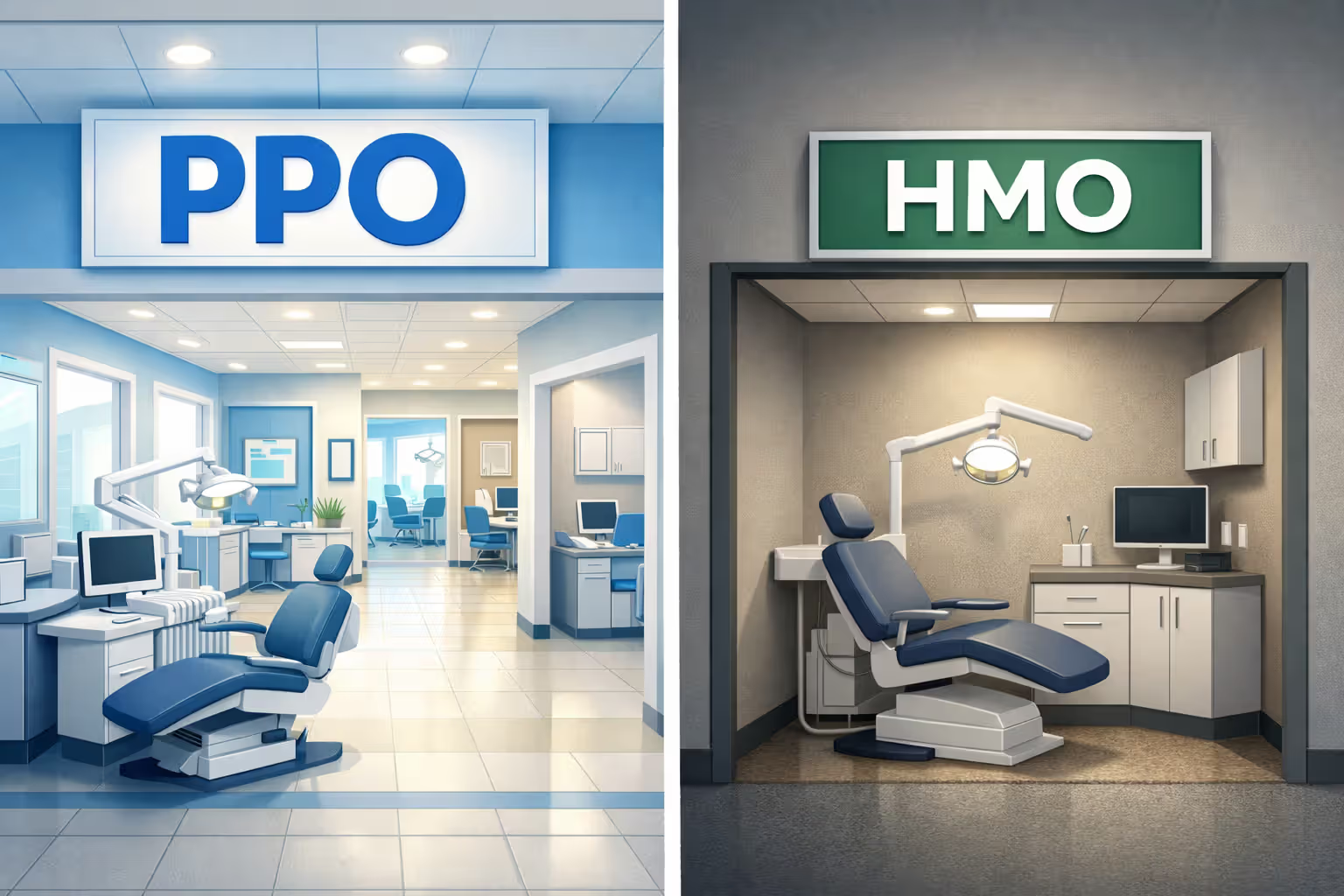
Preferred Provider Organization (PPO) arrangements let you visit any dentist you want. Stay in-network and you'll pay less—typically 80% coverage for basic procedures. Go out-of-network and that drops to maybe 60%. You're paying for freedom of choice, which means monthly premiums between $35 and $70 for individual policies. Worth it if you hate being told which dentist you must use.
Author: Olivia Davenport;
Source: ladylesliebelize.com
Health Maintenance Organization (HMO) dental coverage locks you into a primary dentist from a limited list. Need a specialist? You'll need a referral. The upside: premiums run $15 to $40 monthly, and some plans eliminate deductibles completely. The downside: if your assigned dentist books three months out or you just don't click with them, you're stuck navigating the network's bureaucracy to switch.
Indemnity arrangements (sometimes called fee-for-service) give you total freedom—see any dentist anywhere. You pay the bill upfront, file a claim, and get reimbursed based on what the insurer considers "usual and customary" pricing in your area. Maximum flexibility comes with maximum hassle: premiums run $50 to $90 monthly, you're managing paperwork yourself, and these plans have become rare as PPOs took over.
Dental discount programs aren't insurance at all. You pay an annual membership fee—usually $100 to $200—and participating dentists give you 10% to 60% off their standard rates. No claims, no deductibles, no annual caps. You're just paying a reduced rate at each visit. This works if you're healthy and only need cleanings, or if you need extensive work and want predictable pricing. It fails if you're facing major procedures and need true insurance to limit your financial exposure.
Dental Insurance for Seniors: What Changes After 65
Medicare stops paying for dental care the day you turn 65. Parts A and B don't cover cleanings, fillings, crowns, or dentures—routine or otherwise. Part C (Medicare Advantage) plans sometimes add dental benefits, but what you get varies wildly. One plan might cover preventive care only. Another might chip in for major work but cap benefits at $1,000 annually, which barely makes a dent in real costs.
Your teeth don't improve with age. After decades of chewing, you're more likely to deal with cracked teeth, receding gums, and tooth loss. Dentures cost $2,000 to $8,000 for a full set. Dental implants run $3,000 to $6,000 per tooth. Periodontal disease treatment adds up fast. Without coverage, these expenses can wreck retirement savings you spent decades building.

Author: Olivia Davenport;
Source: ladylesliebelize.com
Standalone dental insurance for people over 65 costs more than it does for younger adults—expect monthly premiums between $40 and $90 for individual coverage. Insurance companies price based on age and risk. They know older enrollees need expensive procedures more often. Look for policies with yearly maximums of $2,000 or higher and major service coverage at 50% minimum. Some carriers bundle dental, vision, and hearing benefits together, which simplifies enrollment and sometimes cuts your total monthly cost by $10 to $20 compared to buying each separately.
Full Coverage Plans with No Waiting Periods
Most dental insurance makes you wait. Basic services like fillings might require 30 to 90 days before coverage kicks in. Major work—crowns, bridges, root canals—can have waiting periods of six to 12 months. Enroll in January, need a crown in March, and you might get denied because the clock hasn't run out.
Plans that eliminate waiting periods let you access benefits immediately. This matters enormously for seniors who know they need dental work soon or who are enrolling outside an employer group. You'll pay for this convenience—premiums typically run 15% to 30% higher than standard policies. Insurers might also lower annual maximums to offset the risk that you'll file expensive claims right away.
Not every carrier offers these plans, and availability changes by state. When you compare options, check whether "no waiting period" applies to all services or just preventive care. Some plans waive the wait for cleanings and exams but still make you wait six months before they'll pay for crowns. Read how they handle pre-existing conditions too. A few insurers won't cover problems diagnosed before you enrolled, even when there's technically no waiting period.

Author: Olivia Davenport;
Source: ladylesliebelize.com
How Much Does Dental Insurance Cost
What you'll pay depends on plan type, your age, where you live, and what level of coverage you're buying. Here's what 2026 pricing looks like on average:
| Plan Type | Under Age 50 | Ages 50–64 | Age 65+ | Yearly Benefit Cap | Preventive Services | Major Services |
| PPO | $40–$60 | $50–$75 | $60–$90 | $1,500–$2,500 | 100% | 50% |
| HMO | $20–$35 | $25–$45 | $35–$60 | $1,000–$2,000 | 100% | 50% |
| Indemnity | $55–$85 | $70–$100 | $80–$120 | $1,500–$2,500 | 80% | 50% |
| Discount Plan | $8–$15/month | $10–$18/month | $12–$20/month | None | 15–60% off | 15–60% off |
Premiums climb as you age because actuaries have data showing older people use more services and need pricier procedures. Where you live affects cost too. In expensive cities—think New York, San Francisco, Boston—premiums run 20% to 40% above national averages. Rural areas sometimes offer lower premiums but might have fewer in-network dentists.
Monthly premiums don't tell the whole story. You've also got deductibles (typically $50 to $100 per person yearly), coinsurance (your share of each procedure), and that annual cap. Take a $70-per-month PPO with a $1,500 maximum. You're paying $840 annually in premiums. Now you need a $2,500 crown. Your total cost: $840 premiums + $100 deductible + 50% of $2,500 (that's $1,250) = $2,190. The plan saved you $310 versus paying cash. Not huge, but it compounds if you need fillings or other work during the year.
Comparing Dental Insurance Plans
Evaluating coverage requires more than skimming a benefits summary. Here's how to compare properly:
Step 1: Inventory what dental work you'll likely need this year. If you're just getting two cleanings and nothing's wrong, preventive coverage matters most. If your dentist mentioned you'll need a crown soon or you've been putting off gum treatment, focus on major service coverage and high annual maximums.
Step 2: Calculate what each plan will actually cost you over 12 months. Multiply monthly premiums by 12. Add the deductible. Then estimate coinsurance based on procedures you expect to need. Use real pricing from your dentist or average costs in your area. This math reveals whether a cheap plan with weak coverage actually costs more than a pricier plan with strong benefits.
Step 3: Confirm which dentists participate in each network. Go to the insurer's website and search for providers near your home and workplace. Make sure at least three to five quality dentists participate. Then call your current dentist's office, verify they accept the plan, and ask whether they've had problems with claims or reimbursements from that carrier.

Author: Olivia Davenport;
Source: ladylesliebelize.com
Step 4: Read what's excluded and what's limited. Policies often don't cover cosmetic procedures, orthodontia (unless you pay extra), or implants. Some limit you to two cleanings yearly or one set of X-rays every 24 months. If you need three or four cleanings annually because of gum disease, a plan that covers extra visits justifies higher premiums.
Step 5: Test a real-world scenario. Pick a common procedure you might need—maybe a filling. Calculate your out-of-pocket cost under each plan: deductible plus coinsurance. Compare that to the cash price your dentist charges. If insurance only saves you $20 or $30 and you're paying $600 yearly in premiums for minimal benefit, the coverage might not be worth buying.
Step 6: Check customer complaints and service ratings. The National Association of Insurance Commissioners publishes complaint ratios for every carrier. High ratios mean frequent disputes over denied claims or lousy service. Sites like the Better Business Bureau and Trustpilot show patterns—if multiple people complain about delayed reimbursements or surprise denials, that's a warning sign.
Common Mistakes When Choosing Dental Insurance
Even careful shoppers make predictable errors that waste money:
Obsessing over the monthly premium alone. A $25-per-month HMO looks appealing until you realize it only covers 40% of major work and caps benefits at $1,000. If you need a $2,000 bridge, you'll pay $1,200 out-of-pocket—more than you'd spend with a $60-per-month PPO that covers 50% of major work and caps at $2,000.
Not checking the annual maximum until it's too late. Many people don't look at this number until they've already maxed out mid-year. If you have ongoing dental problems or expect multiple procedures, a $1,000 cap will evaporate fast, leaving you to fund the rest yourself. Plans with $2,000 or higher maximums cost more monthly but prevent shock bills.
Assuming your dentist accepts a plan because it's a "major brand." This assumption causes chaos when you show up for a cleaning and discover they're out-of-network, which doubles your coinsurance. Always call the dentist's office and confirm participation before you enroll. Every time.
Ignoring waiting periods when you need work soon. Buying insurance the week before a scheduled root canal won't help if the plan makes you wait six months for major service coverage. If you need treatment soon, find plans with reduced or eliminated waiting periods, even if premiums run higher.
Underestimating what your teeth will need. Buying the cheapest plan because you haven't needed dental work in five years backfires when you crack a tooth and need an emergency crown. Dental problems arrive without warning. You can't switch plans mid-crisis—you're locked in until the next enrollment period.
Not comparing insurance against discount plans. If you're healthy and only getting preventive care, a $150-yearly discount plan offering 30% off cleanings might beat a $600-yearly insurance policy. On the flip side, if you need a root canal and crown, insurance with coinsurance and a benefit cap will limit your costs far better than a discount plan that still leaves you paying 60% of a $3,000 bill.
Frequently Asked Questions About Dental Insurance
Picking quality dental insurance means balancing cost, coverage, and convenience. Start by assessing your dental health and what you'll likely need over the next year—just preventive care, or major work like crowns and root canals? Use that forecast to calculate total yearly costs for each plan type, including premiums, deductibles, coinsurance, and annual maximums. Verify that quality dentists near you participate in the network. Read the details about waiting periods and what's excluded.
Seniors face unique pressure. Medicare leaves a gap that leads to deferred care and declining oral health. Standalone dental insurance, Medicare Advantage plans with dental riders, or bundled dental-vision-hearing policies can close that gap—but only if you choose a plan with adequate annual maximums and solid major service coverage. Plans without waiting periods provide immediate access but cost more, so weigh the premium increase against your timeline for needed procedures.
Skip common mistakes: don't fixate on the lowest monthly premium, don't assume your dentist is in-network without calling to confirm, and don't overlook the annual maximum. Run actual cost scenarios based on your dental history and your dentist's real fees. A plan that looks expensive on paper might deliver better value when you account for coinsurance savings and a higher benefit cap.
Quality dental insurance isn't about hunting for the cheapest policy. It's about securing coverage that keeps routine care affordable, shields you from catastrophic dental bills, and gives you access to competent providers when you need them. Compare plans methodically and you'll avoid both overpaying for coverage you won't use and underinsuring yourself when a dental emergency hits.
Related Stories

Read more

Read more



The content on this website is provided for general informational and educational purposes only. It is intended to offer guidance on dental insurance topics, including coverage options, premiums, deductibles, waiting periods, annual maximums, claims processes, and procedures that may be covered by insurance such as implants, braces, crowns, dentures, and preventive care. The information presented should not be considered medical, dental, financial, or professional insurance advice.
All articles and explanations published on this website are for informational purposes only. Dental insurance policies may vary between providers, and details such as coverage limits, exclusions, reimbursement rates, waiting periods, and eligibility requirements can differ depending on the insurer, plan, and individual circumstances.
While we strive to keep the information accurate and up to date, this website makes no guarantees regarding the completeness or reliability of the content. Use of this website does not create a professional relationship. Visitors should review official policy documents and consult with licensed dental or insurance professionals before making decisions regarding dental care or insurance coverage.