
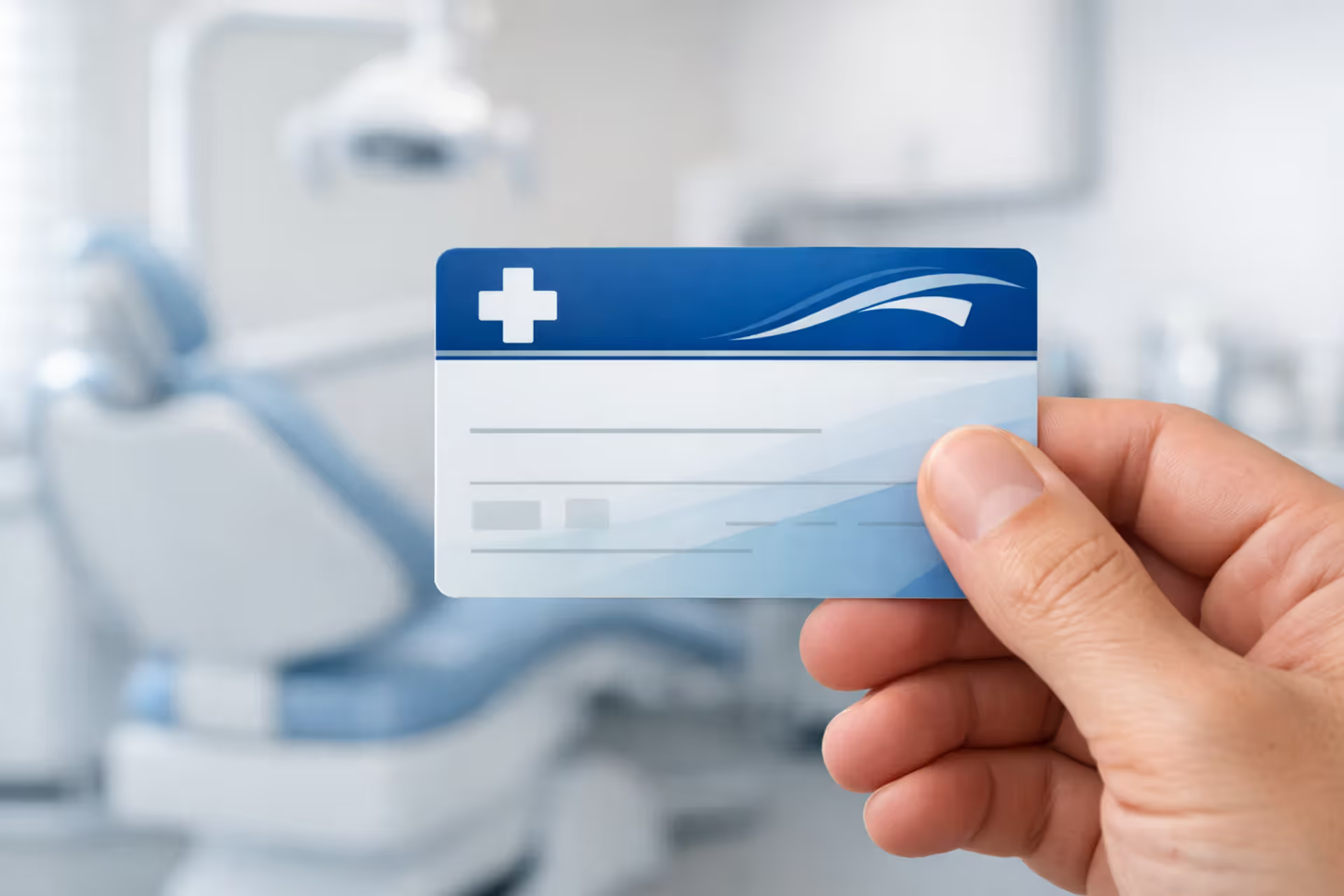
Hand holding a health insurance card in front of a blurred modern dental office chair
Medicaid Dental Insurance Coverage Guide

Over 90 million people across America rely on Medicaid for healthcare. Here's something that surprises most of them: their dental coverage doesn't work the same way as their medical benefits. The rules shift based on how old you are, which state you live in, and sometimes even which category of Medicaid you qualify under. Some beneficiaries get excellent dental care at no cost. Others can't even get a basic filling covered. That gap between comprehensive treatment and emergency-only extraction makes all the difference when you're dealing with a painful tooth or watching your child's smile develop.
Does Medicaid Include Dental Insurance?
The short answer? It depends—and that's frustrating, but here's what you need to know.
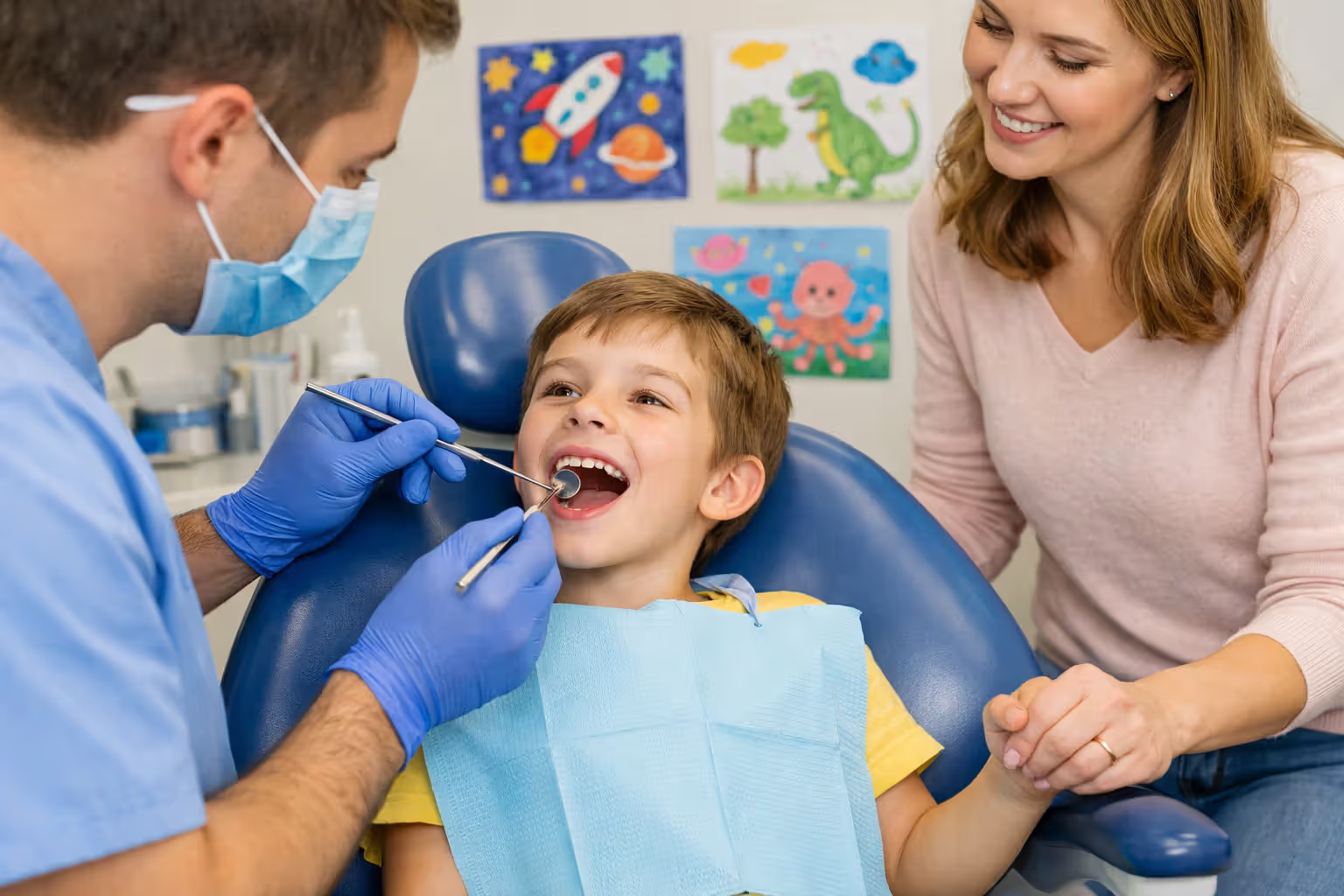
If you're under 21 and enrolled in Medicaid, you've got dental coverage. Period. Federal regulations mandate that every state program must provide complete dental services to children through something called EPSDT (Early and Periodic Screening, Diagnostic and Treatment) benefits. Your state can't opt out of this requirement. Kids get preventive appointments, cavity fillings, tooth extractions, and everything else needed to maintain healthy teeth.
Adults face a completely different situation. Once you turn 21, dental benefits become optional from the federal government's perspective. Each state decides independently whether to offer dental coverage to adult enrollees—and if so, how much. Connecticut might cover everything from cleanings to crowns to dentures. Meanwhile, Arizona historically covered only emergency tooth extractions for years before expanding benefits. A few states have offered almost nothing beyond treating severe infections in hospital emergency rooms.
People frequently ask "is medicaid dental insurance" as if it's a separate product you buy. It's not. Your Medicaid coverage package may or may not include dental benefits depending on the factors above. You won't find a standalone dental insurance policy—instead, dental services come bundled with your regular Medicaid card. Most states don't even issue separate cards for dental visits, though a few contract with specialized dental plans that provide their own member identification.
The relationship between medicaid and dental insurance gets confusing because two people in the same household might have different coverage. Your pregnant sister could access enhanced dental benefits during her pregnancy, while you get only emergency extractions. Same program, different rules based on eligibility category.
Understanding dental insurance with medicaid means accepting this fragmented system. Your medical coverage operates nationwide with consistent basic standards. Dental? That's controlled at the state capitol, where budget committees decide each year what stays funded and what gets cut.
Author: Daniel Mercer;
Source: ladylesliebelize.com
What Dental Services Does Medicaid Cover?
The coverage split between kids and adults couldn't be starker. Children receive robust protection across all 50 states, while adult benefits range from excellent to practically nonexistent.
Dental Coverage for Children on Medicaid
Anyone under 21 enrolled in Medicaid qualifies for comprehensive dental services. Federal law doesn't just suggest this coverage—it requires states to provide:
- Routine checkups and professional cleanings, usually twice yearly
- X-rays to detect cavities between teeth and under the gumline
- Fluoride applications to strengthen enamel and prevent decay
- Dental sealants for molars, creating barriers against food particles
- Fillings for cavities in baby teeth and permanent teeth
- Tooth extractions when decay progresses beyond repair
- Root canal therapy to save infected teeth
- Crowns for badly damaged teeth that can still be preserved
- Orthodontic treatment when dental problems affect eating, speaking, breathing, or ability to keep teeth clean
- Emergency care for knocked-out teeth, facial trauma, or painful infections
Notice the qualifier "medically necessary" shows up with orthodontics. Your teenager won't get braces just because they want a prettier smile. But severe overcrowding that traps food and causes constant cavities? That qualifies. An underbite so pronounced it prevents proper chewing? Covered. The clinical standard focuses on health and function, not cosmetics.
Many parents discover that dental insurance for medicaid children actually exceeds what their employer's dental plan would provide. Private insurance typically caps annual benefits at $1,000 to $2,000. Medicaid for kids? No annual maximum. If your child needs extensive treatment, it's covered.
Dental Coverage for Adults on Medicaid
Adult coverage creates a three-tier system that varies wildly by geography.
Full-benefit states treat adult dental coverage like children's benefits. You'll access cleanings twice a year, fillings when you get cavities, root canals instead of extractions for infected teeth, crowns for cracked molars, and dentures if you've lost teeth. These states—like Connecticut, Rhode Island, and North Dakota—view dental health as integral to overall wellness. They've calculated that paying for preventive care costs less than treating advanced disease and expensive emergency room visits.
Partial-benefit states pick and choose what they'll cover. Maybe you get one cleaning annually and basic exams. Emergency extractions when you're in pain. But fillings? Only for front teeth where decay shows when you smile. Crowns? Not covered at all. Root canals? Forget it—they'll pull the tooth instead. Some of these states impose annual dollar caps as low as $700, which barely covers one crown. You've technically got "coverage," but it won't prevent tooth loss from treatable problems.
Emergency-only states cover tooth extraction when infection or pain becomes severe. That's it. No preventive cleanings. No fillings. No way to save a tooth that could be treated. You end up losing teeth to cavities that a $150 filling would have fixed, because only the $75 extraction is covered. The financial logic makes no sense until you understand state budget pressures during economic downturns.
Pregnant women often receive temporary enhanced benefits regardless of what their state normally covers for adults. During pregnancy and for 60 days postpartum, many states cover cleanings, fillings, and gum disease treatment. Medical research links periodontal disease to premature birth and low birth weight, so treating maternal oral health protects both mother and baby.
Author: Daniel Mercer;
Source: ladylesliebelize.com
How to Check If You Have Dental Insurance Through Medicaid
Thousands of Medicaid enrollees never use their dental benefits because they assume they don't have any. Finding out what you're entitled to takes some detective work, but it's straightforward.
Call your state's Medicaid helpline. Every state runs a toll-free number for members. Dig out your Medicaid ID card and call during business hours. Don't ask "Do I have dental coverage?"—that gets you a yes or no answer without details. Instead, try: "I need to schedule a dental appointment. What specific dental services does my Medicaid plan cover, and how often can I use them?" Write down what they tell you. Ask about:
- Which services are covered for someone in your eligibility category
- How many cleanings or exams you get per year
- Whether procedures like fillings or crowns require prior approval
- If the state uses a managed care dental plan with its own network
Log into your member account online. Most states now offer web portals where you manage your Medicaid coverage. Look for sections labeled "My Benefits," "Coverage Details," or "Dental Services." Download the benefits summary as a PDF. You'll want this document when calling dental offices to verify they accept your specific coverage.
Study your Medicaid card front and back. Some states print dental plan information directly on the card, especially if they contract with a separate company to handle dental benefits. You might see a second phone number specifically for dental questions, or a website that differs from the main Medicaid site.
Contact the dental plan if your state outsources administration. About 20 states hire private dental companies to manage Medicaid dental benefits. These plans maintain their own provider directories, handle prior authorizations, and process claims. If your state uses this system, you'll get better information from the dental plan directly than from the general Medicaid office. The plan name should appear in your enrollment paperwork.
One mistake I see constantly: people ask their primary care doctor's receptionist about dental coverage and get wrong information. Medical clinics rarely track dental benefits because they're administered separately. The front desk genuinely doesn't know. Don't let their uncertainty convince you that coverage doesn't exist.
Do i have dental insurance with medicaid? Under age 21? Yes, definitely. Adult? Depends entirely on your state and which Medicaid category you qualify under—disability, low income, pregnancy, or another pathway.
Medicaid Dental Coverage by Beneficiary Type
| Beneficiary Category | Services Typically Covered | Common Restrictions | Emergency Care |
| Children under 21 | Complete preventive, diagnostic, and restorative services: exams, cleanings, X-rays, fluoride, sealants, fillings, extractions, root canals, crowns, medically necessary braces | Federal EPSDT requirements eliminate annual dollar caps and ensure coverage of all medically necessary dental services regardless of cost | Comprehensive coverage for trauma, infections, severe pain, knocked-out teeth |
| Pregnant women | Most states expand benefits during pregnancy: cleanings, exams, diagnostic X-rays, cavity fillings, extractions, gum disease treatment | Benefits usually expire 60 days after delivery; major procedures like crowns may require prior authorization demonstrating medical necessity during pregnancy | Full emergency coverage during pregnancy and immediate postpartum period |
| Non-pregnant adults | Ranges wildly by state from comprehensive coverage matching children's benefits to absolutely nothing beyond emergency extraction; preventive services include cleanings and exams where offered | Numerous states cap annual benefits at $500-$1,500, restrict service frequency, or exclude entire categories like crowns, root canals, and dentures | Emergency extractions and infection treatment covered in nearly all states even when other dental benefits don't exist |
Coverage varies substantially based on which state you live in. Contact your state's Medicaid program directly to learn your specific benefits.
How to Access Dental Care with Medicaid
Having benefits on paper means nothing if you can't find a dentist who'll see you. Medicaid reimburses dentists significantly less than private insurance—sometimes 40-60% less for identical procedures. This payment gap causes many dental practices to either refuse Medicaid entirely or limit how many Medicaid patients they'll accept. You'll need persistence and strategy.
Use your state's official provider search tool. Every Medicaid program maintains a searchable database of participating dentists. These directories get updated more reliably than general dentist-finder websites. Filter results by your ZIP code, select "accepting new patients," and note which practices list Medicaid. Here's the crucial step: call every office to confirm. Directories lag behind reality when dentists stop accepting Medicaid or close their patient panels.
Community health centers provide guaranteed access. FQHCs (Federally Qualified Health Centers) receive federal grants with specific requirements. One requirement? They must accept Medicaid patients and can't turn people away based on insurance type. Many run dental clinics alongside medical services. You might wait longer for an appointment than at a private practice, but you'll get comprehensive care. Search for community health centers in your area through HRSA's find-a-health-center tool.
Dental schools need patients for student training. Nearly every dental school operates a clinic where third- and fourth-year students provide treatment under faculty supervision. They accept Medicaid and typically charge reduced fees even below what Medicaid covers. Appointments take longer because students work methodically with an instructor checking their work. The clinical quality matches or exceeds private practice—nervous students and watchful professors don't rush. You're helping train the next generation of dentists while receiving excellent care.
Learn whether prior authorization applies. Some states require dentists to get approval before performing anything beyond routine exams and cleanings. Your dental office should handle this paperwork, but knowing it exists helps when staff claim something "isn't covered." Sometimes what they really mean is "we don't want to file the prior authorization request." Ask specifically: "Have you submitted this for prior authorization?" The answer reveals whether coverage was denied or never actually requested.
Bring documentation to every appointment. Always carry your current Medicaid card even if your state also issued a separate dental card. Bring photo identification and recent mail showing your address if you're establishing care somewhere new. For children's appointments, bring the child's Medicaid card plus your own ID proving you're the parent or legal guardian. Offices verify eligibility at each visit.
Request same-day treatment when possible. Many Medicaid dental clinics schedule your exam on one day, then ask you to return weeks later for fillings or other procedures. This makes clinical sense—the dentist needs time to review X-rays and plan treatment. But if you rely on public transportation or have limited time off work, multiple appointments create barriers. When you schedule the initial exam, ask: "If the dentist finds cavities I can afford to treat today, is that possible?" Some offices accommodate this request if their schedule allows.
How to get dental insurance with medicaid isn't about applying for anything new. You already have dental insurance through medicaid if you're enrolled in the program. The challenge is activating those benefits by finding providers and understanding the coverage rules.

Author: Daniel Mercer;
Source: ladylesliebelize.com
Can You Get Additional Dental Insurance If You Have Medicaid?
Technically yes, but it rarely makes financial sense. Let's do the math to see when supplemental coverage might actually help.
Private dental discount plans cost $8 to $25 monthly. These aren't insurance policies—they're membership programs offering negotiated discounts at participating dentists. You might pay $180 yearly for a plan that reduces cleanings from $100 to $70, fillings from $200 to $140, and crowns from $1,200 to $800. Sounds appealing until you realize that many dentists offer identical "cash discounts" if you simply ask about self-pay pricing. You're paying an annual fee for access to discounts you could negotiate directly.
Standalone dental insurance runs $15 to $50 monthly. These policies include waiting periods (often six months for major work), annual maximum benefits ($1,000 to $2,000), and coverage percentages that kick in gradually. If you already have Medicaid covering cleanings and basic care, you're paying $180 to $600 yearly for a policy that might cover one crown after the waiting period—assuming you need a crown that year.
Coordination of benefits determines payment order. When you carry both Medicaid and private dental insurance, the private policy pays first as primary coverage. Then Medicaid covers remaining costs as secondary insurance up to what Medicaid would've paid for that service. You don't get double payment. If a filling costs $150, private insurance pays $90, and Medicaid would've paid $60, you still owe $60 out of pocket. The duplicate coverage didn't help.
The numbers rarely favor buying additional coverage. Imagine you're paying $240 annually for a dental discount plan. Your state's adult Medicaid covers two cleanings yearly but no fillings. Those cleanings are worth about $200 total. The discount plan reduces filling costs from $180 to $120. You'd need four cavities every single year just to break even on that premium versus paying cash for fillings. Most people don't have that much new decay annually if they're getting regular cleanings.
Specific situations justify supplemental coverage. If your state provides zero adult dental coverage or emergency-only extraction, and you have ongoing dental needs like replacing old fillings or getting dentures, buying coverage might fill critical gaps. Calculate carefully: annual premium plus your expected out-of-pocket costs under the plan versus negotiated cash rates for the same services without any insurance. Sometimes paying cash with a dentist's self-pay discount costs less than insurance premiums.
Employer coverage through a spouse changes everything. If your spouse's job offers family dental coverage for $30 monthly and provides better benefits than your state's limited adult Medicaid dental coverage, enroll in that plan. You'll keep Medicaid for medical services while using the employer plan for dental care. Dual coverage makes sense when the employer plan costs little and delivers substantially better benefits.
Can i get dental insurance if i have medicaid? Sure, nothing prevents it legally. Should you? Calculate the total annual cost against realistic projected usage before spending money on coverage that duplicates benefits you already have.

Author: Daniel Mercer;
Source: ladylesliebelize.com
State-by-State Differences in Medicaid Dental Coverage
Medicaid's federal-state partnership creates dramatically unequal dental coverage depending on where you live. Understanding why helps you navigate your own situation and advocate for better benefits.
Budget realities drive state decisions. The federal government sets minimum Medicaid requirements and matches state spending at varying rates (50% to 75% depending on the state's wealth). States must cover certain populations and services to receive federal money. Adult dental? That's optional. When state revenues drop during recessions, legislators look for cuts. Adult dental benefits make easy targets because federal rules don't forbid eliminating them. When budgets recover, dental coverage might come back—or get directed toward other priorities instead.
Comprehensive coverage states invest upfront to save later. Connecticut provides adult Medicaid dental benefits comparable to good employer insurance: cleanings, exams, X-rays, fillings, root canals, crowns, extractions, dentures, even some periodontal surgery. Rhode Island takes a similar approach. These states have calculated that paying $200 for preventive care now costs less than paying $2,000 for emergency room visits and infected teeth later. They're right—studies consistently show that comprehensive dental coverage reduces medical costs.
Limited coverage states offer just enough to seem helpful. These states might cover one annual cleaning, basic exams, and emergency extractions. Maybe fillings for front teeth only—because gaps in your smile affect job prospects, but missing molars stay hidden. Perhaps an annual dollar cap of $1,000 sounds generous until you learn that a single crown costs $1,200. You've got "coverage" that won't actually protect you from significant dental disease.
Minimal coverage states stick to crisis intervention. Tooth abscessed and swollen? They'll cover extraction and antibiotics. Want to save that tooth with a root canal? Pay out of pocket or lose the tooth. Need dentures after losing multiple teeth to untreated decay? Not covered. These policies create a cruel cycle: people can't afford preventive care, develop serious problems, receive only emergency extractions, lose teeth, face employment difficulties due to appearance, remain in poverty.
What dental insurance is medicaid in your state today might change next year. California eliminated most adult dental benefits in 2009 during budget crisis, then gradually restored services starting in 2014. Other states have moved in the opposite direction, cutting coverage that existed for decades. Track your state legislature's budget discussions if you depend on adult dental benefits—they're always vulnerable during tough economic times.
Verify coverage through official state sources only. National summaries like Kaiser Family Foundation's state comparison charts provide useful overviews, but they generalize complex details and may lag behind recent changes. Your state's Medicaid website contains the authoritative, up-to-date information specific to your eligibility category. Don't trust what worked for your cousin in another state or what you read about Medicaid “in general.”
Adults visit our clinics after years of avoiding dental care—sometimes because they didn't realize Medicaid included dental benefits at all, often because they couldn't locate a provider willing to accept their coverage. By the time we see them, conditions that could've been resolved with a straightforward filling now require extraction. The geographic lottery of state-by-state adult coverage variations means your address determines whether you keep your teeth. That shouldn't happen in America. Investing in comprehensive dental coverage for all Medicaid enrollees isn't just humane—the economics make sense. Studies show each dollar spent on preventive dental care saves between eight and fifty dollars in emergency room visits and downstream medical complications
— Dr. Maria Sanchez
Frequently Asked Questions About Medicaid and Dental Insurance
Medicaid dental coverage exists along a spectrum from genuinely comprehensive to essentially worthless depending on whether you're a child or adult, which state you call home, and which eligibility category you qualify under. Children receive strong federal protection guaranteeing robust dental services in all 50 states. Adults navigate a fragmented patchwork where comprehensive benefits in one state contrast sharply with emergency-extraction-only coverage across the border.
Understanding your specific coverage demands active investigation. Log into your state's Medicaid member portal and download your benefits summary. Call the helpline and write down exactly which services you can access and how often. Confirm this information with dental offices before scheduling, because coverage details shift based on eligibility categories that aren't always obvious.
The complexity of medicaid dental insurance shouldn't block you from getting care. Start by confirming your benefits, then systematically search for providers using your state's directory, community health center locations, and dental school clinics. If your state offers minimal adult coverage, focus whatever preventive benefits exist to avoid expensive problems that won't receive coverage later.
Buying supplemental dental insurance rarely improves access enough to justify the premium costs for Medicaid beneficiaries, though exceptions exist. Evaluate your specific situation—particularly if you live in an emergency-only state and face predictable dental needs. Run the numbers carefully. Sometimes negotiating cash-pay discounts directly with dentists costs less than insurance premiums.
Medicaid dental policies change when state budgets tighten or recover. Benefits available this year might disappear next year, or limited coverage could expand if advocates successfully lobby for improvements. Stay informed about your current benefits and use them proactively rather than waiting until dental problems become emergencies requiring extractions instead of restorations.
Related Stories

Read more
Read more



The content on this website is provided for general informational and educational purposes only. It is intended to offer guidance on dental insurance topics, including coverage options, premiums, deductibles, waiting periods, annual maximums, claims processes, and procedures that may be covered by insurance such as implants, braces, crowns, dentures, and preventive care. The information presented should not be considered medical, dental, financial, or professional insurance advice.
All articles and explanations published on this website are for informational purposes only. Dental insurance policies may vary between providers, and details such as coverage limits, exclusions, reimbursement rates, waiting periods, and eligibility requirements can differ depending on the insurer, plan, and individual circumstances.
While we strive to keep the information accurate and up to date, this website makes no guarantees regarding the completeness or reliability of the content. Use of this website does not create a professional relationship. Visitors should review official policy documents and consult with licensed dental or insurance professionals before making decisions regarding dental care or insurance coverage.