

Senior couple reviewing dental insurance documents at a kitchen table with a laptop and eyeglasses
Medicare Dental Insurance Coverage Guide

More than 65 million Americans rely on Medicare for their healthcare needs, yet most discover too late that their coverage stops short when it comes to dental work. A root canal, crown replacement, or even routine cleanings typically won't appear on Medicare's reimbursement list. This gap leaves many retirees scrambling to cover bills that can run into thousands of dollars.
Understanding what Medicare does—and doesn't—pay for dental services helps you make informed decisions about supplemental coverage. Whether you need occasional cleanings or anticipate major procedures like implants, knowing your options now saves money and stress later.
What Dental Services Does Original Medicare Cover?
Original Medicare (Parts A and B) draws a sharp line between medically necessary procedures and routine dental care. Part A hospital insurance will pay for certain dental services only when they're part of a covered inpatient stay. For example, if you need jaw reconstruction after an accident or tumor removal that requires hospitalization, Medicare Part A may cover the associated dental work.
Part B medical insurance covers dental care in equally narrow circumstances. It pays for dental exams before kidney transplants or heart valve replacements, because infections can complicate those surgeries. Part B also covers jaw X-rays to check for fractures or diseases, but not X-rays taken during routine dental checkups.
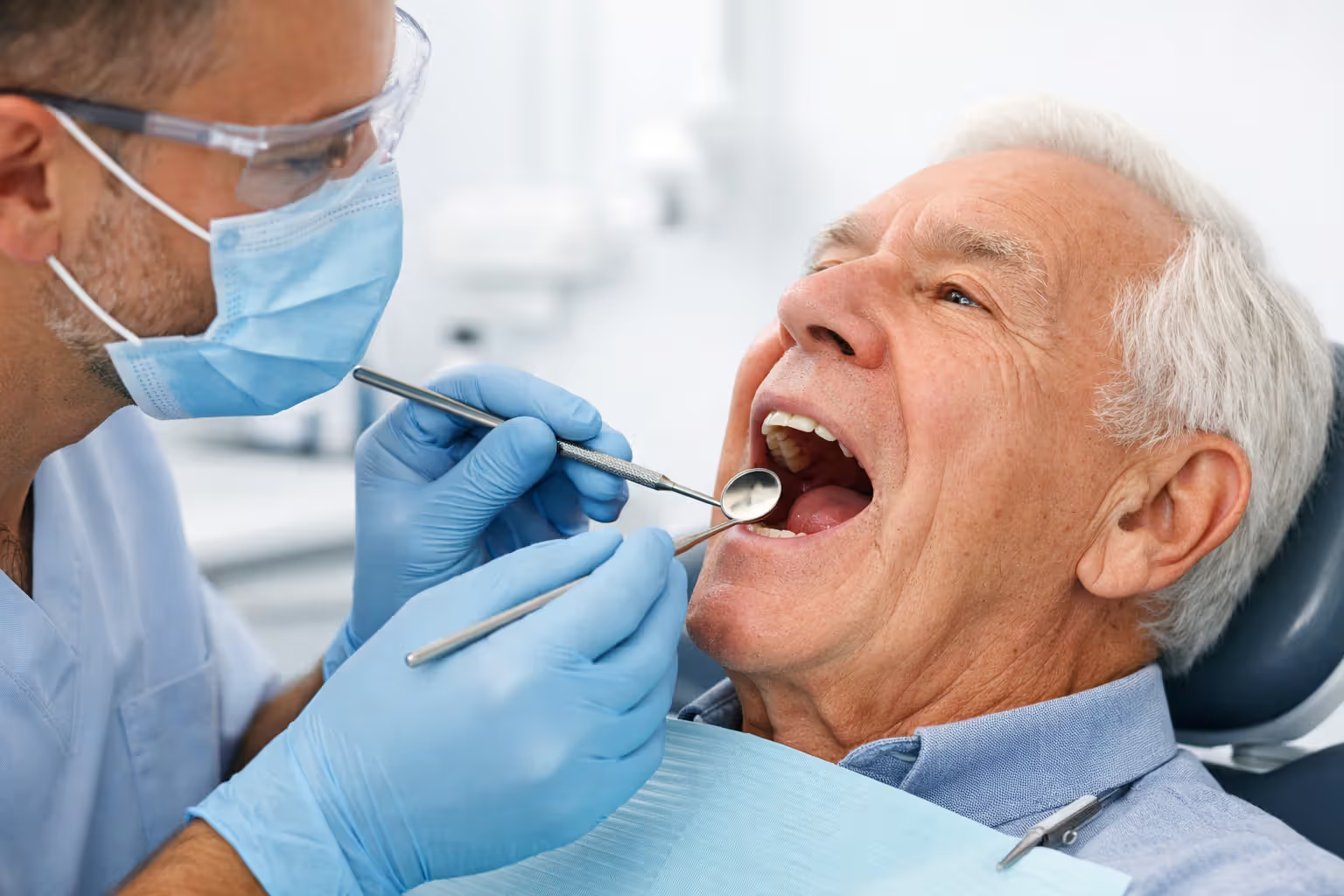
What Medicare won't cover includes cleanings, fillings, extractions for routine tooth decay, dentures, crowns, bridges, or root canals. Even if a dentist determines these procedures are medically necessary for your overall health, Original Medicare typically won't reimburse you. The program treats dental care as a separate category, much like vision and hearing services.
Author: Olivia Davenport;
Source: ladylesliebelize.com
One common mistake: assuming that "medically necessary" means Medicare will pay. A dentist might tell you that extracting infected teeth is medically necessary to prevent sepsis, but unless that infection lands you in the hospital under specific circumstances, Part A or B won't cover the extraction itself.
Does Medicare provide dental insurance as a standard benefit? No. The program was designed in 1965 with a focus on acute medical care and hospitalization, leaving dental, vision, and hearing services largely uncovered. Congress has debated expanding these benefits, but as of 2026, Original Medicare remains limited in dental coverage.
Many seniors are surprised to learn that Original Medicare doesn't cover most dental care. Planning ahead and choosing the right supplemental coverage can prevent unexpected out-of-pocket costs down the road.
— Sarah Mitchell
How to Get Dental Insurance on Medicare
Once you understand Original Medicare's limitations, the next step is exploring ways to add dental coverage. Three main paths exist: enrolling in a Medicare Advantage plan that includes dental benefits, purchasing a standalone dental insurance policy, or checking whether certain Medicare Supplement plans offer optional dental riders.
Medicare Advantage Plans With Dental Benefits
Medicare Advantage (Part C) plans are offered by private insurers approved by Medicare. These plans must cover everything Original Medicare does, but many go further by adding dental, vision, and hearing benefits. Roughly 70% of Medicare Advantage plans in 2026 include some level of dental coverage.
The dental benefits vary widely. Some plans cover only preventive services like cleanings and exams twice a year, with no cost-sharing. Others include comprehensive coverage for fillings, crowns, and even dentures, though you'll typically pay coinsurance or copays. Annual maximums are common—many plans cap dental benefits at $1,000 to $2,500 per year.
Trade-offs exist. Medicare Advantage plans usually require you to use network dentists. If your longtime dentist isn't in-network, you might face higher out-of-pocket costs or need to switch providers. Additionally, these plans often have prior authorization requirements for major procedures, adding administrative steps before you can schedule treatment.
Enrollment is straightforward if you're already eligible for Medicare. You can join a Medicare Advantage plan during your Initial Enrollment Period, the Annual Election Period (October 15–December 7), or a Special Enrollment Period if you qualify. Once enrolled, the dental benefits activate along with your medical coverage.

Author: Olivia Davenport;
Source: ladylesliebelize.com
Standalone Dental Insurance for Seniors on Medicare
Standalone dental insurance operates independently of Medicare. You purchase a policy directly from an insurer, and it functions like traditional dental insurance you might have had through an employer. Premiums typically range from $20 to $60 per month, depending on your location and the plan's generosity.
These policies usually categorize services into three tiers: preventive (cleanings, exams, X-rays), basic (fillings, extractions), and major (crowns, bridges, dentures, implants). Preventive care often has no waiting period and is covered at 80–100%. Basic services might be covered at 70–80% after a short waiting period. Major services are typically covered at 50% and may require waiting 6–12 months before benefits kick in.
Annual maximums are the norm. Many standalone plans cap benefits at $1,000 to $1,500 per year, which can leave you responsible for significant costs if you need extensive work. For example, if you need a crown costing $1,200 and your plan covers 50% with a $1,000 annual max, you'd pay $600 out of pocket—assuming you haven't used any benefits yet that year.
One advantage: you're not locked into a provider network as strictly as with Medicare Advantage. Many standalone dental plans use PPO networks, allowing you to see out-of-network dentists for a higher coinsurance rate. This flexibility matters if you have an established relationship with a dentist you trust.
Dental Coverage Through Medicare Supplement Plans
Medicare Supplement (Medigap) plans help cover the gaps in Original Medicare, such as deductibles and coinsurance for hospital and doctor visits. However, federal law prohibits Medigap policies from including dental, vision, or hearing coverage as part of the standardized benefits.
Some Medigap insurers offer optional dental riders or discount programs as add-ons. These aren't true insurance but rather access to negotiated rates with participating dentists. You pay the full cost upfront but receive a discount—often 10–30% off standard fees. There's no annual maximum because there's no reimbursement; you're simply buying services at reduced prices.
Dental insurance through Medicare Supplement plans, when available as a rider, functions like a standalone policy with premiums, waiting periods, and annual caps. It's administratively separate from your Medigap coverage. Not all insurers offer this option, and availability varies by state.
The bottom line: if you choose Original Medicare plus a Medigap plan, you'll likely need to purchase separate dental coverage if you want more than discount pricing.
Dental and Vision Insurance Options for Medicare Recipients
Insurers recognize that seniors often need both dental and vision care, so bundled plans have become popular. These packages combine dental and vision benefits into a single policy with one monthly premium, simplifying enrollment and billing.
Bundled dental and vision insurance for Medicare recipients typically costs $30 to $80 per month. The dental portion follows the usual structure—preventive, basic, and major services with annual maximums. The vision portion usually covers an annual eye exam, lenses or frames every one or two years, and discounts on additional eyewear or contact lenses.
What to look for when evaluating these plans:
Network size and access. Check whether your current dentist and eye doctor participate. Switching providers to save money makes sense only if the new providers maintain quality care.
Annual maximums and benefit caps. A plan with a $1,000 dental maximum and $150 vision allowance might sound adequate until you need a root canal and new glasses in the same year. Run the numbers based on your anticipated needs.
Waiting periods. Some bundled plans waive waiting periods for preventive services but impose 6–12 month waits for major dental work. If you know you need a crown soon, a plan with no waiting period (often available through Medicare Advantage) might be smarter.
Premium vs. out-of-pocket balance. Lower premiums usually mean higher coinsurance or copays. If you visit the dentist frequently, paying a bit more monthly for richer coverage can reduce your total annual spending.

Author: Olivia Davenport;
Source: ladylesliebelize.com
Dental and vision insurance for seniors on Medicare also comes in discount-only formats. These aren't insurance policies but membership programs that negotiate reduced fees with providers. You pay an annual or monthly membership fee—often $10 to $25 per month—and receive 10–60% discounts on services. There's no annual maximum because there's no reimbursement, but you also have no coverage for emergencies or unexpected procedures.
Discount programs work best for people who need only routine care and want predictable, lower costs. They fall short if you face major dental work, where insurance reimbursement significantly reduces your burden.
Costs and Coverage: What Medicare Supplemental Insurance Dental Coverage Includes
Understanding the financial details helps you compare options and choose coverage that fits your budget and health needs. Dental insurance for seniors on Medicare varies in structure, but most plans share common cost elements: premiums, deductibles, copays or coinsurance, and annual maximums.
| Coverage Type | Monthly Premium Range | Annual Maximum Benefit | Preventive Care Coverage | Major Services Coverage | Waiting Periods |
| Medicare Advantage with Dental | $0–$80 (may be $0 premium, but varies by plan) | $1,000–$2,500 | 80–100%, often $0 copay | 50–70% coinsurance | Typically none |
| Standalone Dental Insurance | $20–$60 | $1,000–$1,500 | 80–100% | 50% | 0–12 months |
| Discount Dental Plan | $10–$25 | No maximum (discount only) | 10–60% discount | 10–60% discount | None |
| Medigap Dental Rider | $15–$50 | $1,000–$2,000 | 80–100% | 50% | 6–12 months |
Premiums represent your monthly cost to maintain coverage. Medicare Advantage plans sometimes have $0 premiums, though you still pay your Part B premium. Standalone and Medigap dental riders charge separate premiums on top of your other Medicare costs.
Deductibles are less common in dental insurance than in medical coverage, but some plans require you to pay $25–$100 out of pocket before benefits begin. Preventive services often bypass the deductible.
Copays and coinsurance determine what you pay per service. A plan might charge a $20 copay for a cleaning or 20% coinsurance for a filling. Major services like crowns or implants typically have higher coinsurance rates—often 50%, meaning you split the cost with the insurer.
Annual maximums cap how much the plan will pay in a calendar year. Once you hit the limit, you're responsible for 100% of additional costs. This is the single biggest limitation of dental insurance. A $1,500 maximum sounds reasonable until you need a root canal ($1,000), crown ($1,200), and a few fillings ($300 each). You'd exhaust your benefits quickly and face thousands in out-of-pocket expenses.
Waiting periods delay coverage for certain services. Preventive care usually has no waiting period, so you can get a cleaning right after enrollment. Basic services might require a 3–6 month wait, and major services often have 6–12 month waiting periods. If you need immediate major work, a plan with waiting periods won't help in the short term.
Real-world scenario: A retiree enrolls in a standalone dental plan in January 2026 with a $1,500 annual maximum, 100% preventive coverage, 80% basic coverage, and 50% major coverage. In March, she gets a cleaning ($120, fully covered) and two fillings ($250 each, pays 20% = $100). In July, she needs a crown ($1,200, pays 50% = $600). Her total out-of-pocket: $700. The plan paid $800. If she needs another crown in November, she'd pay the full cost because she's approaching her annual max.
Medicare supplemental insurance dental coverage helps, but it rarely covers everything. Budgeting for dental expenses even with insurance prevents surprises.

Author: Olivia Davenport;
Source: ladylesliebelize.com
Is Medicare Dental Insurance Worth It?
The value of dental insurance depends on your oral health, financial situation, and risk tolerance. For some seniors, paying monthly premiums makes perfect sense. For others, self-insuring and paying out of pocket proves cheaper.
When dental insurance makes sense:
- You visit the dentist regularly and need cleanings, exams, and occasional fillings. Preventive coverage alone can offset premiums.
- You anticipate major work in the near future—crowns, bridges, or dentures. Even with annual maximums, insurance reduces your burden.
- Your budget can't absorb a $2,000 surprise bill. Insurance spreads costs over time, making them more predictable.
- You qualify for a Medicare Advantage plan with robust dental benefits and low or $0 premium. The value proposition is strong when dental coverage comes bundled at little extra cost.
When to skip dental insurance:
- You have excellent oral health and rarely need more than cleanings. Paying out of pocket for two cleanings a year ($200–$300 total) costs less than 12 months of premiums ($240–$720) if you never use other benefits.
- You have significant savings earmarked for healthcare. Self-insuring gives you flexibility and avoids annual maximums, waiting periods, and network restrictions.
- The available plans in your area have restrictive networks, and your trusted dentist doesn't participate. Switching providers or paying out-of-network rates can negate the insurance savings.
- You're enrolling late in the year and need major work immediately. Waiting periods mean you'd pay full price anyway, while still paying premiums.
Cost-benefit calculation: Estimate your annual dental expenses based on past history and upcoming needs. Compare that to the total cost of insurance (premiums plus out-of-pocket costs under the plan). If insurance saves you money or provides peace of mind worth the small extra cost, it's worth it. If you'd pay more for insurance than you'd spend without it, skip it.
Example: A senior expects two cleanings ($240), one filling ($250), and possibly a crown ($1,200) in the next year. Total potential cost: $1,690. A standalone plan costs $40/month ($480/year), covers preventive at 100%, basic at 80%, and major at 50% with a $1,500 max. The plan would pay $240 (cleanings) + $200 (filling) + $600 (crown) = $1,040. Out-of-pocket: $50 (filling) + $600 (crown) + $480 (premiums) = $1,130. Without insurance: $1,690. Savings with insurance: $560. In this scenario, insurance is worth it.
But if the same senior needs no major work and only gets cleanings, they'd pay $480 in premiums to save $240 on cleanings—a $240 net loss.
The math changes for everyone. Review your dental history, talk to your dentist about likely future needs, and run the numbers before committing.
Common Questions About Dental Insurance Through Medicare
Navigating dental coverage on Medicare requires understanding that Original Medicare provides minimal dental benefits and that supplemental options come with trade-offs. Medicare Advantage plans bundle dental coverage with medical benefits but limit you to network providers. Standalone dental insurance offers flexibility but imposes annual maximums and waiting periods. Discount programs reduce costs without reimbursement but work best for routine care.
Evaluate your oral health, budget, and risk tolerance before choosing a plan. Calculate expected costs with and without insurance, considering premiums, coinsurance, and annual caps. If you need frequent or major dental work, supplemental coverage can save thousands. If you have strong teeth and savings, self-insuring might be smarter.
Review your coverage annually during Medicare's open enrollment periods. Dental needs change as you age, and plan options evolve. Staying informed ensures you're not overpaying for coverage you don't use or underinsured when you need care most.
Related Stories

Read more
Read more



The content on this website is provided for general informational and educational purposes only. It is intended to offer guidance on dental insurance topics, including coverage options, premiums, deductibles, waiting periods, annual maximums, claims processes, and procedures that may be covered by insurance such as implants, braces, crowns, dentures, and preventive care. The information presented should not be considered medical, dental, financial, or professional insurance advice.
All articles and explanations published on this website are for informational purposes only. Dental insurance policies may vary between providers, and details such as coverage limits, exclusions, reimbursement rates, waiting periods, and eligibility requirements can differ depending on the insurer, plan, and individual circumstances.
While we strive to keep the information accurate and up to date, this website makes no guarantees regarding the completeness or reliability of the content. Use of this website does not create a professional relationship. Visitors should review official policy documents and consult with licensed dental or insurance professionals before making decisions regarding dental care or insurance coverage.