

Dental office front desk administrator receiving insurance card from patient with laptop and paperwork on desk
Dental Insurance Claims Processing Guide

Dental insurance claims processing is the administrative backbone that connects the treatment you receive in the dentist's chair to the reimbursement your insurance company provides. This system involves multiple parties, strict timelines, and specific protocols that determine whether your claim gets paid, denied, or delayed. Understanding how this process works helps patients anticipate out-of-pocket costs and reduces confusion when bills arrive weeks after treatment.
What Is Dental Insurance Claims Processing
Dental insurance claims processing is the sequence of steps that transforms a record of dental treatment into a payment request, review, and reimbursement decision. When a dentist performs a procedure—whether a routine cleaning or a complex root canal—the dental office documents the service using standardized codes and submits this information to your insurance carrier. The insurer then evaluates the claim against your policy's coverage terms, verifies your eligibility, and decides how much to pay.
Most dental offices handle claims submission as a courtesy to patients. The front desk or billing department collects your insurance information during check-in, verifies your coverage before treatment, and files the claim electronically after your appointment. This arrangement means you typically pay only your estimated portion at the time of service, while the office waits for the insurance payment to arrive.
Patients can also file claims themselves, particularly when visiting an out-of-network provider. In these situations, you pay the dentist in full upfront, then submit a claim form along with an itemized receipt to your insurance company. The insurer sends reimbursement directly to you based on your plan's out-of-network benefits, which are usually lower than in-network rates.
The basic flow moves from treatment completion to documentation, submission, review, adjudication, and finally payment or denial. Each stage introduces potential delays or errors that can extend the timeline from a few days to several weeks.
How Dental Insurance Claims Processing Works
The claims process begins the moment your dentist completes a procedure. The clinical team records detailed notes about the treatment, including which tooth was affected, what materials were used, and the medical necessity for the service. A billing specialist or front office staff member translates these clinical notes into standardized American Dental Association (ADA) procedure codes and diagnosis codes.
Next, the office prepares a claim form—either the ADA Dental Claim Form (also called the J430 form) or its electronic equivalent. This document includes your personal information, the dentist's National Provider Identifier (NPI) number, the date of service, procedure codes, fees charged, and any supporting documentation like X-rays or narratives explaining why the treatment was necessary.

Author: Ashley Whitford;
Source: ladylesliebelize.com
The claim travels to your insurance company, where it enters a queue for review. An insurance examiner checks whether you were eligible for coverage on the date of service, confirms the dentist is in-network (if applicable), and verifies that the procedure aligns with your plan's covered services. The examiner also looks for any waiting periods, annual maximums already met, or frequency limitations that might affect payment.
During adjudication, the insurance company applies your plan's specific terms. For example, if you received a crown and your plan covers major restorative work at 50% after a deductible, the examiner calculates the allowed amount, subtracts your deductible if not yet met, and determines the insurance payment. The remaining balance becomes your responsibility.
Finally, the insurer issues payment to the dental office (for assigned claims) or to you (for unassigned claims) and generates an Explanation of Benefits (EOB) that details how they calculated the payment. If the claim is denied, the EOB explains the reason and outlines your appeal rights.
Electronic vs. Paper Claims Submission
Electronic claims submission has become the standard in dental practices because it dramatically reduces processing time and error rates. When a dental office uses practice management software integrated with a clearinghouse, claims transmit directly to insurance companies within seconds. The clearinghouse acts as a middleman that scrubs claims for common errors before forwarding them to the appropriate insurer.
Electronic claims typically process within 10 to 14 days, and the dental office receives real-time acknowledgments confirming receipt. If the clearinghouse detects missing information or invalid codes, it rejects the claim immediately, allowing the office to correct and resubmit within hours rather than weeks.
Paper claims require physical mailing, which introduces delays from postal transit alone. Once received, insurance companies must manually enter the data into their systems, a process prone to typos and misinterpretation of handwriting. Paper claims often take 30 to 45 days to process, and if rejected, the dental office may not learn about the problem until weeks later when they receive a mailed denial letter.
| Submission Method | Typical Processing Time | Error Rate | Best Use Cases |
| Electronic | 10-14 business days | 2-5% | Routine in-network claims, high-volume practices |
| Paper | 30-45 business days | 15-25% | Out-of-network providers, patients filing their own claims, offices without practice management software |
Claim Adjudication and Payment Timeline
Adjudication happens in stages. First-level review is often automated, with software checking basic eligibility and coverage. Claims that pass this initial screening move to payment processing. More complex claims—those involving pre-authorizations, high fees, or unusual procedures—get flagged for manual review by a claims examiner.
Manual review extends the timeline significantly. An examiner might request additional documentation from the dental office, such as X-rays proving the need for an extraction or a narrative explaining why a patient required a specific type of filling material. The dental office must respond to these requests within a specified timeframe, usually 30 days, or risk claim denial.
Payment typically arrives at the dental office within three to five business days after adjudication for electronic claims. Paper checks for paper claims can take an additional week. The EOB usually arrives separately in the mail, though many insurers now provide electronic EOB access through patient portals.
Who Handles Dental Insurance Claims Processing
Dental office staff members are the first handlers of claims. The front desk coordinator verifies insurance coverage before appointments, often calling the insurance company or checking online portals to confirm active coverage, remaining benefits, and any applicable deductibles. After treatment, a billing specialist or office manager prepares and submits the claim.
Larger practices employ dedicated dental billing specialists who focus exclusively on claims submission, follow-up, and denial management. These professionals stay current on coding updates, insurance policy changes, and clearinghouse requirements. They track claims from submission through payment and investigate any claims that remain unpaid beyond expected timelines.
Clearinghouses serve as intermediaries between dental offices and insurance companies. These third-party vendors receive claims from providers, check them for formatting errors and missing data, translate them into the specific format each insurance company requires, and route them to the correct payer. Clearinghouses charge small fees per claim—typically $0.50 to $2.00—but save dental offices considerable time and reduce rejection rates.
Insurance companies employ claims processors, examiners, and dental consultants who review submitted claims. Entry-level processors handle straightforward claims that meet all basic criteria. Senior examiners review complex cases, denied claims, and appeals. Dental consultants—often licensed dentists employed by the insurance company—evaluate the clinical appropriateness of treatment when questions arise about medical necessity.
Third-party administrators (TPAs) process claims on behalf of self-funded employers who offer dental benefits. These companies perform the same functions as traditional insurance carriers but don't bear the financial risk themselves; they simply administer the plan according to the employer's specifications.
Common Dental Insurance Claims Processing Errors
Missing or incorrect patient information ranks as the most frequent error. A transposed digit in the member ID number, an outdated address, or a misspelled name can trigger an automatic rejection. Dental offices should verify insurance cards at every visit, even for established patients, because coverage details change when employers switch carriers or patients move between plans during open enrollment.
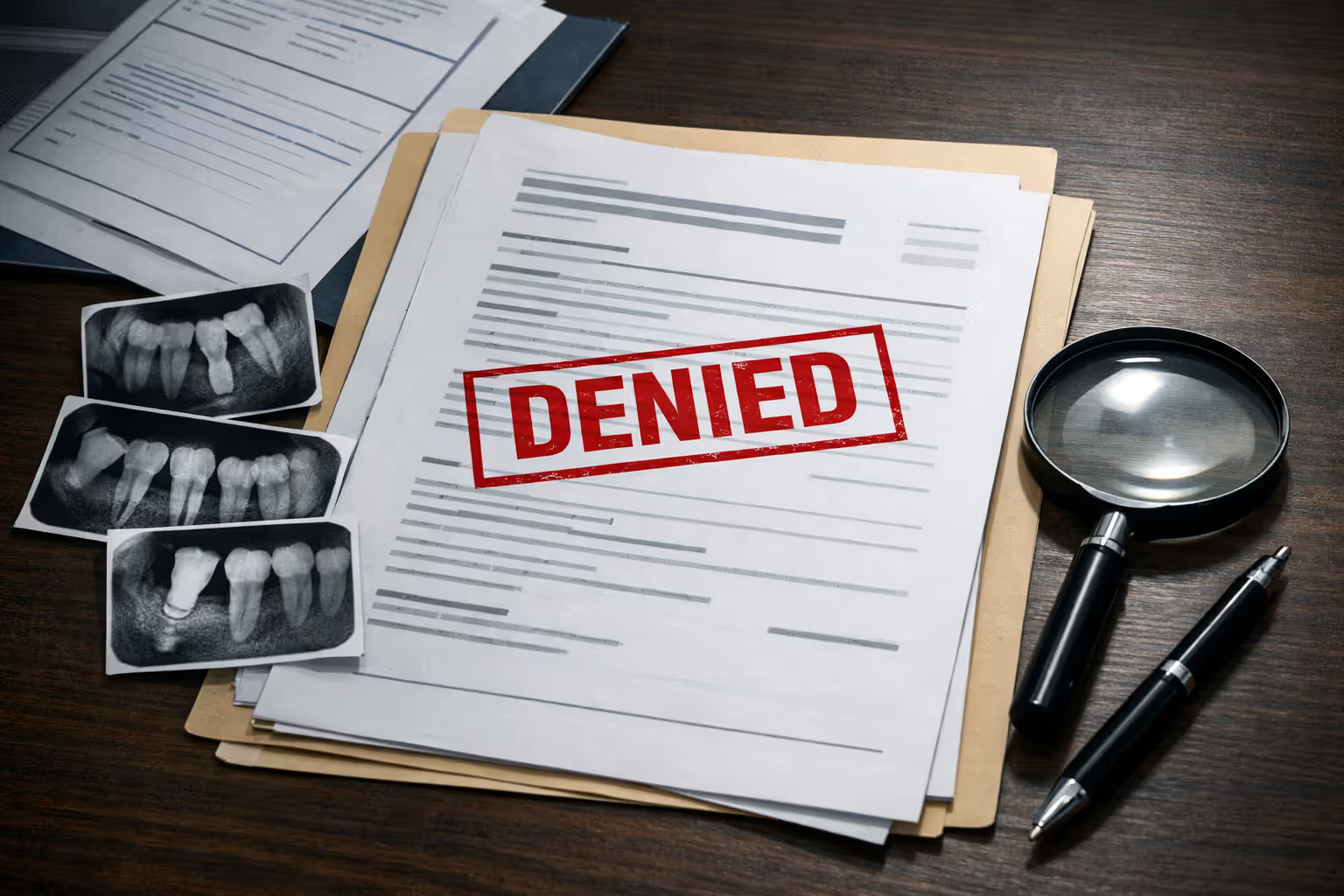
Incorrect procedure codes create significant problems. Each dental service has a specific ADA code, and using the wrong one can result in denial or incorrect payment. For example, code D1110 represents a prophylaxis (cleaning) for an adult, while D1120 is a child's cleaning. Submitting D1110 for a 10-year-old might trigger a denial if the insurance company's system flags the age mismatch.
Author: Ashley Whitford;
Source: ladylesliebelize.com
Coordination of benefits (COB) issues occur when a patient has coverage through multiple insurance plans—often through both their own employer and a spouse's plan. Dental offices must determine which plan is primary and which is secondary, then submit claims in the correct sequence. Submitting to the wrong plan first can delay payment by weeks while the insurance companies sort out responsibility.
Missing pre-authorizations cause denials for major procedures. Most insurance plans require pre-authorization (also called pre-determination or prior approval) before performing crowns, bridges, dentures, or periodontal surgery. The dental office submits treatment plans and supporting documentation before beginning work, and the insurance company responds with an estimate of benefits. Proceeding without pre-authorization when required gives the insurer grounds to deny the claim entirely.
Frequency limitations trip up claims when patients receive services more often than their plan allows. Insurance policies typically cover routine cleanings twice per year, full-mouth X-rays once every three years, and fluoride treatments annually for children. Submitting a claim for a third cleaning in a calendar year will generate a denial based on frequency limits, even if the patient is willing to pay out of pocket.
What Dental Insurance Claims Processing Covers
Dental insurance plans categorize services into three main groups: preventive, basic, and major. Each category typically has different coverage levels, with preventive services receiving the most generous benefits and major services the least.
Preventive services usually receive 100% coverage with no deductible. This category includes routine exams (twice yearly), cleanings (twice yearly), fluoride treatments for children, and routine X-rays. The goal is to encourage regular dental visits that catch problems early, reducing the need for expensive restorative work later.
Basic services typically receive 70% to 80% coverage after you meet your annual deductible. This category encompasses fillings, simple extractions, periodontal scaling and root planing (deep cleanings), and emergency care like treating infections or injuries. If your plan has a $50 deductible and covers basic services at 80%, you'll pay the $50 deductible plus 20% of the allowed amount for these procedures.

Author: Ashley Whitford;
Source: ladylesliebelize.com
Major services receive 50% coverage after the deductible in most plans. This category includes crowns, bridges, dentures, root canals, surgical extractions, and implants (when covered at all). These procedures are expensive, so even with insurance paying half, patients face substantial out-of-pocket costs.
Orthodontia often sits in its own category with a separate lifetime maximum—commonly $1,000 to $2,000 per person. Plans that cover orthodontia typically pay 50% of the allowed amount, and the benefit applies to children and adults equally if the plan includes adult orthodontia coverage.
Annual maximums cap how much the insurance company will pay in a calendar year, typically ranging from $1,000 to $2,000. Once you reach this limit, you're responsible for 100% of any additional dental costs until the calendar year resets. Preventive services sometimes don't count toward the annual maximum, allowing you to continue receiving cleanings and exams even after exhausting your benefits on major work.
How Patients Can Track Their Dental Claims
The Explanation of Benefits (EOB) is your primary tool for tracking claims. This document—not a bill—arrives from your insurance company after they process a claim. It shows the date of service, the procedure performed, the dentist's charge, the allowed amount under your plan, the insurance payment, and your responsibility. The EOB also explains any denials or adjustments.
Reading an EOB requires understanding several key terms. "Allowed amount" or "maximum allowable charge" is what your insurance company considers reasonable for a given procedure, which may be less than what your dentist charged. "Patient responsibility" includes your deductible, coinsurance percentage, and any amount above the allowed charge if you saw an out-of-network provider.
Online insurance portals provide real-time claim status updates. Most major dental insurance carriers now offer member portals where you can log in to see submitted claims, processing status, payment amounts, and remaining benefits. These portals typically update within 24 to 48 hours of a status change, faster than waiting for mailed EOBs.
Contacting your insurance company directly helps when claims seem delayed. Have your member ID, the date of service, and the dental office's information ready when you call. Customer service representatives can check whether the claim was received, identify any issues preventing payment, and provide estimated processing timelines.
If a claim is denied, start by carefully reading the denial reason on your EOB. Common reasons include lack of coverage for the specific procedure, frequency limitations, missing pre-authorization, or eligibility issues. Many denials can be resolved by having your dental office submit additional documentation or correct coding errors.
The appeals process allows you to challenge denials you believe are incorrect. Your dental office can file an appeal on your behalf, submitting clinical notes, X-rays, and a letter explaining why the treatment was medically necessary and should be covered. Most insurance companies have two or three levels of appeal, with specific deadlines at each stage.
The single biggest mistake I see patients make is assuming their dental office knows exactly what their insurance will cover. Insurance policies vary dramatically even within the same carrier, and benefits change annually. Patients should call their insurance company themselves before major work to confirm coverage, because the dental office's estimate is just that—an estimate based on typical plans, not your specific policy
— Jennifer Martinez
Frequently Asked Questions About Dental Insurance Claims
Successful dental insurance claims processing requires active participation from patients, not just passive waiting for bills to arrive. Start by thoroughly understanding your specific plan's benefits before scheduling major dental work. Request a copy of your Summary of Benefits or log into your insurance portal to review coverage percentages, annual maximums, deductibles, and waiting periods.
Verify that your dentist is in-network if you want to maximize benefits and minimize out-of-pocket costs. In-network providers have negotiated fees with your insurance company and have agreed not to balance-bill you for amounts above the allowed charge. Out-of-network providers can charge whatever they want, and you'll be responsible for the difference between their fee and your insurance payment.
Keep detailed records of all dental treatments, payments, and insurance correspondence. Create a simple spreadsheet tracking dates of service, procedures performed, amounts paid, insurance payments, and remaining balances. This documentation proves invaluable when questions arise months later about whether a bill was paid or how much of your annual maximum remains.
Communicate directly with both your dental office and insurance company when problems arise. Don't assume one will contact the other on your behalf. If your insurance denies a claim, ask your dental office why and what can be done. If the office says they submitted a claim but your insurance has no record of it, request proof of electronic submission or a copy of the mailed paper claim.
The dental insurance claims processing system involves multiple parties, strict protocols, and specific timelines that affect when and how you receive benefits. By understanding each stage of the process—from treatment documentation through claim submission, adjudication, and payment—you can anticipate potential issues, track claims effectively, and advocate for yourself when problems occur. The system isn't perfect, but informed patients who actively monitor their claims experience fewer surprises and resolve issues faster than those who simply wait for bills to arrive.
Related Stories

Read more

Read more




The content on this website is provided for general informational and educational purposes only. It is intended to offer guidance on dental insurance topics, including coverage options, premiums, deductibles, waiting periods, annual maximums, claims processes, and procedures that may be covered by insurance such as implants, braces, crowns, dentures, and preventive care. The information presented should not be considered medical, dental, financial, or professional insurance advice.
All articles and explanations published on this website are for informational purposes only. Dental insurance policies may vary between providers, and details such as coverage limits, exclusions, reimbursement rates, waiting periods, and eligibility requirements can differ depending on the insurer, plan, and individual circumstances.
While we strive to keep the information accurate and up to date, this website makes no guarantees regarding the completeness or reliability of the content. Use of this website does not create a professional relationship. Visitors should review official policy documents and consult with licensed dental or insurance professionals before making decisions regarding dental care or insurance coverage.