

Modern dental office with patient chair, dental instruments in foreground, and abstract insurance card with dollar signs and shield symbol in background, clean blue and white tones
What Does Out of Network Mean for Dental Insurance

Content
Content
Choosing a dentist without understanding your insurance network can turn a routine cleaning into a financial surprise. When you visit an out-of-network dentist, your insurance plan processes the claim differently than it would for an in-network provider, often leaving you responsible for substantially higher costs. The distinction between in-network and out-of-network care affects everything from routine checkups to major procedures, making it one of the most important factors to understand before scheduling your next dental appointment.
How Dental Insurance Networks Work
A dental network insurance system functions as a contractual agreement between insurance companies and dental providers. Insurance carriers negotiate reduced fees with dentists who agree to join their network, creating a roster of preferred providers. These dentists accept pre-negotiated rates for specific procedures in exchange for patient referrals from the insurance company.
When a dentist joins a network, they sign contracts stipulating exactly how much they'll charge for each procedure code. A routine cleaning might be set at $85 for network members, even if the dentist's standard fee is $125. The dentist agrees to write off the difference—they cannot bill you for that gap.
So what does out of network mean for dental insurance coverage? It means the dentist has no contractual obligation to accept your insurance company's fee schedule. They can charge their full rates, and your insurance will typically reimburse based on what they consider "usual and customary" rates for your geographic area. If your dentist charges $150 for a filling but your insurance considers $100 reasonable, you'll pay the $50 difference plus your normal cost-sharing amounts.
Networks exist primarily to control costs for insurance companies while giving policyholders access to discounted care. For dentists, joining networks means guaranteed patient volume but lower per-procedure revenue. This trade-off explains why some highly specialized or established practices opt out of insurance networks entirely—they'd rather maintain their fee schedules than discount services.
Most PPO (Preferred Provider Organization) plans maintain networks spanning hundreds or thousands of dentists. HMO and EPO plans typically have smaller, more restrictive networks. The size and quality of a network should factor heavily into your plan selection, especially if you live in a rural area where network options may be limited.

Author: Daniel Mercer;
Source: ladylesliebelize.com
Cost Differences Between In-Network and Out-of-Network Dentists
The financial impact of going out of network varies dramatically depending on your specific plan, but the pattern remains consistent: you'll pay more. Three factors drive these higher costs: different reimbursement calculations, balance billing, and often higher deductibles or coinsurance rates.
In-network dentists accept negotiated rates as payment in full (minus your copay, deductible, or coinsurance). Out-of-network dentists can bill you for the difference between their charges and what your insurance pays—a practice called balance billing. If your insurance reimburses 80% of what it deems reasonable ($100) for a procedure, but your dentist charges $160, you're responsible for the $20 coinsurance plus the $60 difference, totaling $80 instead of $20.
Many plans also apply different benefit percentages to out-of-network care. Your plan might cover 80% of preventive care in-network but only 60% out-of-network. Some plans apply separate, higher deductibles to out-of-network services.
Here's how typical costs compare across common procedures:
| Service Type | In-Network Cost | Out-of-Network Cost | Patient Pays (In-Network) | Patient Pays (Out-of-Network) |
| Routine cleaning | $85 | $125 | $17 (20% coinsurance) | $60 (40% coinsurance + balance) |
| Filling | $150 | $220 | $30 (20% coinsurance) | $108 (40% coinsurance + balance) |
| Root canal | $900 | $1,350 | $450 (50% coinsurance) | $945 (70% coinsurance + balance) |
| Crown | $1,200 | $1,800 | $600 (50% coinsurance) | $1,260 (70% coinsurance + balance) |
Note: These figures represent national averages for 2026 and vary significantly by region and specific plan terms.
The dental insurance vs out of pocket calculation becomes even more complex when you factor in annual maximums. Most dental plans cap benefits at $1,500-$2,000 per year. Out-of-network care depletes this maximum faster because the insurance pays less per dollar spent. You might exhaust your annual benefits after two crowns out-of-network, whereas the same maximum could cover three crowns in-network.
How much is dental insurance out-of-pocket when you go out of network? For major work, expect to pay 60-80% of the total bill rather than 20-50% in-network. Over a year of regular care plus one major procedure, the difference could easily exceed $1,000.
Understanding PPO Dental Insurance Plans
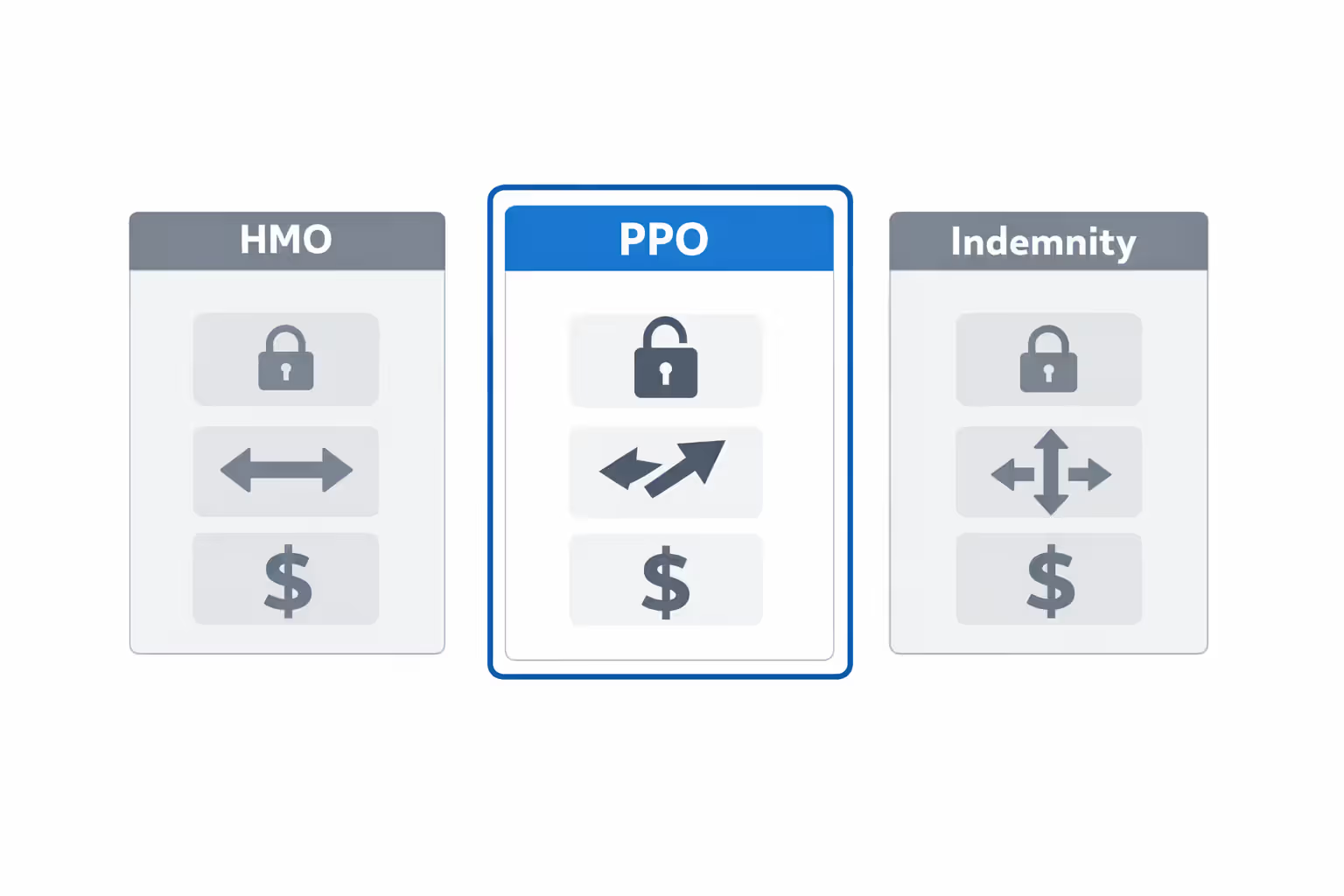
PPO stands for Preferred Provider Organization, and it's the most common type of dental insurance in the United States. What does PPO dental insurance mean for your flexibility? Unlike HMO plans that require you to stay within network (except for emergencies), PPO plans allow you to see any licensed dentist—you'll just pay more for going outside the network.
This flexibility makes PPO plans attractive if you value choice over cost savings. You're not locked into a specific dentist or required to get referrals before seeing specialists. The trade-off is typically higher monthly premiums compared to HMO plans.
What does PPO mean for dental insurance networks specifically? PPO plans maintain tiered networks. The "preferred" providers have agreed to the steepest discounts and represent your most affordable option. Some PPO plans include a secondary tier of providers with moderate discounts. Any dentist outside these tiers is considered out-of-network.
Author: Daniel Mercer;
Source: ladylesliebelize.com
The reimbursement structure differs fundamentally from HMO plans. HMOs typically pay dentists a fixed monthly amount per enrolled member (capitation) regardless of services provided. PPOs pay fee-for-service, reimbursing dentists for each procedure performed. This structure means PPO insurers care deeply about negotiating low per-procedure fees with network dentists.
For patients, PPO plans offer a middle ground between restrictive HMOs and indemnity plans (which are increasingly rare). You get meaningful coverage for out-of-network care—unlike HMOs that typically provide zero coverage—but you'll still have strong financial incentives to stay in-network.
When evaluating PPO plans, examine three factors: the size and quality of the network, the gap between in-network and out-of-network coverage levels, and whether the premium difference justifies the flexibility. A PPO plan with 70% out-of-network coverage might be worth higher premiums if you have an established relationship with a non-network dentist. A plan with only 50% out-of-network coverage offers less value for that flexibility.
Dental Insurance Waiting Periods Explained
What does waiting period mean for dental insurance? It's a specified timeframe after your policy starts during which certain services aren't covered. Waiting periods prevent people from purchasing insurance only when they need expensive work, then canceling once treatment is complete.
Dental plans typically structure waiting periods in tiers based on service complexity:
- Preventive care (cleanings, exams, X-rays): No waiting period or immediate coverage
- Basic procedures (fillings, simple extractions): Often no waiting period, though some plans impose 3-6 months
- Major procedures (crowns, bridges, dentures): 6-12 month waiting periods are standard
- Orthodontics: 12-24 month waiting periods when covered
What does 6 month waiting period mean for dental insurance coverage? If you enroll on January 1st with a 6-month waiting period for major services, any crowns or root canals performed before July 1st won't be covered—you'll pay full price. Fillings might be covered immediately or after a shorter wait, depending on your specific plan terms.
What does 12-month waiting period mean for dental insurance practically? You're essentially paying premiums for a full year before accessing coverage for expensive procedures. For someone needing immediate major work, this makes new insurance financially useless in the short term. You'd pay 12 months of premiums (perhaps $600-$800) before the plan would contribute anything toward a crown costing $1,200.
Waiting periods apply regardless of whether you see in-network or out-of-network providers. The clock starts on your enrollment date, not when you first visit a dentist. However, some employers waive waiting periods for new hires, and switching between plans during open enrollment sometimes allows you to carry over credit for time served under your previous plan.
What does a waiting period mean for dental insurance strategy? If you know you need major work, purchasing insurance makes sense only if you can delay treatment or if you're getting employer-subsidized coverage. For immediate needs, negotiating cash-pay rates or seeking dental schools for discounted care often proves more economical than paying premiums during a waiting period.
Some plans offer "no waiting period" options with significantly higher premiums. Calculate whether the premium increase over 12 months exceeds what you'd pay out-of-pocket for needed procedures. Often, it does.
When Going Out of Network Makes Sense
Despite higher costs, certain situations justify seeing out-of-network dentists. The decision requires weighing financial considerations against quality, convenience, and relationship factors.
Established patient relationships represent the most common reason people go out-of-network. If you've seen the same dentist for 15 years and trust their work completely, switching to an unknown in-network provider to save money involves real trade-offs. Your current dentist knows your dental history, understands your anxiety triggers, and has proven their competence. Starting over with a new provider means explaining your history, adjusting to different communication styles, and potentially receiving different treatment recommendations.
Specialist expertise sometimes requires going out-of-network. If you need complex oral surgery or endodontic work, the most qualified specialist in your area might not participate in your network. The cost difference might be $500-$1,000, but the value of expertise for complicated procedures often justifies the premium. A failed root canal requiring retreatment costs far more than paying extra for the best endodontist initially.
Limited local networks force some people out-of-network by default. Rural areas and small towns might have only one or two dentists, and neither may participate in your specific network. You could drive 45 minutes each way to see an in-network provider, but the time cost, transportation expense, and inconvenience might outweigh the insurance savings, especially for routine care.
Quality concerns occasionally emerge with network providers. Not all dentists provide equal care, and network participation doesn't guarantee quality. If in-network options have poor reviews, outdated equipment, or long wait times, paying more for better care makes sense. Dental work is permanent—a poorly done crown or filling creates problems for years.
Treatment philosophy differences matter more than many people realize. Some dentists take aggressive treatment approaches, recommending crowns where others would suggest fillings. Others prefer conservative "watch and wait" strategies. If your in-network options don't align with your treatment philosophy, going out-of-network for a second opinion or ongoing care might prevent unnecessary procedures.
The calculation changes for different procedures. Going out-of-network for a $95 cleaning that costs you an extra $30 makes less sense than for a $1,500 implant where you've researched the best provider. Consider the procedure's permanence, complexity, and total cost when deciding whether network status should drive your choice.

Author: Daniel Mercer;
Source: ladylesliebelize.com
How to Verify Your Dental Coverage and Network Status
How to find out if you have dental insurance starts with checking whether coverage is included in your medical benefits package. Many employers bundle dental with medical insurance, but some require separate enrollment. Review your benefits summary or contact your HR department. If you purchased insurance independently, check your policy documents or online account.
Once you've confirmed coverage exists, follow these steps to verify network status and benefits before scheduling appointments:
Step 1: Locate your insurance card and policy documents. Your card should list a member services phone number and website. If you don't have a physical card, most insurers provide digital cards through mobile apps or member portals.
Step 2: Access the provider directory. Insurance company websites maintain searchable databases of network dentists. Filter by location, specialty, and whether they're accepting new patients. These directories update regularly, so verify information is current.
Step 3: Call the dental office directly. Provider directories sometimes contain outdated information. Before scheduling, call the dentist's office and confirm they participate in your specific plan. Mention your insurance company name and group number—some dentists participate in certain plans but not others from the same insurer.
Step 4: Verify coverage details with your insurer. Call the member services number and ask specific questions: What's my annual maximum? How much have I used this year? What are my deductibles? What percentage does the plan cover for preventive, basic, and major services? Do waiting periods apply to any services I need?
Step 5: Request a pre-authorization for major work. Before proceeding with expensive procedures, ask your dentist to submit a pre-authorization (also called pre-determination) to your insurance. The insurer will confirm exactly what they'll cover and what you'll owe. This prevents surprise bills after treatment is complete.
Step 6: Understand your explanation of benefits (EOB). After each appointment, you'll receive an EOB showing what was billed, what the insurance paid, and what you owe. Review these carefully. Errors happen—dentists sometimes use incorrect procedure codes, and insurers occasionally deny claims that should be covered.

Author: Daniel Mercer;
Source: ladylesliebelize.com
For out-of-network dentists, ask whether they'll submit claims on your behalf or if you'll need to file claims yourself. Some out-of-network providers handle all paperwork; others require you to pay upfront, then seek reimbursement from your insurance. The reimbursement process typically involves completing a claim form and submitting an itemized receipt from your dentist.
Don't assume coverage without verification. The most expensive dental mistakes happen when patients assume their insurance will cover something, only to discover after treatment that it doesn't.
Out-of-Pocket Costs: Insurance vs No Insurance
Dental insurance doesn't always represent the most economical option, particularly for people needing minimal care or facing long waiting periods. Understanding when insurance provides value requires comparing total costs across scenarios.
With insurance, in-network: You'll pay monthly premiums (perhaps $30-$60 for individual coverage), plus deductibles ($50-$100 typically), plus coinsurance or copays (20-50% for most services). Your annual maximum caps the insurer's contribution at $1,500-$2,000. For someone getting two cleanings, one set of X-rays, and one filling annually, total out-of-pocket might be $500-$700 in premiums plus $100-$150 in coinsurance, totaling $600-$850.
With insurance, out-of-network: The same scenario costs $500-$700 in premiums plus $250-$400 in coinsurance and balance billing, totaling $750-$1,100.
Without insurance (cash pay): Many dentists offer discounts for cash-paying patients, typically 10-30% off standard rates. The same care might cost $600-$800 total with no monthly premiums. Some dentists also offer payment plans for major work.
The biggest misconception about out-of-network coverage is that patients assume they'll be reimbursed based on what the dentist charges. In reality, reimbursement is based on what the insurance company decides is 'reasonable,' which can be 30-40% lower than actual charges in high-cost areas. Patients end up shocked by bills that are technically 'covered' but leave them paying the majority
— Dr. Sarah Mitchell
When does insurance make sense financially? If you need major work (crowns, bridges, implants), insurance typically pays for itself even with waiting periods, assuming you can delay treatment. If you have ongoing dental problems requiring multiple fillings or extractions annually, insurance provides value. For families with children needing orthodontics, insurance with ortho benefits (even with waiting periods and lifetime maximums) usually beats paying full price.
When might self-pay work better? If you have excellent dental health requiring only preventive care, paying cash often costs less than premiums plus cost-sharing. If you need immediate major work and would face a 12-month waiting period, paying cash or negotiating a payment plan typically costs less than a year of premiums with no benefits. If you're considering insurance solely for a single expensive procedure, calculate the total cost of premiums during the waiting period plus your coinsurance against the cash-pay rate.
Membership discount plans (not insurance) offer another option. For $100-$300 annually, these plans provide 20-40% discounts at participating dentists with no waiting periods, deductibles, or annual maximums. For people needing more than preventive care but not qualifying as high utilizers, discount plans sometimes provide better value than traditional insurance.
The calculation depends entirely on your expected utilization. Track your dental expenses over the past few years to identify patterns, then model costs under different scenarios before committing to a plan.
Frequently Asked Questions About Dental Insurance Networks
Understanding what out of network means for dental insurance empowers you to make informed decisions about your care. The network status of your dentist significantly impacts your out-of-pocket costs, sometimes doubling or tripling what you'll pay compared to in-network care. PPO plans offer flexibility to see any dentist but reward staying in-network with substantially better coverage. Waiting periods affect access to benefits regardless of network status, making timing an important consideration when enrolling in new coverage.
Before choosing a dentist or dental plan, verify network participation, understand your specific coverage terms, and calculate total costs across different scenarios. Sometimes paying more for an out-of-network provider makes sense for quality, convenience, or continuity of care. Other times, the financial penalty outweighs any benefits. The right choice depends on your individual circumstances, expected dental needs, and budget priorities. Taking time to understand these factors before scheduling treatment prevents expensive surprises and helps you maximize the value of your dental benefits.
Related Stories
Read more

Read more



The content on this website is provided for general informational and educational purposes only. It is intended to offer guidance on dental insurance topics, including coverage options, premiums, deductibles, waiting periods, annual maximums, claims processes, and procedures that may be covered by insurance such as implants, braces, crowns, dentures, and preventive care. The information presented should not be considered medical, dental, financial, or professional insurance advice.
All articles and explanations published on this website are for informational purposes only. Dental insurance policies may vary between providers, and details such as coverage limits, exclusions, reimbursement rates, waiting periods, and eligibility requirements can differ depending on the insurer, plan, and individual circumstances.
While we strive to keep the information accurate and up to date, this website makes no guarantees regarding the completeness or reliability of the content. Use of this website does not create a professional relationship. Visitors should review official policy documents and consult with licensed dental or insurance professionals before making decisions regarding dental care or insurance coverage.