
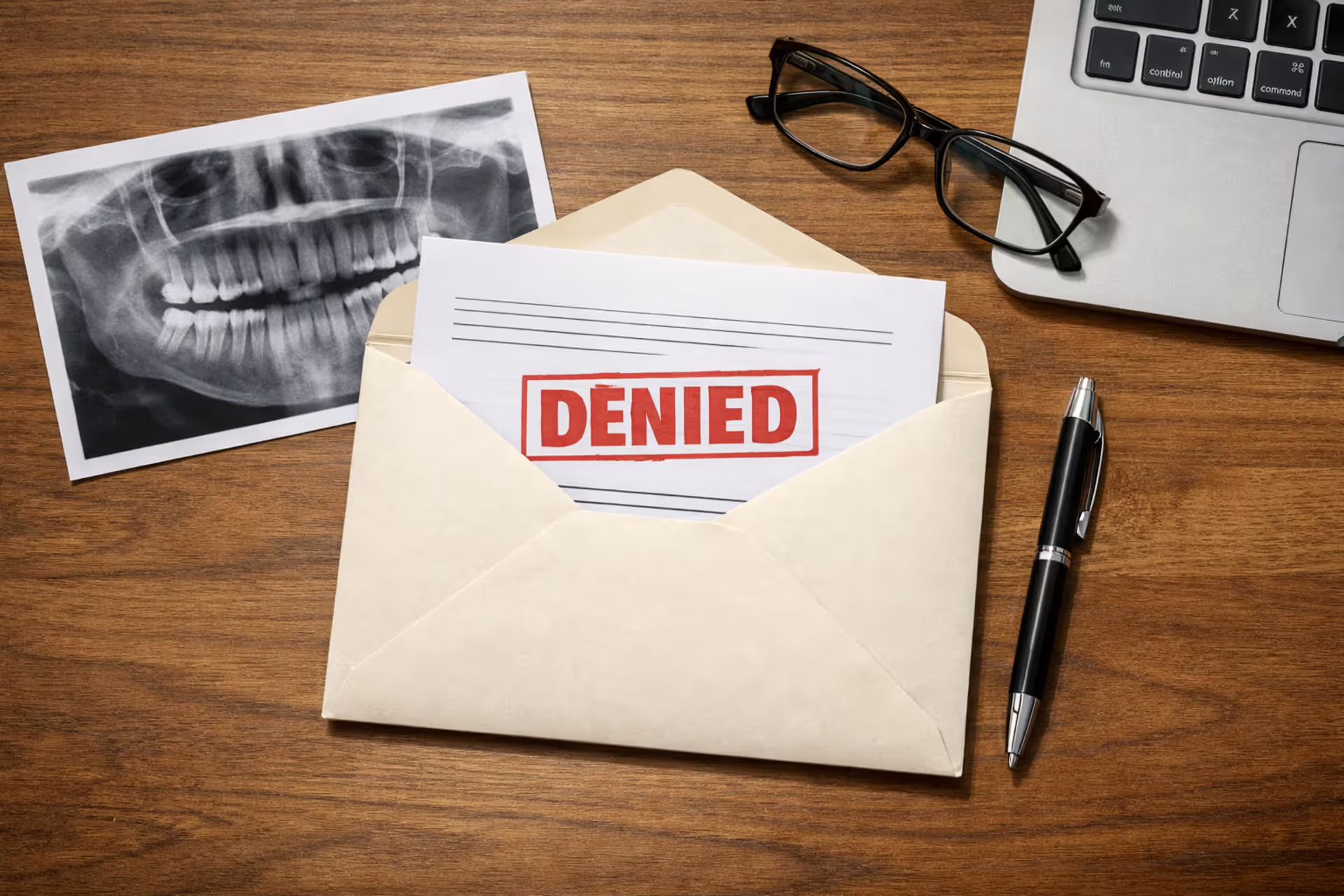
Top view of a desk with an opened envelope containing a dental insurance denial letter stamped denied in red next to a dental X-ray glasses and a pen
What to Do When Dental Insurance Denied Claim?

Last month, my neighbor Sarah had a root canal. Her dentist's office assured her that insurance would handle most of the $1,400 bill. Three weeks later, she opened an envelope from her insurer and saw the words "claim denied" stamped across the page. Now she's on the hook for the full amount, plus she's already started making payments to the dental office. Sound familiar? I've watched friends and family members navigate this exact scenario more times than I can count. The good news? Denials reverse more often than most people realize—when you know which buttons to push.
Why Dental Insurance Companies Deny Claims
Insurance companies reject claims for traceable, fixable reasons. They're required to document everything, which means you're never left completely in the dark.
Missing paperwork tops the denial list by a wide margin. Your dentist's office uploads an X-ray that gets corrupted during transmission—the insurance processor sees a broken file and clicks "deny" without a second thought. Or the office assistant gets interrupted while submitting your claim and forgets to attach the narrative explaining why you needed that crown instead of a less expensive filling. Claims adjusters work through hundreds of submissions daily. They won't chase down missing pieces for you.
Policy exclusions hide in the fine print until they bite you. I learned this the hard way when my own plan covered white fillings on front teeth but not on molars—only the old metal amalgam got approved for back teeth. A friend's employer-sponsored plan refused to pay for porcelain crowns on molars, covering only metal alternatives. These restrictions appear nowhere on your insurance card. You have to dig through the actual policy booklet that most people toss in a drawer.
Pre-authorization requirements exist for nearly everything beyond basic care. Routine exams and simple fillings? Usually fine without advance approval. Anything else—crowns, root canals, extractions, deep cleanings, bridges, implants—typically needs a green light first. Your dentist might forge ahead assuming the insurer will approve it after the fact, but that assumption becomes your financial burden when the claim comes back denied for "no pre-authorization on file."
Wrong billing codes cause more headaches than most patients suspect. Dentists use something called CDT codes to describe every procedure. D2391 means a one-surface composite filling. D2392 means two surfaces. Type the wrong one, flip two digits by accident, or bill the upper right molar when you meant the lower left, and the claim bounces back. I've seen claims denied because the tooth number didn't match the X-ray notation.

Author: Tyler Grant;
Source: ladylesliebelize.com
Annual benefit caps function like hard stops, not suggestions. Most dental plans max out between $1,000 and $2,500 per calendar year. Hit that ceiling in July? Every claim you submit from August through December gets auto-denied. Appeals won't help here—it's basic arithmetic, not a judgment call.
Treatment timing restrictions catch people completely off guard. Replaced a crown in 2019? Your insurer probably won't cover a replacement on that same tooth until at least 2026 or 2027. Most plans enforce five to seven-year waiting periods between major services on the same tooth. They'll also deny claims for work performed before your coverage started, even by just a few days.
Specific technique exclusions differ from blanket procedure denials. Your plan might cover root canals generally but draw the line at laser-assisted methods. It might approve crowns but specify which materials it'll pay for. My dentist once recommended a particular type of composite resin for durability, but my insurer would only cover the basic version—I had to pay the $180 difference myself.
How to Read Your Dental Insurance Denial Letter
Your EOB—that Explanation of Benefits document—contains the roadmap for fixing the problem. Staring at the bottom-line dollar amount you owe won't help.
Hunt down the denial codes immediately. You'll see combinations like "96," "D23," or similar cryptic notations printed somewhere on the form. Some EOBs include a legend explaining what these codes mean, but more often you'll need to log into your insurance portal or call member services for translations. Write down every code—some claims get hit with multiple denial reasons simultaneously.
Study the claim processing section with a magnifying glass. This area shows what your dentist submitted versus what the insurance company recorded. I once caught a transposed digit in a procedure code that changed "two-surface filling" to "crown buildup"—a completely different service. Compare tooth numbers, service dates, and procedure codes against your treatment records. Discrepancies here often point to simple clerical mistakes that get corrected easily.
Circle your appeal deadline in red ink. It's usually printed in bold or highlighted in a colored box. This date means business. I watched a family member miss their deadline by three days because they set a mental reminder instead of a phone alarm. Those three days cost them $850 they'll never recover. Set your phone reminder for two weeks before the deadline so you have cushion time.
Look at the billed amount versus the allowed amount. If there's a massive gap—like your dentist charged $1,200 but the insurer's "allowed amount" shows $680—you're dealing with an out-of-network provider. The insurance company applies their own fee schedule regardless of what your dentist actually charges. This affects your out-of-pocket costs whether your appeal succeeds or fails.
Check for coordination of benefits language. If you carry only one dental plan but the EOB mentions waiting for another insurer to pay first, somebody entered incorrect information into the system. This data glitch alone can trigger denials that have zero connection to your actual coverage.
Steps to Appeal a Denied Dental Insurance Claim
Appeals work best when you follow a specific sequence. Skip steps, and you're building your case on shaky ground.
Gather Supporting Documentation
Call your dentist's office and request your complete file—not just the X-rays they submitted originally, but everything: treatment notes, measurements, photographs if they took any. For gum disease cases, you'll need pocket depth charts and bone loss documentation. Crown claims require notes explaining why a filling wouldn't hold up structurally.
Track down your actual insurance policy, not the wallet-sized summary card. I'm talking about the 40-page booklet nobody reads. Highlight every section that supports coverage for your specific procedure. Pay attention to ambiguous wording—insurance contracts generally get interpreted in the policyholder's favor when language could go either way.
Locate any pre-authorization paperwork. Even phone approvals count if you wrote down the representative's name, call date, and reference number. Insurance companies record all calls, and you can request recordings through a formal member inquiry (they typically charge around $10-25 for this service, but it's worth it if the recording proves you got approval).
Ask your dentist for what's called a "letter of medical necessity." This isn't a one-paragraph form letter—it needs to be a detailed clinical explanation of why this specific procedure was essential for your situation, what would happen without treatment, and why cheaper alternatives wouldn't work. Generic letters accomplish nothing.
Write Your Appeal Letter
Address your letter to the specific appeals department address printed on your EOB. Sending it to a general mailing address creates delays and risks getting lost in their mailroom shuffle.
Start with: your policy number, claim number, date of service, and the exact procedure code that got denied. Then write something like: "I'm formally appealing the claim denial for procedure D2740 (porcelain-fused-to-metal crown) performed on April 12, 2026."
Build your argument in numbered sections. First: quote the exact denial reason word-for-word from your EOB. Second: explain specifically why that reason doesn't apply to your situation, citing your policy language and referencing your attachments. Third: state clearly what you want—full payment of the claim, reconsideration with complete documentation, whatever action you're requesting.
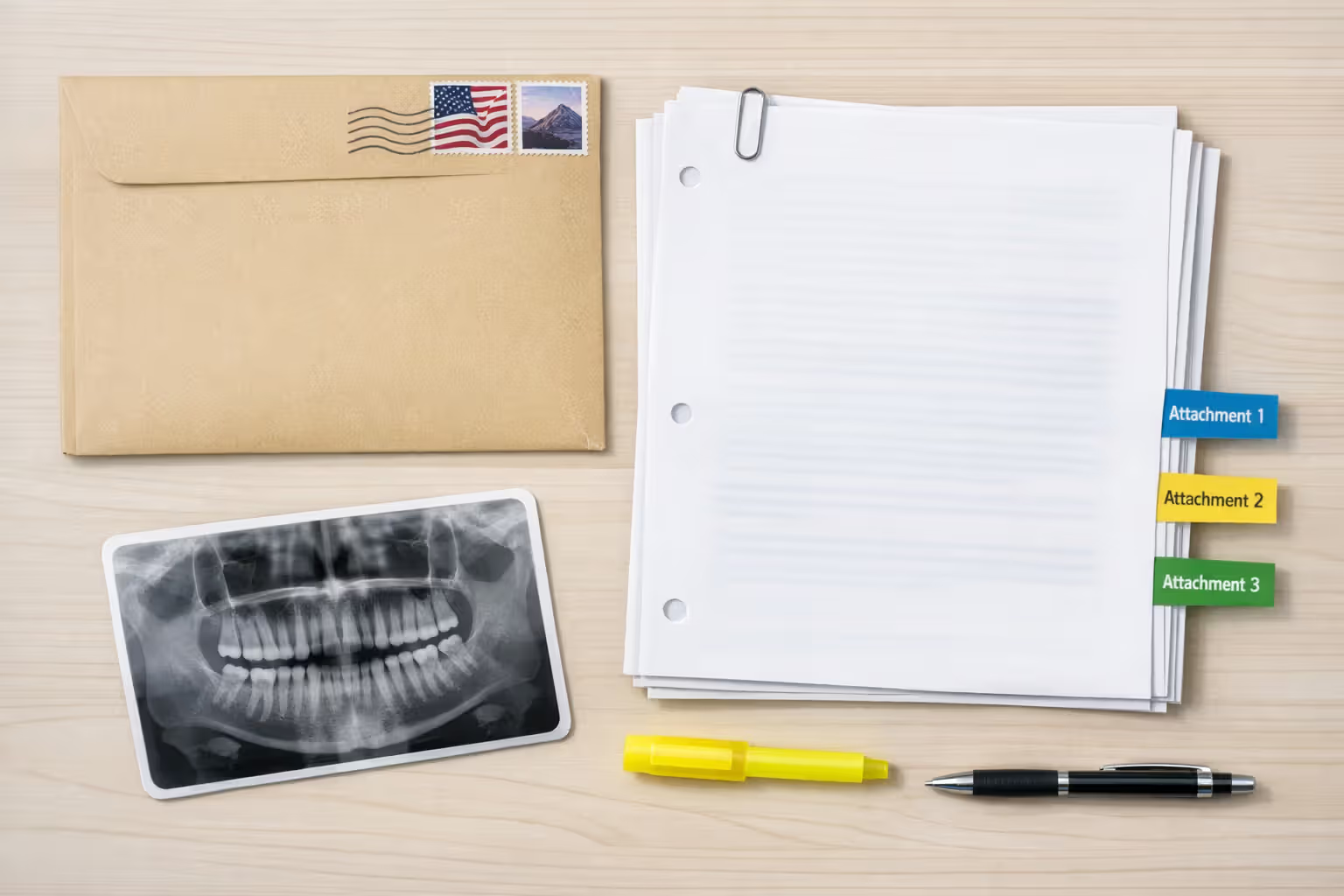
Label every attachment as "Attachment 1," "Attachment 2," etc., and reference them in your letter ("Attachment 3, the X-ray from April 8, 2026, shows the crack extending below the gumline that made a crown necessary instead of a filling"). Never mail originals—always copies.
Author: Tyler Grant;
Source: ladylesliebelize.com
Skip emotional language about financial hardship or how unfair this feels. Insurance adjusters follow clinical guidelines and policy rules. They can't approve claims based on sympathy.
Submit Your Appeal Within the Deadline
Mail everything certified with return receipt. You'll pay around $8 at the post office, but you get proof of delivery with an exact timestamp. Some insurers accept electronic submissions through member portals that generate instant confirmation—equally valid if you screenshot the confirmation page and save the confirmation email.
I always submit at least one week before the deadline. Mail carriers call in sick. Online portals crash during system maintenance. Weather delays packages. Building in buffer time protects you if Murphy's Law strikes.
Photocopy or scan your entire appeal packet before mailing. You'll need identical copies if you escalate to external review or file a state complaint.
Follow Up With Your Insurance Company
Wait one week after mailing, then call the appeals department to confirm receipt. Ask for your assigned adjuster's name and direct phone number.
Most insurers take 30-60 days to decide appeals, depending on your state's regulations and plan type. Silence past that window? Start calling every three business days until you get answers. I've seen claims sit in someone's inbox for months until the patient called asking for a status update.
When the decision letter arrives, read it immediately. If they approved it, verify that payment processes correctly and posts to your dentist's account. Another denial? Check that letter right away for second-level appeal instructions and external review information.
When to Involve Your Dentist's Office
Your dentist's billing coordinator has dealt with hundreds of insurance denials. They know the shortcuts and have direct contacts at major insurance companies.
Resubmitting corrected claims handles straightforward mistakes quickly. The billing staff spots what's missing or incorrect, fixes it, resubmits within a few days, and many denials flip to approvals without anyone filing formal appeals. This works particularly well for coding errors, missing attachments, or wrong patient information.
Providing additional clinical documentation becomes crucial when insurers question whether you actually needed the treatment. Your dentist can submit detailed progress notes, extra photographs showing the problem from different angles, additional X-ray views, periodontal charts with pocket measurements—whatever clinical evidence supports the necessity of what they did.
Correcting billing code problems requires expertise most patients don't have. Sometimes procedures need unbundling (splitting combined codes into separate ones). Sometimes a more specific code exists that describes the work more accurately. Sometimes adding modifier codes clarifies unusual circumstances. My dentist's biller once told me she spends 30% of her day just cleaning up code-related denials.
Requesting peer-to-peer consultations lets your dentist speak directly with the insurance company's dental consultant by phone. These conversations allow your dentist to explain complex clinical decisions that don't translate well through forms and codes. Ask your dentist about this option when your appeal hinges on treatment judgment rather than paperwork problems.

Author: Tyler Grant;
Source: ladylesliebelize.com
Your dentist wants payment as much as you want coverage. Most offices fight hard for patients, especially when they're confident the denial lacks merit.
What to Do If Your Appeal Is Rejected
Second denials don't close all doors. You've got escalation paths that move beyond the insurance company's internal system.
External review programs operate in most states for medically necessary dental treatments (cosmetic cases typically don't qualify). An independent dentist—someone with no financial ties to your insurance company—reviews your case and all supporting documents. In 43 states, their decision legally binds the insurer. Visit your state insurance department's website and search for "external review application." These deadlines run tighter than internal appeal windows—often just 60 days.
State insurance department complaints apply regulatory pressure. File a complaint explaining that you believe your denial was improper and that the internal appeals process didn't produce a fair result. Insurance commissioners investigate these complaints and sometimes force reconsideration. My cousin filed one in Pennsylvania and got a callback from the insurance company within two weeks, suddenly willing to negotiate. The process can stretch six months, but filing costs nothing.
Small claims court handles disputes up to your state's limit—usually $5,000 to $10,000—without requiring a lawyer. You'll pay a filing fee (typically $30-100 depending on the claim amount), invest time preparing your case and attending the hearing, and argue in front of a judge. For larger claims involving clear bad faith, some consumer attorneys take cases on contingency, collecting fees only if they win.
Payment arrangements with your dentist might become your practical solution after exhausting appeals. Many dental offices offer monthly payment plans, reduce fees for patients struggling with coverage issues, or connect you with healthcare financing companies. Some will write off portions of the bill rather than send it to collections, especially if you've been a long-term patient.
Roughly half of all first-level appeals succeed when patients submit thorough documentation while citing specific policy provisions. Second-level internal appeals see success rates drop to about one in five. External reviews, however, produce favorable outcomes approximately 40% of the time because independent reviewers apply clinical judgment rather than policy technicalities
— Dr. Rebecca Martinez
How to Prevent Future Dental Claim Denials
Stopping denials before they happen beats fighting them every time. These strategies dramatically cut your denial risk.
Call your insurance company with specific procedure codes before scheduling treatment. Don't settle for vague answers like "Yes, crowns are covered." Instead ask: "Will you cover procedure code D2740 on tooth number 19, considering I've never had a crown on this tooth before?" I learned this after getting burned on a $900 claim. Document the representative's full name and create a reference number. Some insurers let you request written confirmation through their member portal.
Get pre-authorization for anything beyond six-month checkups and basic fillings. Yes, waiting two to three weeks delays treatment, but dealing with pre-authorization denials before you've had work done and owe money beats fighting after the fact. My dentist's office won't even schedule major procedures until pre-auth comes through—they've been burned too many times.
Read your entire policy document beyond the two-page summary brochure. Look specifically for frequency restrictions (cleanings every six months, full X-rays every three years), age cutoffs (sealants only for dependents under 18), and material limitations (amalgam covered universally, composite resin only for front six teeth). These details hide in the policy sections titled "limitations" or "exclusions."
Document every insurance conversation in a notebook or phone app. Date, time, representative's full name, and exactly what they told you. When someone confirms coverage, ask them to email you written verification or add detailed notes to your account that you can reference later. I've started screenshotting my insurance portal after calls, capturing any notes representatives add to my file.

Author: Tyler Grant;
Source: ladylesliebelize.com
Verify network status for your dentist and any specialists before scheduling. In-network providers have contracted agreements with your insurer regarding fee schedules and claim submission protocols. These agreements minimize denial risk because in-network offices know exactly how your specific plan wants claims formatted and coded. Out-of-network providers might use coding approaches or billing methods your insurer routinely rejects.
Request pre-treatment estimates by having your dentist submit planned procedures to your insurance company before doing the work. The insurer responds with an estimate of what they'll pay. This isn't a payment guarantee—they can still deny the claim later—but it surfaces potential coverage problems while you can still make informed decisions about whether to proceed.
Common Denial Reasons and Solutions
| Denial Reason | What It Means | How to Fix It |
| Missing or incomplete documentation | X-rays didn't upload properly, narrative notes weren't attached, or required forms were blank | Contact your dentist's billing office and ask them to resubmit with complete attachments; call your insurer after three business days to confirm they received everything |
| Treatment not medically necessary | Insurer questions whether you truly needed this procedure or thinks a less expensive alternative would have worked | Get a detailed clinical letter from your dentist explaining specifically why this treatment was essential for your situation and why other options wouldn't address the underlying problem; include diagnostic measurements, X-ray findings, and progression photos if available |
| No pre-authorization on file | You received treatment that required advance approval without getting it first | Check if your plan allows retroactive authorization requests; appeal by demonstrating emergency circumstances that prevented getting prior approval; if appeals fail, negotiate a payment plan with your dentist |
| Benefit maximum exhausted | You've used your yearly coverage limit (typically $1,000-$2,500) | Delay remaining treatment until your plan year renews; check whether orthodontic work or implants have separate maximums that haven't been touched; consider discount dental programs for immediate needs |
| Procedure excluded from coverage | Your specific plan doesn't cover this category of treatment | Review your policy for exceptions or alternative covered procedures; appeal if you can demonstrate the procedure should fall under a covered category; explore dental school clinics or payment plans for excluded services |
| Incorrect procedure coding | Wrong CDT code submitted, code doesn't match the diagnosis, or tooth number is wrong | Ask your dentist's billing department to review the claim against their clinical notes and resubmit using correct codes with appropriate modifiers; request a detailed EOB showing exactly what code was processed |
Frequently Asked Questions About Denied Dental Claims
Fighting denied dental insurance claims tests your patience and organizational skills, but the financial recovery makes the effort worthwhile for most people. Start by identifying the precise denial reason, pull together comprehensive supporting documentation, and methodically work through each appeal step. Your dentist's billing team can become your most valuable ally, especially for technical issues like coding mismatches. When internal appeals hit brick walls, external review programs and state insurance regulators provide additional recourse. Most importantly, verify coverage before scheduling future dental work to stop this cycle before it starts. The hours you invest appealing an improper denial can recover thousands of dollars while creating a documentation trail that prevents repeat problems with your insurer.
Related Stories

Read more
Read more



The content on this website is provided for general informational and educational purposes only. It is intended to offer guidance on dental insurance topics, including coverage options, premiums, deductibles, waiting periods, annual maximums, claims processes, and procedures that may be covered by insurance such as implants, braces, crowns, dentures, and preventive care. The information presented should not be considered medical, dental, financial, or professional insurance advice.
All articles and explanations published on this website are for informational purposes only. Dental insurance policies may vary between providers, and details such as coverage limits, exclusions, reimbursement rates, waiting periods, and eligibility requirements can differ depending on the insurer, plan, and individual circumstances.
While we strive to keep the information accurate and up to date, this website makes no guarantees regarding the completeness or reliability of the content. Use of this website does not create a professional relationship. Visitors should review official policy documents and consult with licensed dental or insurance professionals before making decisions regarding dental care or insurance coverage.