
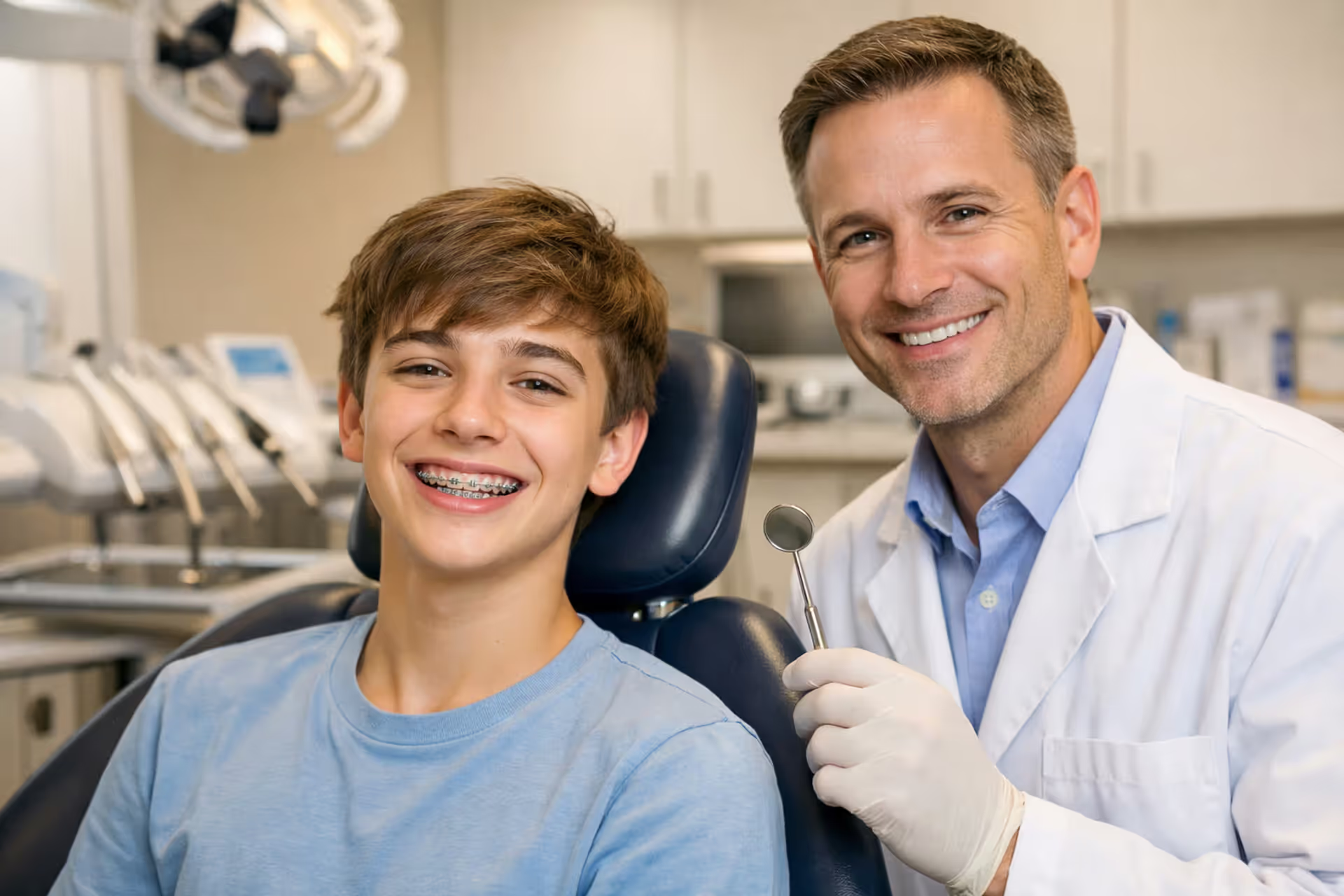
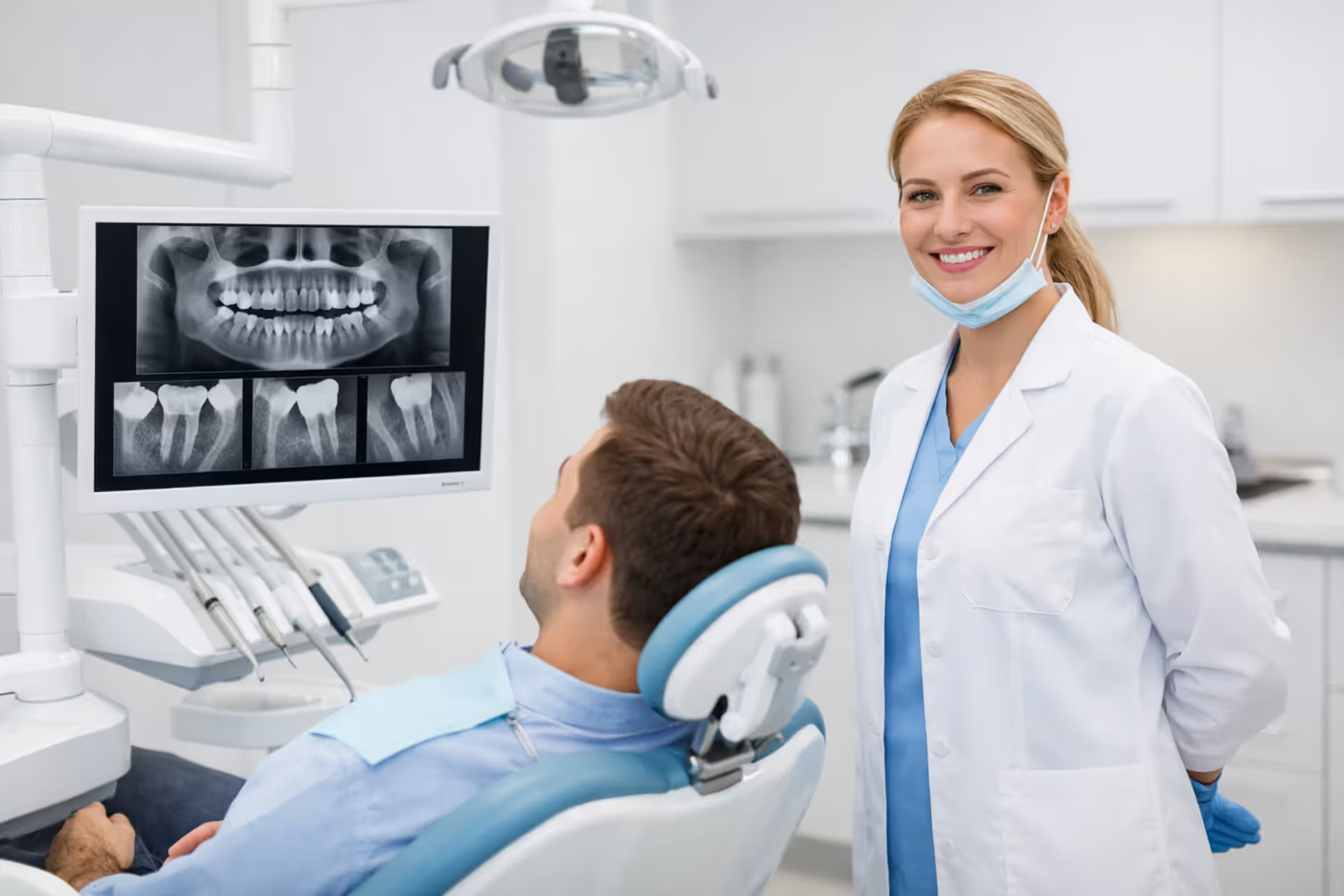
Smiling teenager with metal braces sitting in a dental chair next to an orthodontist in a modern bright dental office
Dental Insurance for Braces No Waiting Period Guide

You need braces now. Your insurance says "wait twelve months." That gap between needing treatment and getting coverage creates real problems—your teeth keep shifting, your child's jaw development window narrows, and you're stuck paying premiums for coverage you can't use.
Here's what most people don't realize: those standard 6-12 month orthodontic waiting periods aren't universal. Specific enrollment situations, plan structures, and government programs let you bypass these delays entirely. I've spent considerable time researching which doors actually open to immediate coverage versus which ones just look promising from the outside.
The difference between paying $4,000 out-of-pocket versus $2,000 often comes down to understanding five or six strategic moves that aren't obvious when you're just comparing monthly premiums on insurance websites.
How Dental Insurance Waiting Periods Work for Braces
Think of waiting periods as insurance companies protecting themselves from people who only buy coverage when they already know they need expensive work. You wouldn't let someone buy fire insurance while their house is burning—insurers apply similar logic to dental coverage.
Here's how they structure it. Cleanings and exams? Available immediately. Fillings and basic work? You're looking at three to six months before coverage kicks in. Anything major—crowns, bridges, root canals, and yes, braces—typically locks you out for six to twelve months after your policy starts.
Orthodontic waiting periods work with stricter rules than other dental services. Let's say you have a twelve-month waiting period and you start braces eight months after buying your policy. Your insurer won't cover any portion of treatment because you began before the waiting period ended. Compare that to a crown, where you could get the procedure on month seven of a six-month waiting period and receive full coverage since you passed the threshold.
Why do insurers do this? They're avoiding adverse selection—insurance jargon for "people who only buy coverage when they already need it." Picture someone discovering their teenager needs $5,500 in orthodontic work. They immediately buy insurance, submit the claim, collect benefits, then cancel the policy. Without waiting periods, this pattern would drive premiums up for everyone else.
Medical insurance used to work this way too. The Affordable Care Act changed that game for health coverage—most medical waiting periods disappeared. Dental insurance operates under different regulations, though, leaving carriers free to maintain these restrictions on expensive procedures.

Author: Ashley Whitford;
Source: ladylesliebelize.com
Which Dental Insurance Plans Cover Braces Without Waiting Periods
Not all plans make you wait. Four categories consistently provide faster access to orthodontic benefits.
Company-provided dental plans through your employer represent your best shot at immediate coverage. When you sign up during your company's annual enrollment window or within 30 days of getting hired, most group plans skip waiting periods completely. Doesn't matter if it's a PPO, HMO, or traditional indemnity plan—the group structure spreads risk across dozens or hundreds of employees, making insurers comfortable with immediate access. I've seen this work for companies with just 15 employees up through Fortune 500 corporations.
Medicaid and CHIP cover kids' braces without any waiting period if treatment qualifies as medically necessary. Each state runs these programs differently, but "medically necessary" generally means the orthodontic problem creates functional issues, not just crooked teeth. Severe overbites affecting eating, jaw alignment problems, or spacing issues causing speech difficulties typically qualify. Purely cosmetic concerns don't. Adults almost never get orthodontic coverage through Medicaid unless they're facing jaw surgery or have documented medical complications from their bite.
HMO-style dental plans sometimes trade network flexibility for immediate coverage. You'll pick a primary dentist from a limited list, get referrals for specialists, and stick with in-network providers exclusively. In exchange, some HMOs let you start orthodontic treatment right away with 50% coverage. Before signing up, confirm your preferred orthodontist actually participates—HMO networks run smaller than PPO networks.
Discount dental membership programs aren't technically insurance, but they solve the immediate access problem. You pay $100-300 annually for membership, then receive 10-60% discounts on all services from participating providers. No waiting periods exist because you're not filing insurance claims—you're just paying reduced out-of-pocket rates. If you need braces immediately and can work out a payment plan with your orthodontist, this combination sometimes costs less than waiting a year for traditional insurance to kick in.
A handful of regional carriers sell "immediate coverage" plans with no waiting periods for any service. You'll pay 20-40% higher monthly premiums, but if you're starting orthodontic work within the first year, the math works in your favor.
What Dental Insurance Covers for Braces Treatment
Orthodontic benefits follow different rules than regular dental coverage. Instead of paying percentages per visit, plans typically assign a lifetime maximum dollar amount for orthodontics—commonly between $1,000 and $2,000, though generous employer plans sometimes reach $2,500 to $3,500.
Here's the calculation that confuses people. Your plan says it covers 50% of orthodontic costs up to a $1,500 lifetime maximum. Your orthodontist charges $5,000. You might think: "50% of $5,000 is $2,500, so insurance pays that." Wrong. Insurance pays the lesser amount—either 50% of the fee OR the lifetime maximum. In this case, that's $1,500. You're covering the remaining $3,500.
Once you've used that lifetime maximum, it's gone. Forever. Even if you switch jobs, move to a different state, or change to a different insurance carrier, that particular plan's orthodontic benefit won't renew. Some people don't realize this and expect the benefit to reset annually like their $2,000 coverage for fillings and crowns.
Age restrictions matter tremendously. Most plans cover dependent children's orthodontics without debate. Adult coverage? That's where things get restrictive. Some plans cut off anyone over 18. Others technically cover adults but pay reduced amounts—maybe 25% instead of 50%. A minority of plans (usually from large employers with generous benefits) treat adults and kids equally.
What actually gets covered: - Initial consultation and diagnostic X-rays, photos, impressions - Traditional metal braces or ceramic brackets - All adjustment appointments during active treatment (typically every 4-8 weeks) - Retainers provided after braces come off - Emergency repairs for broken brackets, loose wires, or similar issues
What usually doesn't get covered: - Lingual braces that attach to the back surfaces of teeth - Premium clear aligner systems beyond what traditional braces cost (insurers might pay their standard benefit, leaving you with a larger balance) - Retreatment if you had braces previously as a child - Cosmetic-only treatment where no functional bite problems exist - Any services from out-of-network providers if you're on an HMO plan
Author: Ashley Whitford;
Source: ladylesliebelize.com
Coverage Differences Between Adults and Children
Kids get preferential treatment in orthodontic insurance, and it's not subtle. Insurers classify childhood orthodontics as preventive care that heads off worse problems later—impacted teeth, severe wear patterns, TMJ issues. Adult orthodontics gets labeled elective or cosmetic even when genuine functional problems exist.
The numbers tell the story. About 70% of employer dental plans cover dependent children's orthodontics. That percentage drops to roughly 40% for adult employees. Among plans that cover both, kids typically receive better benefits. A plan might offer a $2,000 lifetime maximum for children but only $1,000 for adults, or pay 50% for kids and just 25% for adults.
This creates significant financial disparities. Same orthodontist, identical treatment, two family members. The 16-year-old's braces cost the family $2,000 out-of-pocket after insurance. The 25-year-old sibling pays $4,000 for the same work because adult benefits are half as generous.
How Much Insurance Typically Pays for Braces
Real-world coverage depends on three moving parts: what your orthodontist charges, what percentage your plan covers, and your lifetime maximum cap.
Walk through a typical example. Metal braces cost $5,200. Your plan covers 50% of orthodontics with a $1,500 lifetime maximum. The calculation: - 50% of $5,200 = $2,600 - Your plan's maximum = $1,500 - Insurance pays $1,500 (whichever number is smaller) - You pay $3,700
Now imagine the same scenario with a $2,500 maximum instead. Insurance pays $2,500, dropping your cost to $2,700. Notice how the orthodontist's fee almost doesn't matter? Whether they charge $5,000 or $5,500, you're hitting that maximum either way. Finding a plan with a higher lifetime cap matters more than negotiating small fee discounts.
Payment timing varies. Some insurers cut a check for their portion upfront. Others spread payments across your treatment timeline (usually 18-24 months). A few withhold final payment until treatment completely finishes. This affects how you'll manage cash flow with your orthodontist's payment expectations.
Supplemental Dental Insurance Options for Braces
When your primary insurance offers weak orthodontic coverage or forces you to wait a year, supplemental approaches can fill those gaps.
Orthodontic riders attach to your existing dental plan for extra monthly fees. These riders might boost your lifetime orthodontic maximum or reduce waiting periods. Adding $1,000 to your lifetime maximum for an extra $15-25 monthly sounds good until you do the math. If you're paying $300 yearly for three years before starting treatment, that's $900 in additional premiums. Your net benefit just shrank to $100. Riders only make financial sense if you'll use the benefit soon after purchase.
Secondary coverage through a spouse's employer can be strategically coordinated for higher total benefits. When both parents carry family dental coverage, a child's orthodontic treatment might qualify under both plans. Coordination of benefits rules determine how much each insurer pays, but combined coverage often exceeds what either plan provides alone. Both plans need to permit dual coverage, and you're obviously paying premiums for both policies.
Discount dental memberships work alongside your waiting-period insurance. Join a discount network, start treatment immediately at reduced rates, then apply your insurance benefits to remaining costs once your waiting period expires. Confirm your orthodontist participates in the discount network before joining—not all providers work with these programs.
Health Savings Accounts and Flexible Spending Accounts don't eliminate waiting periods, but they make out-of-pocket costs less painful. Both account types let you pay orthodontic expenses with pre-tax money, effectively discounting your costs by your marginal tax rate (somewhere between 22-35% for most middle-income earners). FSAs cap annual contributions around $3,050, while HSAs allow up to $4,150 for individuals or $8,300 for families in 2026.
Healthcare credit cards like CareCredit offer promotional 0% interest windows (typically 12-24 months) for medical and dental bills. This doesn't reduce your total cost, but it spreads payments interest-free if you pay off the balance before the promotion ends. Miss that deadline and you'll face retroactive interest charges, often above 20% APR.

Author: Ashley Whitford;
Source: ladylesliebelize.com
How to Get Braces Coverage Immediately
Several tactical approaches can speed up your access to orthodontic benefits beyond just waiting out a standard delay period.
Special enrollment windows in employer plans open during qualifying life events—getting married, having or adopting a child, losing other coverage, or dependent status changes. These enrollment opportunities usually waive waiting periods just like annual open enrollment does. If you're planning to marry someone whose employer offers dental coverage, timing your wedding before starting orthodontic treatment could save several thousand dollars.
Switching to a spouse's or parent's plan during eligible enrollment provides immediate coverage when that plan doesn't impose waiting periods. Adult children can stay on parental dental plans until age 26 in many states (mirroring the medical insurance rule), though not every dental plan extends this option. Verify the plan's dependent age cutoff before assuming you're eligible.
Direct negotiation with orthodontists sometimes produces better outcomes than insurance. Some practices knock 5-10% off total treatment costs for payment in full at the start. Others structure in-house payment plans with zero interest charges—essentially loaning you the money themselves. A $5,000 treatment spread over 24 months at $208 monthly with no interest costs exactly what you'd pay upfront, but improves your cash flow situation dramatically.
Timing treatment around plan transitions demands strategic thinking. Your employer announces a switch to a new dental carrier effective January 1, and the new plan has no waiting periods? Postponing treatment until after the switch gives you immediate coverage. Conversely, if you're leaving a job with strong dental benefits, starting treatment before your last day ensures coverage begins under the favorable plan.
University dental clinics dramatically cut costs, though they don't accelerate insurance coverage. Accredited orthodontic residency programs provide treatment by residents under faculty supervision at 30-50% below private practice fees. That $5,000 private practice treatment might run $2,000-2,500 at a university clinic. Treatment takes longer because of the educational environment, but quality standards match private care.
Common Mistakes When Choosing Braces Insurance
Selecting orthodontic coverage involves subtleties that catch even careful shoppers off guard.
Skipping the orthodontic fine print in plan documents creates nasty surprises later. Some plans list "orthodontics" prominently in benefits summaries but bury age restrictions or coverage percentages deep in the policy details. A plan might cover orthodontics for dependents under 19 only, excluding your 20-year-old college student completely. Always verify the specific orthodontic benefit details, not just whether orthodontics appears somewhere in the coverage list.
Missing enrollment deadlines locks you out of coverage for another full year. Employer plans typically offer 30-day open enrollment windows annually. Miss that window and you're waiting until next year unless you experience a qualifying life event. Individual marketplace plans have similar enrollment restrictions. Mark these enrollment periods on your calendar months ahead if you're anticipating orthodontic coverage needs.
Assuming adult coverage exists without checking leads to frustration when you discover your plan only covers minors. Around 60% of dental plans with orthodontic benefits restrict coverage to children. If you're an adult needing braces, explicitly confirm adult coverage exists before enrolling. Watch for phrases like "dependent orthodontic coverage"—that's code for children only.
Overlooking lifetime maximums relative to actual treatment costs leaves you financially unprepared. A $1,000 lifetime maximum seems helpful until you learn braces cost $5,000-6,000, leaving you responsible for 80-83% of expenses. Compare lifetime maximums across all available plans—a plan costing $30 more monthly but offering a $2,000 higher maximum saves substantial money if you actually use the benefit.
Failing to verify network participation before starting treatment can void your coverage entirely under HMO plans. Even PPO plans pay significantly less for out-of-network providers. Before enrolling in any plan, confirm your preferred orthodontist participates in that plan's network. Switching orthodontists mid-treatment disrupts care and sometimes forces you to start over from scratch.
Poor timing between enrollment and treatment start wastes money. Enrolling in a plan with a 12-month waiting period but not starting treatment until month 18? You've paid six months of unnecessary premiums. Conversely, starting treatment during month 10 of a 12-month waiting period means you receive zero coverage and must pay full costs yourself.
Expert Perspective
The biggest misconception I encounter is patients believing they must wait for insurance to start treatment. While insurance helps, it rarely covers more than 25-35% of total treatment costs even with good benefits. I encourage patients to explore all options simultaneously—employer coverage, payment plans, discount programs—rather than fixating solely on insurance. Many patients actually spend less by starting treatment immediately with a payment plan than by paying premiums for a year during a waiting period only to receive modest benefits. The math often favors action over waiting, especially when you factor in the value of having straight teeth sooner rather than later
— Dr. Michael Rodriguez
Frequently Asked Questions About Dental Insurance for Braces
Navigating orthodontic insurance means matching your specific situation to available plan structures. Employer-sponsored coverage during open enrollment windows offers the clearest path to immediate benefits. Without employer access, you'll need to weigh trade-offs between waiting periods on comprehensive plans versus immediate access through HMOs, discount programs, or payment arrangements.
The lifetime maximum matters more than coverage percentage for most situations. A plan covering 60% with a $1,500 maximum pays identically to a plan covering 50% with a $1,500 maximum when braces cost $5,000—both hit the maximum and pay $1,500. Focus on securing the highest lifetime maximum within your budget rather than chasing impressive-sounding percentage rates.
Strategic timing around life events, job transitions, and enrollment periods can save thousands. The six months invested in planning coverage access strategically often produces better financial outcomes than rushing into the first available plan. Document all coverage details in writing before starting treatment—verbal assurances from insurance representatives don't override plan documents when disputes arise.
For families with multiple children needing orthodontics, consider whether the lifetime maximum can sustain coverage for everyone. A plan with a $3,000 family maximum might adequately cover one child but leave nothing for siblings. Per-person maximums provide more predictable coverage when multiple family members need treatment.
Remember that insurance represents just one component of the affordability equation. Combining modest insurance benefits with payment plans, tax-advantaged accounts, and provider discounts often creates a more manageable financial picture than relying on insurance alone. The goal isn't necessarily zero out-of-pocket cost—it's making quality orthodontic care accessible within your budget while minimizing unnecessary treatment delays.
Related Stories

Read more
Read more


The content on this website is provided for general informational and educational purposes only. It is intended to offer guidance on dental insurance topics, including coverage options, premiums, deductibles, waiting periods, annual maximums, claims processes, and procedures that may be covered by insurance such as implants, braces, crowns, dentures, and preventive care. The information presented should not be considered medical, dental, financial, or professional insurance advice.
All articles and explanations published on this website are for informational purposes only. Dental insurance policies may vary between providers, and details such as coverage limits, exclusions, reimbursement rates, waiting periods, and eligibility requirements can differ depending on the insurer, plan, and individual circumstances.
While we strive to keep the information accurate and up to date, this website makes no guarantees regarding the completeness or reliability of the content. Use of this website does not create a professional relationship. Visitors should review official policy documents and consult with licensed dental or insurance professionals before making decisions regarding dental care or insurance coverage.