

Patient in a dental office reviewing a dental insurance bill with a dentist
Full Coverage Dental Insurance Guide

Content
Content
Dental insurance companies love plastering "full coverage" across their marketing materials. You'll see it on billboards, websites, and broker presentations. Then you sign up, schedule that crown you've been putting off, and boom—the bill arrives with a $600 balance due. What happened to "full" coverage?
Here's the reality: full coverage dental insurance means the plan addresses preventive, basic, and major dental work. It doesn't mean free dental care. Think of it more like "comprehensive" than "complete." Your insurance might pay the entire cost of your twice-yearly cleanings, but that crown? You're looking at 50% coinsurance in most cases. Plans cap their annual payouts too—usually between $1,500 and $2,500.
The insurance industry doesn't regulate the term "full coverage," so companies slap it on plans with wildly different benefits. One insurer's "full coverage" maxes out at $1,000 per year. Another offers $3,000 but charges double the premium. You'll find plans that waive waiting periods entirely, others that make you wait a year before covering major procedures, and bundled packages that throw in vision and medical coverage.
Shopping smart means ignoring the marketing buzzwords and diving into the actual policy details—coverage percentages, annual caps, network size, and all those exclusions buried in the fine print.
What Does Full Coverage Dental Insurance Include?
Dental insurance full coverage breaks down into three distinct service categories, each with its own reimbursement level.
Preventive services form the foundation. We're talking routine exams, two cleanings per year (sometimes called prophylaxis), X-rays, fluoride applications for kids under 14, and sealants. Full dental insurance covers these at 100% without touching your deductible. Why? Because preventing cavities costs insurers way less than filling them. Your plan wants you in that dentist's chair every six months.

Author: Daniel Mercer;
Source: ladylesliebelize.com
Basic procedures handle the everyday dental problems. Fillings, simple tooth extractions, non-surgical gum treatments, and root canals all fall here. Full dental coverage typically picks up 70–80% of these costs after you've met your deductible (usually $50–$150 per person). If your filling costs $200 and you've met your $100 deductible, expect to pay $40–$60 out of pocket.
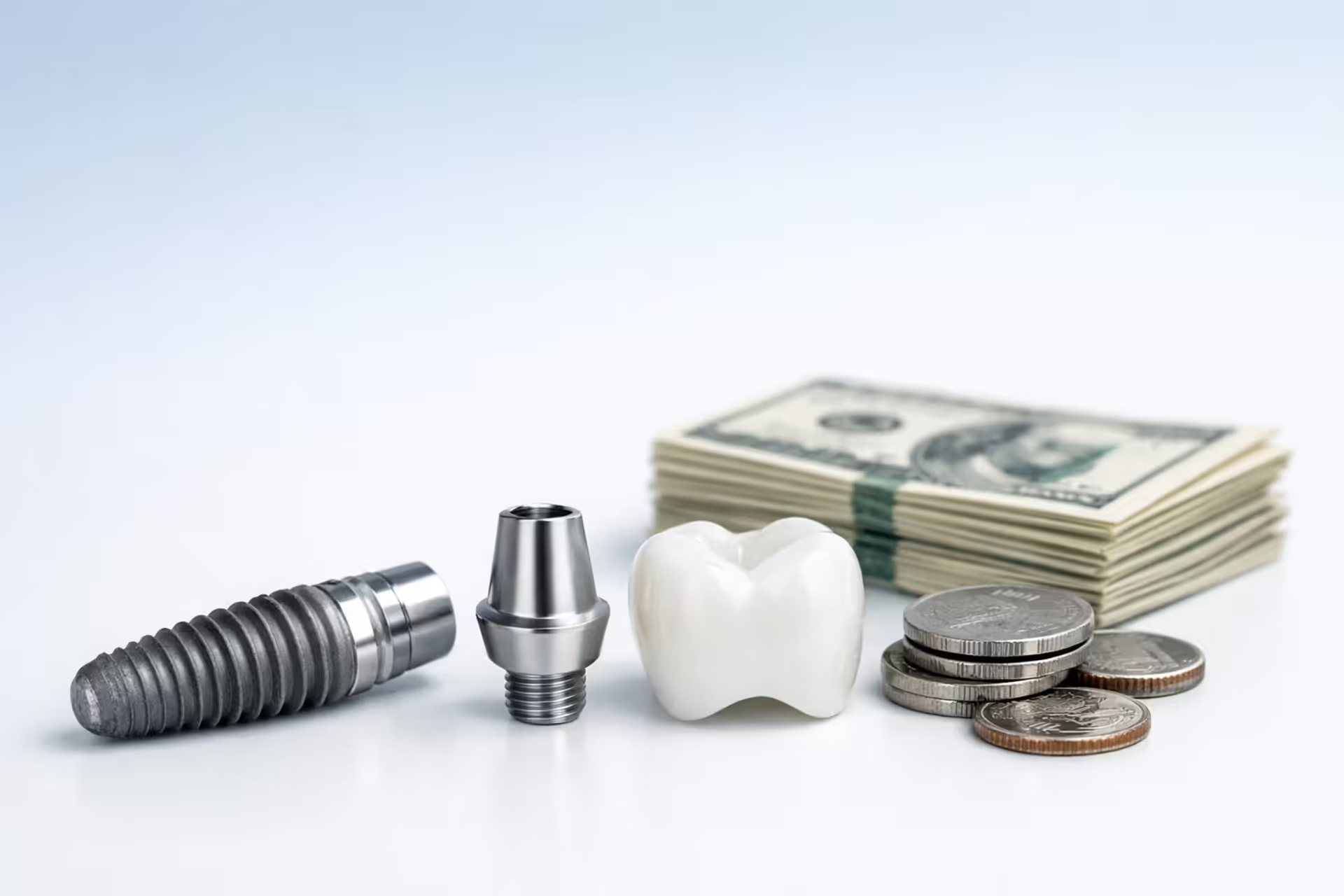
Major services cover the expensive stuff: crowns, bridges, dentures, inlays, onlays, and sometimes dental implants. Your full coverage dental plan will pay around 50% after the deductible. A $1,200 crown means you're contributing $600 plus whatever's left on your deductible.
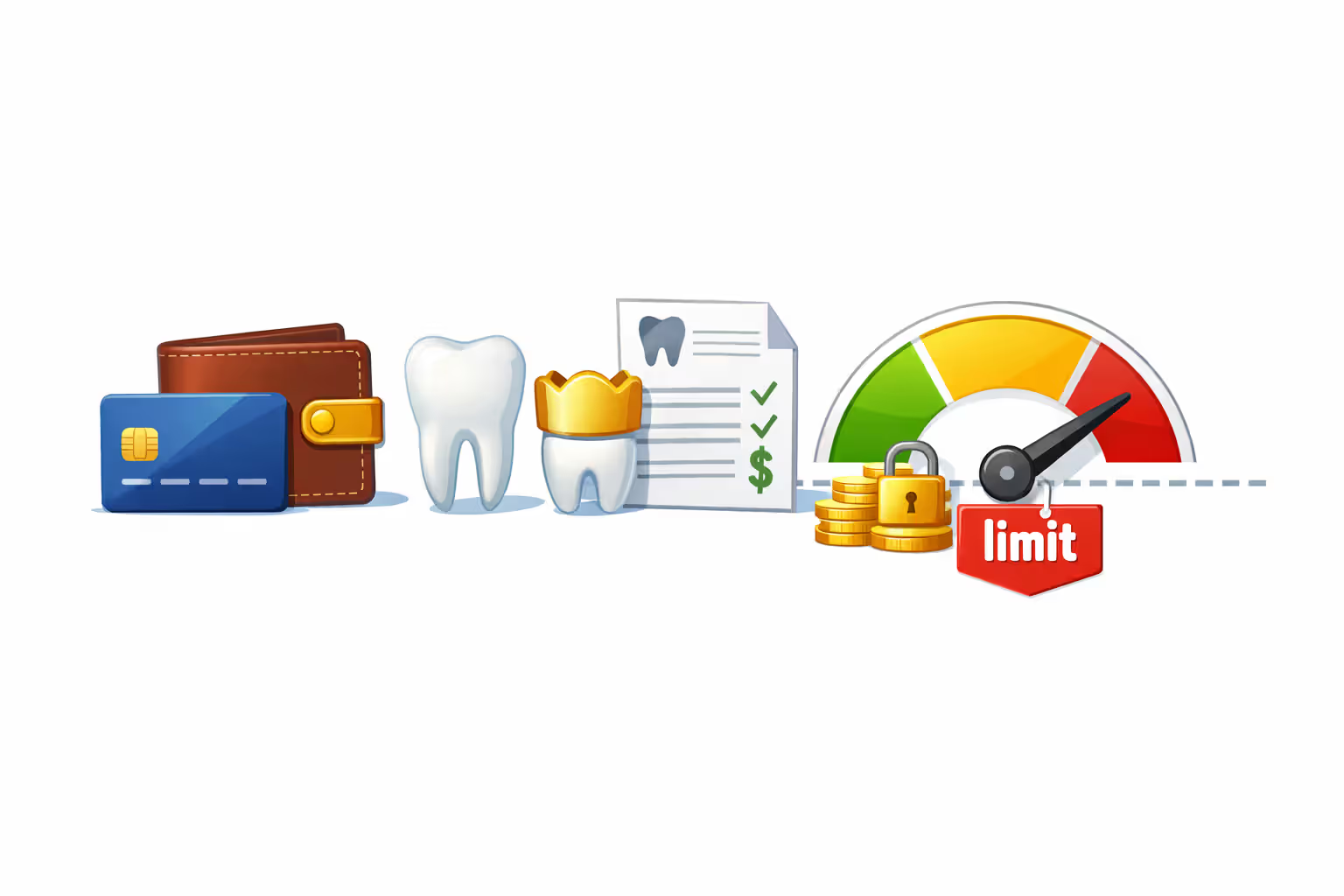
Now here's where "full" gets misleading. Every plan sets an annual maximum—the total dollar amount they'll pay in a single year. Hit $1,800 in claims on a plan with a $2,000 max? You've got $200 in coverage left. Need another $1,500 procedure this year? You're covering $1,300 yourself.
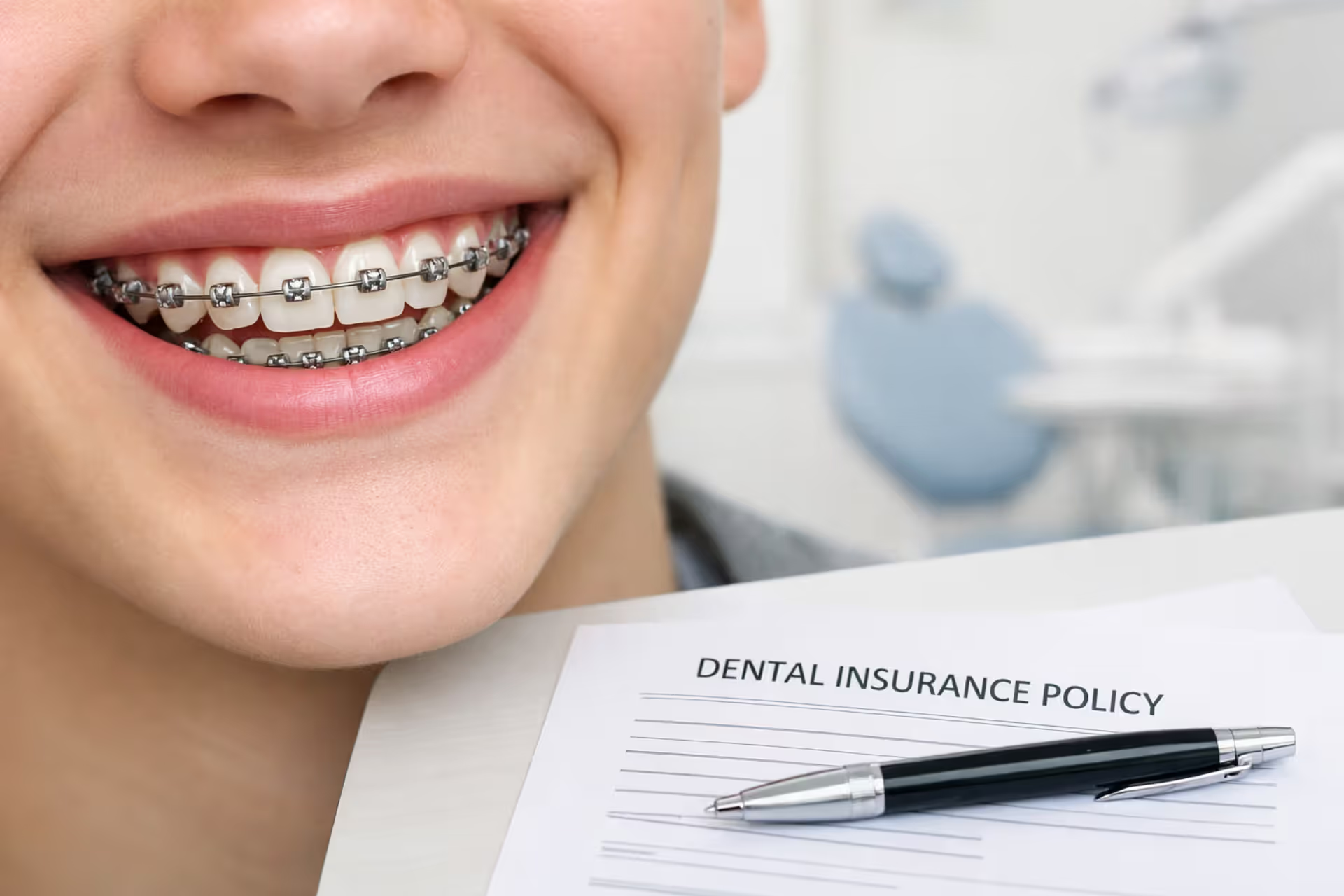
Orthodontics operates in its own universe. Some full dental coverage policies include braces for kids or adults, usually with a separate lifetime cap of $1,000–$3,000. Many exclude orthodontics completely. One more reason to actually read your policy certificate instead of trusting the "full coverage" label.
Cosmetic work—teeth whitening, veneers for appearance, recontouring—won't appear in your benefits list. Full dental insurance sticks to medically necessary treatments.
Author: Daniel Mercer;
Source: ladylesliebelize.com
How Much Does Full Coverage Dental Insurance Cost?
Full coverage dental insurance cost depends on where you live, who you're covering, and which plan type you choose. Let's break down the real numbers.
Individual premiums run $30–$60 monthly for comprehensive PPO plans in 2026. Family coverage jumps to $90–$180 per month. HMO plans cost less—$15–$35 for individuals—but lock you into a smaller provider network.
Deductibles typically sit between $50 and $150 per person annually. Family deductibles often cap at two or three individual deductibles, so a family of four might pay $300 max instead of $600. Most plans waive deductibles for preventive care, meaning your cleanings and exams cost zero.
Coinsurance determines your share after meeting the deductible. Basic work? You're paying 20–30%. Major procedures? Expect to cover 50%. That percentage applies to the "allowed amount"—what the insurance company decides the procedure should cost, not necessarily what your dentist charges.
Annual maximums create your biggest financial exposure. Most full coverage plans cap benefits at $1,500–$2,500 yearly. Premium plans might offer $3,000–$5,000 limits, but you'll pay $70–$100 monthly for that privilege. Do the math: is the extra $600 in annual premiums worth the higher cap if you only use $2,000 in benefits?
Out-of-pocket maximums don't exist in dental insurance like they do in medical plans. Once you exhaust that annual max, you're paying full retail prices until January 1st rolls around again.
Geography swings costs significantly. A PPO plan in Manhattan might run $65 monthly while the identical coverage costs $38 in rural Kentucky. Urban areas have higher premiums because provider costs are steeper.
Age factors in too. Some carriers charge 55-year-olds 25% more than 30-year-olds because older adults statistically need more crowns and bridges.
Employer-sponsored plans offer the best deals—usually 30–50% cheaper than individual policies because your company negotiates group rates and often subsidizes part of your premium.
Here's a realistic scenario: You pay $45 monthly for a mid-tier PPO with a $100 deductible, 80% basic coverage, 50% major coverage, and a $2,000 annual max. Your yearly premium hits $540. You get two free cleanings, one filling ($30 after insurance), and one crown ($600 after insurance). Total annual cost: $1,170. Compare that to paying retail—$400 for cleanings, $250 for the filling, $1,200 for the crown—and you're saving $680.
Full Coverage Dental Insurance With No Waiting Period
Waiting periods stall your access to benefits. Most plans activate preventive coverage immediately but make you wait 3–6 months for basic procedures and 6–12 months for major work. Schedule a crown during month five? Denied.
Full coverage dental insurance with no waiting period flips that script. Everything turns on from day one—cleanings, fillings, crowns, root canals, the whole menu.
Where to find plans without waiting periods:
Employer group plans almost always skip waiting periods, especially when you enroll during your company's open enrollment or within 30 days of being hired. It's one of the biggest perks of workplace benefits.
Medicare Advantage plans with dental riders frequently offer immediate coverage, though the benefits themselves may be basic—maybe a $1,000 annual max with limited major services.
Direct-to-consumer carriers like Renaissance Dental and Ameritas sell individual PPO plans with zero waiting periods, but premiums run 15–25% higher than comparable plans that impose delays.
Discount dental plans—technically not insurance—never have waiting periods because you're just buying access to negotiated rates, not actual coverage. Pay $100–$200 annually and get 10–60% off all services immediately.
The catch with no-wait plans:
Insurers aren't stupid. They know people will enroll right before expensive treatment and cancel afterward. To combat this "adverse selection," no-wait plans include protective measures:
Higher premiums, usually $10–$20 extra monthly. Over a year, that's $120–$240 more than a standard plan.
Lower annual maximums—sometimes only $1,000 instead of $1,500–$2,000. You gain immediate access but lose overall coverage.
Missing tooth clauses that refuse to cover replacements for teeth you lost before enrollment. The no-wait policy won't help with that bridge or implant if the tooth was already gone.
Frequency limitations still apply. Sure, you can get a crown immediately, but the plan might only cover one crown per tooth every five years, and they're tracking that from the procedure date, not when you enrolled.
Let's run the numbers. You need a $1,200 crown right now. Option A: Pay cash ($1,200 one-time expense), then enroll in a standard plan for future needs ($40/month). Option B: Enroll in a no-wait plan ($60/month), pay 50% coinsurance ($600), and you've spent $1,320 in year one ($720 in premiums plus $600 coinsurance). You're paying more upfront but gaining ongoing coverage. If you anticipate needing additional work within 12 months, the no-wait plan wins. If this crown is your only major expense for years, paying cash makes more sense.

Author: Daniel Mercer;
Source: ladylesliebelize.com
Full Coverage Dental vs. Medical and Vision Bundled Plans
Full coverage medical dental and vision insurance packages combine everything under one enrollment, one bill, and usually one insurance carrier. Sounds convenient, but convenience isn't always cost-effective.
Standalone dental plans give you maximum flexibility:
You can shop among dozens of dental carriers, picking the one with the best local network. Your dentist's probably in-network with multiple insurers, so you're not stuck with whoever bundles with your medical plan.
Switching is easier. Hate your dental coverage? Change it during your next enrollment period without touching your medical insurance.
Premiums often run lower when you're not bundling because you're buying only what you need. Don't care about vision coverage? Don't pay for it.
The downside? Juggling multiple policies, member ID cards, customer service phone numbers, and claims systems. Your dental deductible doesn't count toward your medical out-of-pocket max, so you're managing separate financial tracking.
Bundled packages simplify administration:
One premium payment, one member portal, one customer service contact. Some employers offer bundled plans where the medical, dental, and vision deductibles combine—rare, but incredibly valuable when available.
Bundling sometimes (not always) shaves 5–10% off your total premiums compared to buying each policy separately.
Full coverage health and dental insurance bundles typically include comprehensive medical coverage meeting ACA requirements, a dental PPO or HMO covering all three service tiers, and vision benefits like one annual eye exam plus a $100–$150 allowance toward frames or contacts every 12–24 months.
The trade-off? Fewer choices. Your bundled dental network might exclude your longtime dentist. The vision benefit might cover only basic frames, not the designer pair you want. And if you dislike any component, you're stuck unless you overhaul everything.
Cost comparison example:
Buying separately: Medical ($450/month) + Dental ($40/month) + Vision ($15/month) = $505/month
Bundled package: $480/month
You're saving $25 monthly ($300 yearly), but you've surrendered control over each individual policy. If your dentist leaves the bundled network, you either find a new dentist or pay out-of-network rates—losing way more than $300 in extra costs.
Full coverage health dental and vision insurance makes the most sense for families who value simplicity over customization, don't have established provider relationships, or receive subsidies on marketplace plans where bundling maximizes the subsidy calculations.

Author: Daniel Mercer;
Source: ladylesliebelize.com
How to Choose the Right Full Dental Coverage Plan
Picking full coverage dental insurance demands more detective work than most people expect. Follow this approach to avoid buyer's remorse.
Step one: List every dental procedure you anticipate needing.
Realistic assessment matters. If your dentist mentioned needing two crowns and you've been ignoring a cracked filling, write those down. If you're just maintaining healthy teeth, preventive coverage becomes your priority. Families with kids in braces need strong orthodontic benefits.
Step two: Verify your dentist's network participation.
Call your dentist's office and ask which plans they accept. Don't trust online provider directories—they're notoriously outdated. Out-of-network care typically costs 30–50% more after insurance pays their portion, so keeping your current dentist might justify paying higher premiums for the right plan.
Step three: Match annual maximums to your needs.
Needing $3,500 in dental work? A plan with a $1,500 max won't cut it. You'll exhaust benefits and pay retail prices for the remaining $2,000. Higher maximums cost more upfront—maybe $15–$25 extra monthly—but that's $180–$300 annually versus $2,000 in uncovered procedures.
Step four: Decode waiting periods and exclusions.
If you need immediate treatment, waiting periods kill the deal. Check whether your procedures fall under "basic" or "major" categories because waiting periods differ. Read exclusions carefully—some plans refuse to cover implants or cosmetic bonding even when medically justifiable.
Step five: Calculate your true annual cost.
Forget comparing just monthly premiums. Build a spreadsheet: premiums × 12, plus your deductible, plus coinsurance for anticipated procedures, minus what you'd pay without insurance. A $30 monthly plan that covers only 50% of your $2,000 crown costs you $1,360 ($360 premiums + $1,000 coinsurance). A $50 monthly plan with 80% coverage costs you $1,000 ($600 premiums + $400 coinsurance). The "more expensive" plan saves you $360.

Author: Daniel Mercer;
Source: ladylesliebelize.com
Step six: Research the insurer's reputation.
Visit the National Association of Dental Plans website or Better Business Bureau. Check complaint ratios. Read reviews about claims processing speed. An insurer that denies claims on technicalities or takes 90 days to reimburse you creates hassles that offset any premium savings.
Step seven: Understand coordination of benefits if you have dual coverage.
Some couples both have employer dental plans and cover each other as dependents. Coordination of benefits rules determine which plan pays first (usually the plan covering you as an employee, not a dependent). The second plan covers whatever the first one didn't, but only up to the allowed amount—you don't get double benefits. Running dual coverage rarely makes financial sense unless one employer subsidizes 100% of premiums.
Quick rule: Visit the dentist twice yearly for cleanings and rarely need other work? Basic plans with strong preventive coverage and a $1,000–$1,500 max work fine. Dealing with periodontal disease, needing crowns, or anticipating extensive work? Invest in plans offering $2,500+ maximums and better major service coinsurance, even if premiums hit $60–$70 monthly.
Comparison of Full Coverage Dental Insurance Plan Types
| Plan Type | Monthly Cost (Individual) | Waiting Periods | Network Restrictions | Preventive Coverage | Basic Coverage | Major Coverage |
| PPO | $35–$60 | 0–12 months | Large network; out-of-network visits allowed but reimbursed at lower rates | 100% | 70–80% | 50% |
| HMO (DHMO) | $15–$35 | 0–6 months | Restricted network; must choose primary dentist; no out-of-network benefits | 100% | 80–90% | 50–60% |
| Indemnity | $40–$70 | 6–12 months | Visit any licensed dentist; submit claims yourself; slower reimbursement | 80–100% | 60–80% | 50% |
| Discount Plan | $8–$20 (plus $100–$200 annual fee) | None | Network required; provides discounted rates not insurance coverage | 10–60% discount | 10–60% discount | 10–60% discount |
Common Mistakes When Buying Full Dental Insurance
Smart people make dumb mistakes buying dental insurance because they trust the marketing instead of reading the actual policy. Avoid these traps.
Overlooking annual limits: "Full coverage" sounds unlimited. It's not. That $1,500–$2,000 annual cap gets exhausted fast when you need major work. A root canal and crown on one tooth can consume your entire year's coverage. Always confirm the annual maximum before purchasing, and when you hit it mid-year, you're paying 100% retail for everything else until the plan year resets.
Ignoring network restrictions: You find a plan with a $25 monthly premium—amazing deal! Then you discover your dentist isn't in-network. You're choosing between finding a new dentist (who might not know your dental history) or paying 50% more for out-of-network reimbursement rates. Verify network participation before you enroll, not after.

Author: Daniel Mercer;
Source: ladylesliebelize.com
Assuming "full" eliminates your financial responsibility: The term full coverage dental creates false expectations of zero-cost dentistry. You're still paying deductibles (even if just $50), coinsurance on basic and major work (20–50%), and everything above the annual maximum. Read the summary of benefits document to understand what you'll actually pay.
Skipping the fine print on waiting periods: You enroll in January, excited about finally getting that crown. You schedule it for March. Claim denied—six-month waiting period for major services. Now you're stuck waiting until July or paying entirely out of pocket despite having "coverage." Confirm waiting periods for each service tier before enrolling.
The biggest mistake I see consumers make is fixating on that 'full coverage' label without investigating three critical factors: the annual maximum ceiling, whether their current dentist participates in the plan's network, and how major procedures get reimbursed. I've reviewed plans advertising full coverage that cap annual benefits at just $1,000—barely enough for one crown and root canal. Always look for maximums of at least $2,000, confirm your dentist accepts the plan before enrolling, and verify that major services receive at least 50% coinsurance. Don't let marketing terminology distract you from reading the actual certificate of coverage.
— Sarah Mitchell
Failing to coordinate FSA or HSA contributions: You have access to a flexible spending account or health savings account that lets you pay dental expenses with pre-tax money, effectively saving 20–35% depending on your tax bracket. If you don't budget correctly for your out-of-pocket dental costs in your FSA, you're paying with after-tax dollars and throwing away significant savings. Plan your FSA contributions around your expected dental coinsurance and deductibles.
Enrolling in duplicate coverage without strategy: Two dental plans sound better than one, right? Usually not. Coordination of benefits rules mean the primary plan pays first, the secondary covers some of what's left, but you don't get to double-dip. Total reimbursement can't exceed the allowed amount. Two $40 monthly premiums ($960 annually) rarely pay off unless one employer covers 100% of the premium cost.
Choosing based solely on premium price: That $20 monthly plan looks tempting until you discover it only covers preventive care with a $500 annual maximum. You're saving $240 in premiums compared to a $40 plan but losing $1,000–$1,500 in potential benefits. Total expected costs matter more than premium sticker prices.
Forgetting frequency limitations: Your plan covers two cleanings per year. You get your cleanings in January and July, then switch dentists in November. The new dentist submits a claim for another cleaning. Denied—you've hit your annual limit. Insurance tracks these by procedure codes and dates, not by provider. Keep your own records of which benefits you've used.
Frequently Asked Questions About Full Coverage Dental Insurance
Full coverage dental insurance provides valuable financial protection against dental care costs, but that "full" label obscures significant limitations. No plan reimburses every procedure at 100% without restrictions. Grasping how the three service tiers work—preventive, basic, and major—along with deductibles, coinsurance percentages, and annual spending caps helps you set realistic expectations and select coverage matching your dental health situation and budget.
Plans eliminating waiting periods give you immediate access to major procedures, though they generally charge higher premiums or impose tighter benefit limits. Bundled health, dental, and vision packages streamline paperwork and might trim your total premiums slightly, but standalone dental policies typically deliver more provider choices and greater flexibility.
Before enrolling, evaluate your anticipated dental needs for the next year, confirm your dentist participates in the network, and calculate your total annual spending including premiums, deductibles, and your share of procedure costs. Sidestep common pitfalls like ignoring annual maximums or trusting that "full coverage" eliminates all out-of-pocket expenses.
By comparing different plan structures, studying the certificate of coverage rather than marketing brochures, and asking pointed questions before purchasing, you can find full coverage dental insurance that genuinely protects your wallet and your teeth—not just in advertising language, but in actual benefits when you're sitting in that dentist's chair.
Related Stories

Read more
Read more

The content on this website is provided for general informational and educational purposes only. It is intended to offer guidance on dental insurance topics, including coverage options, premiums, deductibles, waiting periods, annual maximums, claims processes, and procedures that may be covered by insurance such as implants, braces, crowns, dentures, and preventive care. The information presented should not be considered medical, dental, financial, or professional insurance advice.
All articles and explanations published on this website are for informational purposes only. Dental insurance policies may vary between providers, and details such as coverage limits, exclusions, reimbursement rates, waiting periods, and eligibility requirements can differ depending on the insurer, plan, and individual circumstances.
While we strive to keep the information accurate and up to date, this website makes no guarantees regarding the completeness or reliability of the content. Use of this website does not create a professional relationship. Visitors should review official policy documents and consult with licensed dental or insurance professionals before making decisions regarding dental care or insurance coverage.